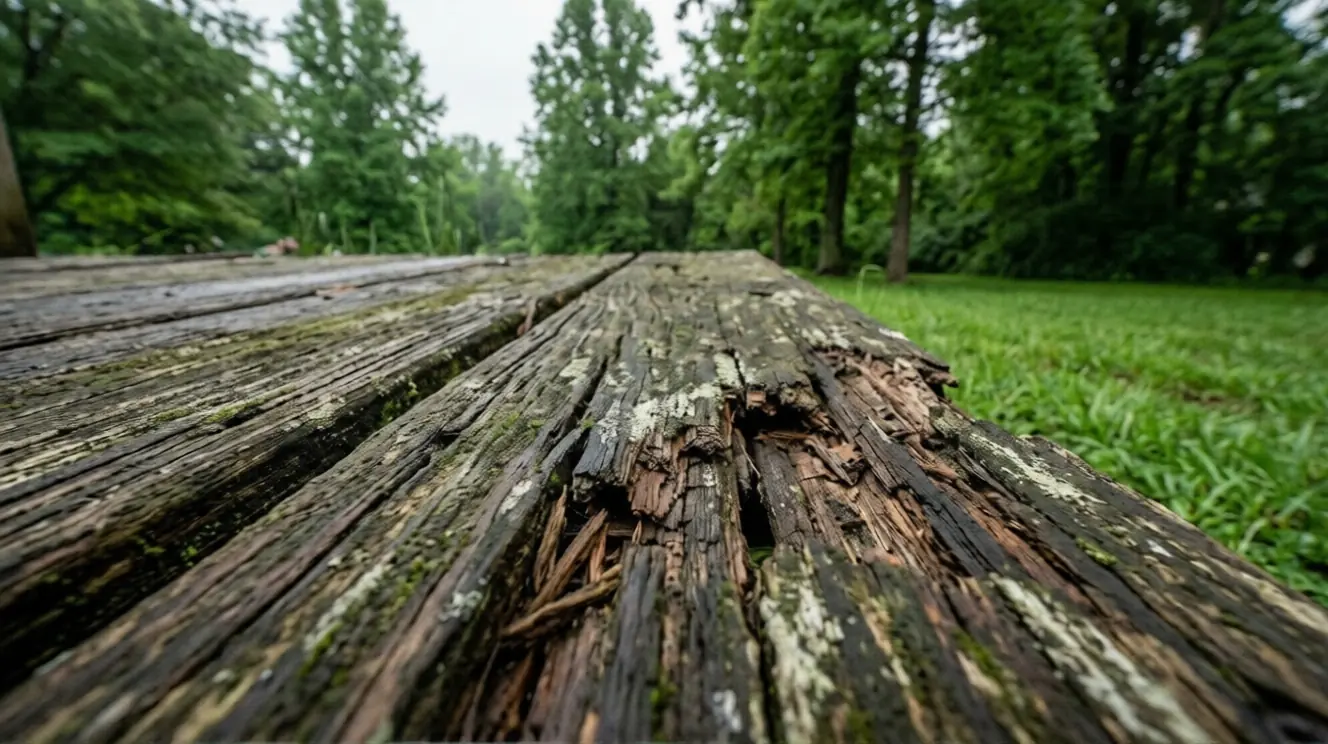
Why Sacramento Decks Need Climate-Smart Protection
Sacramento-area decks face long periods of direct sun and high summer temperatures, followed by a cooler rainy season. That combination can fade finishes, dry and crack exposed wood, loosen fasteners through seasonal movement, and create moisture problems where drainage is poor.
Understanding these local stresses is the first step toward preventing expensive structural damage.
1. Strong UV Exposure and Summer Heat
Unshaded boards can become extremely hot during Sacramento summers. UV exposure breaks down coatings and dries natural wood over time.
Without proper protection:
- Color fades and finishes lose protection
- Wood can check, split, cup, or develop surface cracks
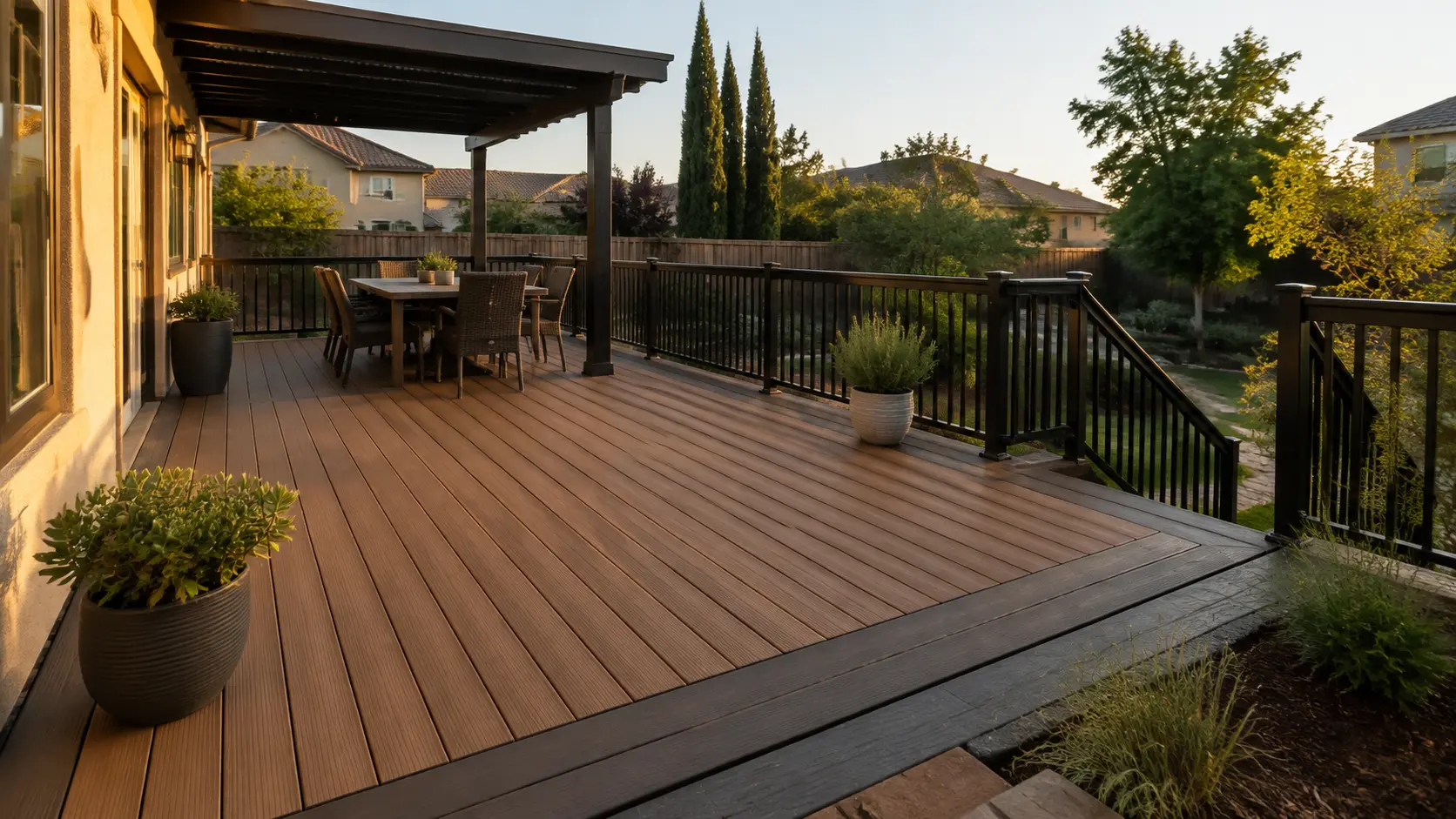
- Dark composite boards may retain more heat
Light-colored materials, UV-resistant coatings, shade structures, and routine inspection help reduce heat-related wear.
2. Winter Rain and Poor Drainage
Most Sacramento-area rain arrives seasonally. If water cannot drain away from the deck, moisture can remain trapped at ledgers, joists, board gaps, and post bases.
Common problems include:
- Improper board spacing
- No flashing where the deck attaches to the house
- Water pooling between boards
- Soil grading directing water toward posts
Standing water is one of the primary causes of premature deck failure.
3. Seasonal Expansion and Contraction
Large differences between hot summer afternoons and cool, wet winter conditions cause deck materials to move.
When installation details do not account for movement:
- Boards may gap, cup, or bind
- Fasteners can loosen
- Small cracks can grow over time
Correct spacing, compatible fasteners, and manufacturer-approved installation details are essential.
4. Insects and Hidden Moisture
Wood that stays damp or touches soil is more vulnerable to:
- Termites
- Carpenter ants
- Fungal spores
If wood remains damp, it becomes a target for pests and decay organisms.
Composite and PVC materials resist these threats far better than traditional lumber.
How to Prevent Deck Rot in California
✔ Choose the Right Materials
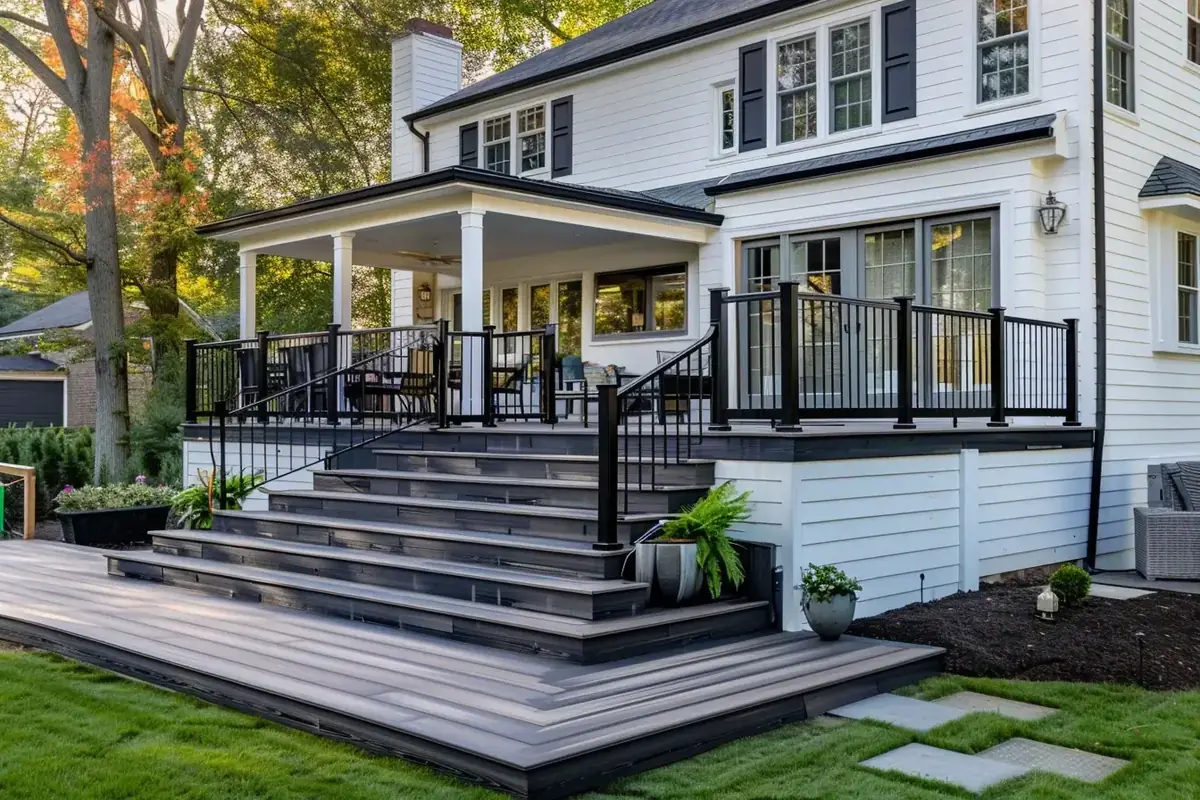
Pressure-treated lumber is the minimum standard, but for long-term durability consider:
- Composite decking
- PVC decking
- Properly sealed hardwood
You can compare material options on our
Decking Services Page
to determine which system works best for California’s climate.
✔ Improve Ventilation & Drainage
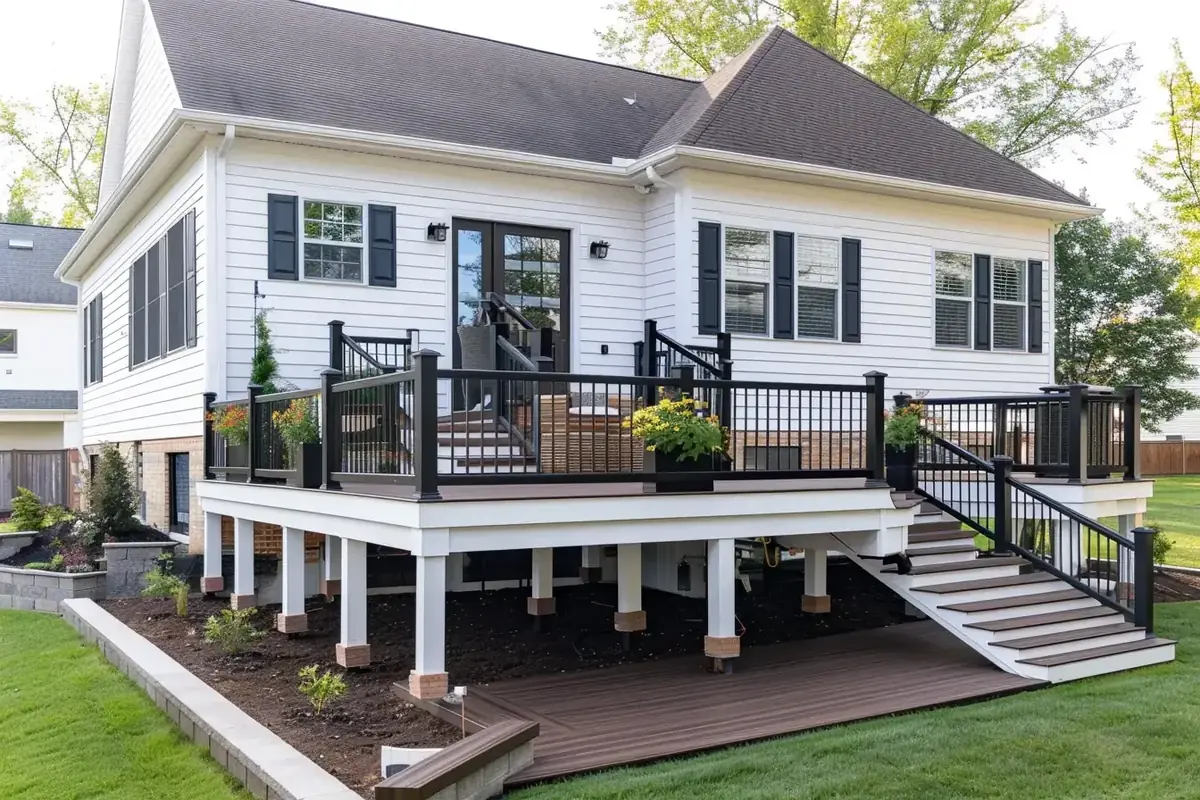
A professionally built deck should include:
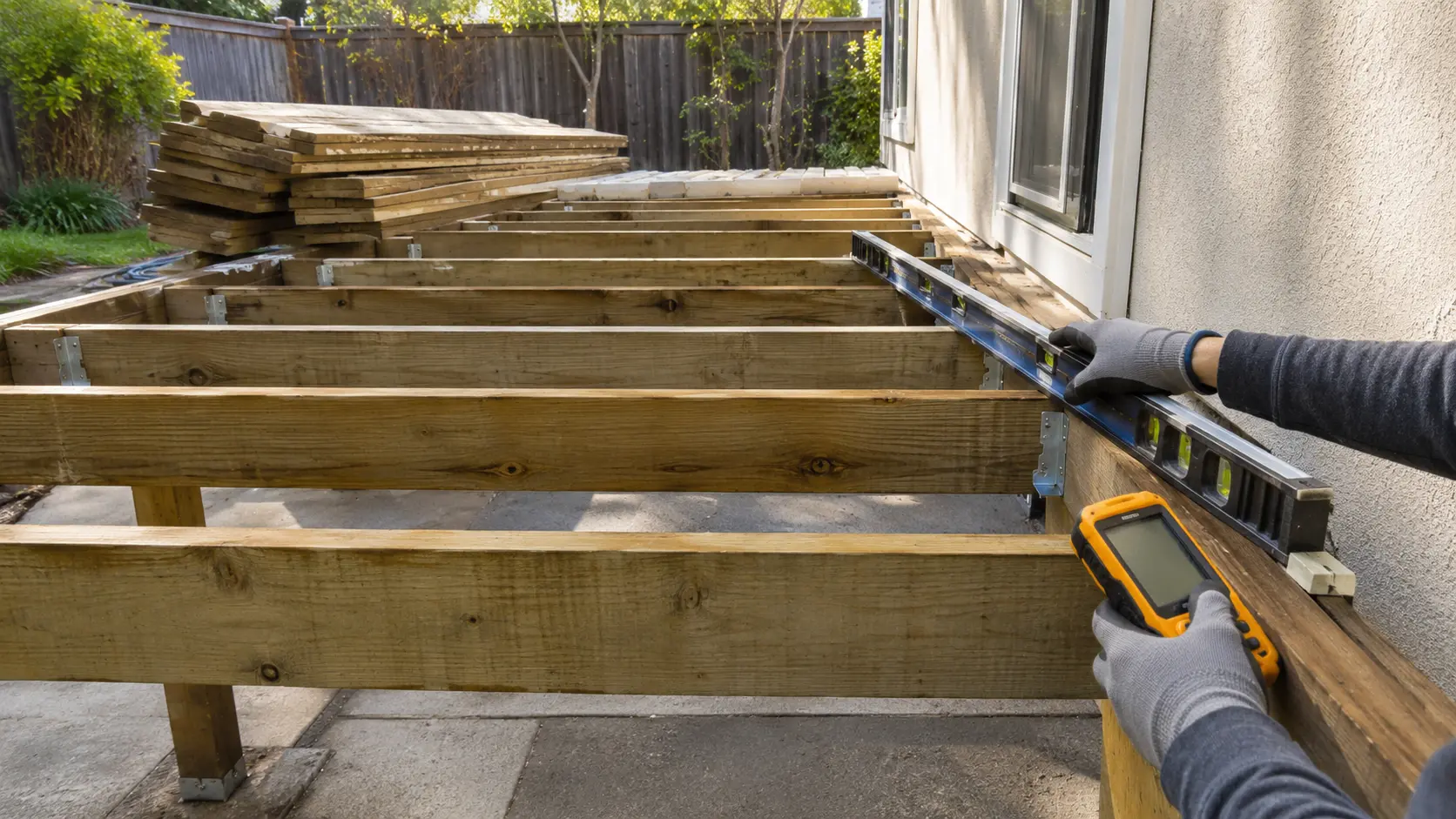
- Proper joist spacing
- Adequate airflow underneath
- Correct board spacing (⅛"–¼")
- Flashing tape on ledger boards
- Concrete footings above grade
Moisture management starts during installation — not after damage appears.
If you're unsure whether your current structure was installed correctly, consult a professional
Deck Builder
for a structural inspection.
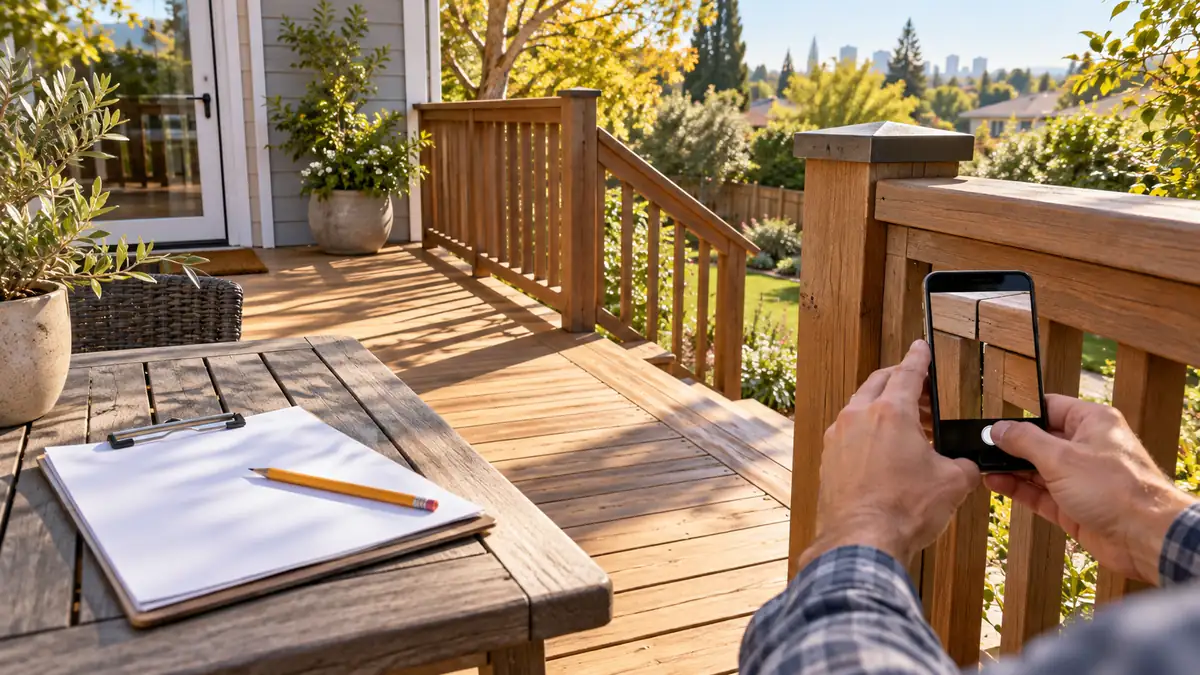
✔ Seal & Maintain Regularly
For wood decks:
- Re-stain or seal every 2–3 years
- Clean debris between boards
- Inspect fasteners annually
- Check post bases for soil contact
Even “low-maintenance” decks benefit from periodic cleaning to prevent buildup.
Signs Your Deck May Already Have Rot
Watch for:
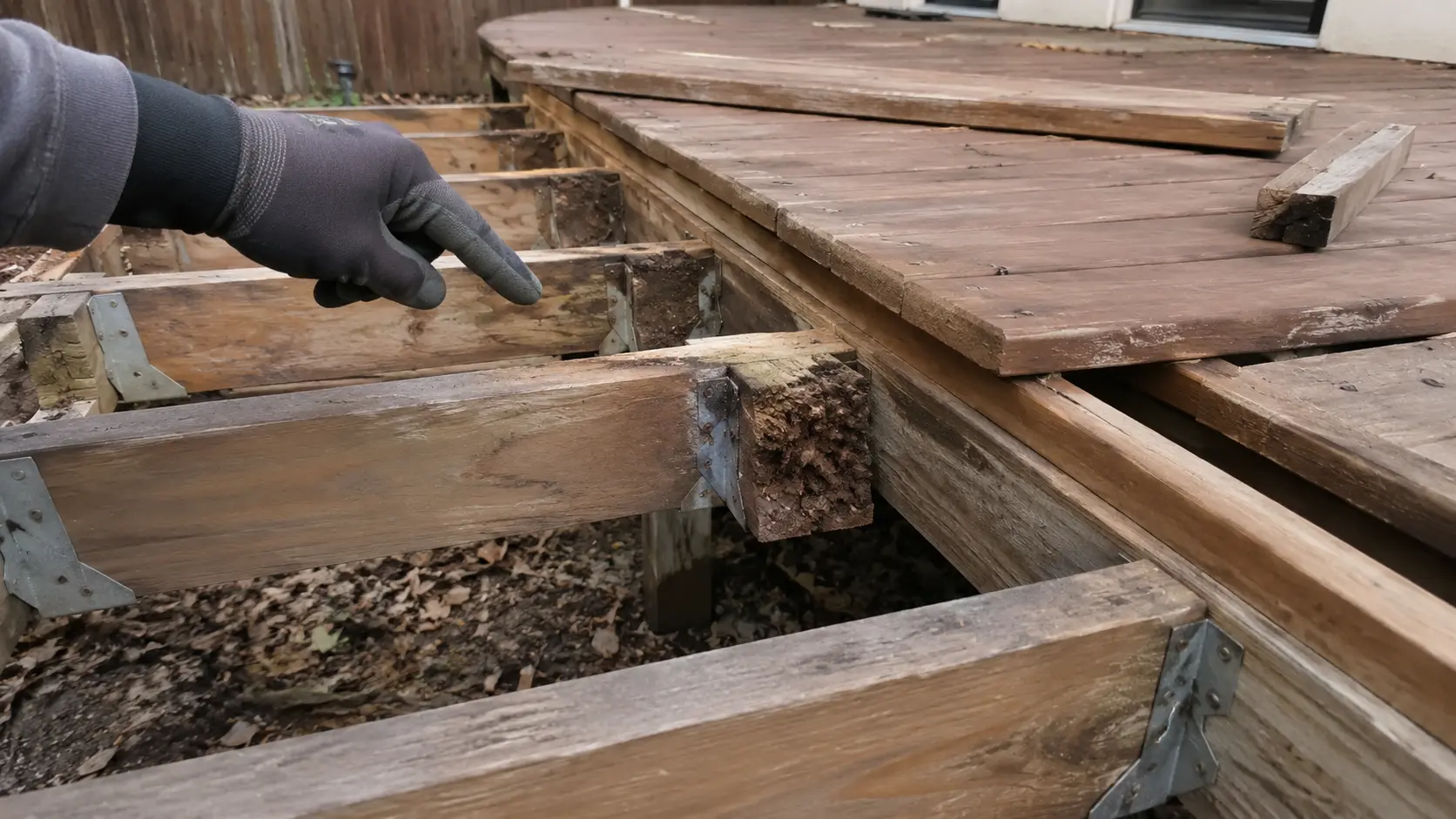
- Soft or spongy boards
- Dark discoloration
- Cracking near fasteners
- Loose railings
- Musty odor
If structural joists or ledger boards are compromised, replacement may be necessary for safety.
Average Deck Lifespan in California
| Material | Typical Lifespan in CA Climate |
|---|---|
| Pressure-Treated Wood | 10–15 years |
| Hardwood | 20–30 years |
| Composite | 25–30+ years |
| PVC | 30–40+ years |
Climate plays a major role in these numbers — proper installation can extend them significantly.
Final Thoughts
Deck rot in California isn’t unusual — but it is preventable.
The key factors are:
- Smart material selection
- Proper drainage design
- Professional installation
- Routine maintenance
Cutting corners during construction often leads to costly repairs within a few years.
A properly designed deck, built for California’s climate, can last decades with minimal issues.
If you’re planning a new build or concerned about existing damage, investing in climate-appropriate materials and expert craftsmanship makes all the difference.
Tags: #DeckMaintenance #CaliforniaDecks #DeckRepair #CompositeDecking #OutdoorLiving