A sliding patio door is secure only when the operating panel closes squarely, the interlocking stiles meet, the primary lock engages without force and any secondary device is designed for that door. A stronger-looking lock cannot compensate for worn rollers, a distorted frame or a panel that never reaches its fully closed position.
Start with normal operation. Open and close the door slowly, observe the gaps, test the lock, and confirm that every household member can restore all security devices after using the patio. Do not remove a heavy glass panel or drill the frame based on a generic online tip; use the instructions for the exact manufacturer and model.
Understand the parts that work together
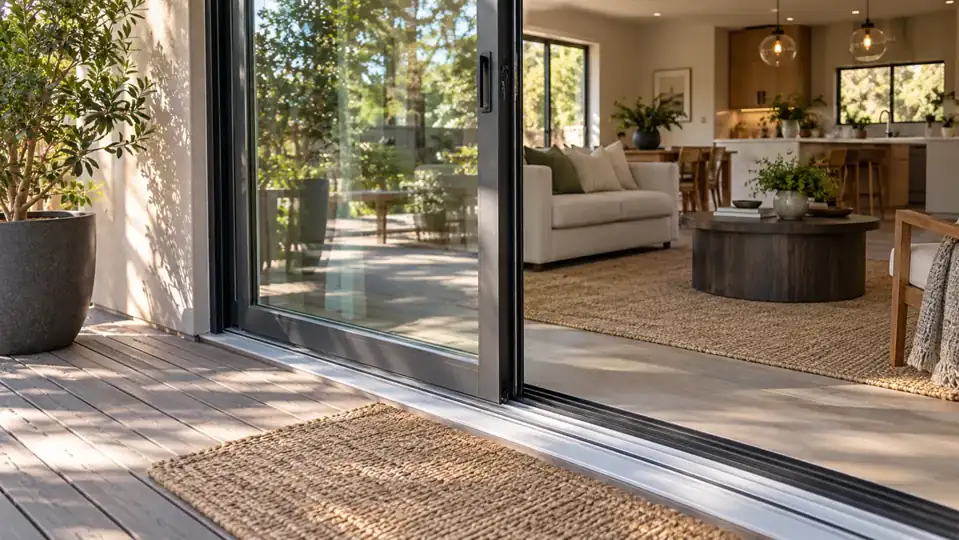
A typical two-panel sliding patio door has one operating panel and one fixed panel. Security depends on more than the handle:
- Primary lock: the latch or hook operated by the handle or thumb turn
- Receiver or keeper: the part the primary lock engages
- Interlock: the meeting-stile geometry that connects the sliding and fixed panels when closed
- Rollers and track: the moving support that lets the panel reach the jamb evenly
- Secondary lock: a manufacturer-approved footbolt, vent lock or auxiliary device when available
- Fixed-panel attachment: the approved fasteners or retainers that keep the non-operating panel secured
Pella's current patio-door anatomy guide describes the interlocker, rollers, multipoint locks, vent locks and footbolts as distinct components. They solve different problems; one should not be treated as a substitute for all the others.
Test the primary lock without forcing it
Close the door at a normal speed and operate the lock with one hand. The hardware should engage consistently without lifting, pushing or pulling the panel into position. Then unlock it and confirm the handle returns normally.
Stop and document the condition if:
- The thumb turn requires excessive force
- The hook misses or scrapes the receiver
- The panel springs away from the jamb after locking
- The top and bottom gaps are visibly different
- The handle or receiver moves under light pressure
- The door locks only when someone lifts the panel
Andersen explains that difficult or incomplete lock engagement may result from alignment or hardware problems. Its guidance also notes that roller adjustment can affect latch alignment. That is why replacing the handle alone may not correct a door whose panel is no longer square in the frame.
Check panel alignment and the interlock
Open the operating panel about an inch and compare the narrow vertical gap from top to bottom. A noticeably uneven reveal can indicate that the panel needs product-specific roller adjustment or that the frame has moved. With the door closed, inspect the meeting stiles from inside. They should overlap and engage as the product was designed.
Do not try to improve security by adjusting rollers until the panel binds tightly. The operating panel still needs to travel smoothly and meet the weatherstripping correctly. Follow the manufacturer's adjustment sequence, make small changes, and retest operation and locking after each change.
If the door sticks, grinds or shows water at the sill, first use the Sacramento patio-door track and leak checklist. Security hardware will not repair a damaged track, blocked drainage path or failed opening assembly.
Choose secondary hardware by product, not appearance
A secondary device can add another locking point, but it must fit the door and the way the household uses it.
Footbolts and multipoint locks
Some manufacturers offer integrated footbolts or multipoint systems for selected product lines. Pella, for example, describes a footbolt that can provide a secondary locking or venting position on certain sliding doors. These features are model-specific; availability on one series does not prove compatibility with another frame.
Ask the supplier to identify the exact option, mounting location, approved fasteners, vent position and replacement parts. Confirm that the device can be reengaged easily after normal patio use.
Auxiliary locks and anti-lift measures
The Sacramento Police Department recommends additional protection for sliding glass doors, including auxiliary locks and measures intended to keep a panel from being lifted from its track. However, drilling locations and clearances vary by product. Before adding anything to the head track, sill or panel, verify the manufacturer's instructions and warranty. A misplaced screw can obstruct operation, damage the frame or interfere with designed clearances.
An improvised stick in the track may limit travel, but it should not be presented as a complete security system. It does not correct a loose fixed panel, failed interlock, misaligned lock or lift clearance, and it may be forgotten after the door is used.
Build a daily closing routine
Hardware works only when it is restored after each opening. Use a short routine that every responsible household member can follow:
- Clear the sill of loose debris without blocking drainage openings.
- Slide the operating panel fully to the jamb.
- Confirm that curtains, pet-door inserts and cords are clear.
- Engage the primary lock and verify it seated normally.
- Engage the approved secondary lock when the door is not in use.
- Check that the screen door is not being mistaken for the security barrier.
Test the routine in daylight before relying on it at night. If a lock is so awkward that people leave it disengaged, the operational problem is part of the security problem.
Treat vent positions as limited openings
A vent lock may hold a panel open a small amount, but a vent position is not the same as fully locked. Consider exterior access, pets, children, smoke, heat and weather before leaving a ground-level opening unattended.
If the patio door leads toward a pool or spa, do not assume an ordinary footbolt or vent lock satisfies barrier requirements. The CPSC recommends layers of protection and notes that doors leading toward a pool may need self-closing, self-locking hardware or alarms. Verify the rules and approved products for the specific property.
Keep the track clean without guessing at lubricants
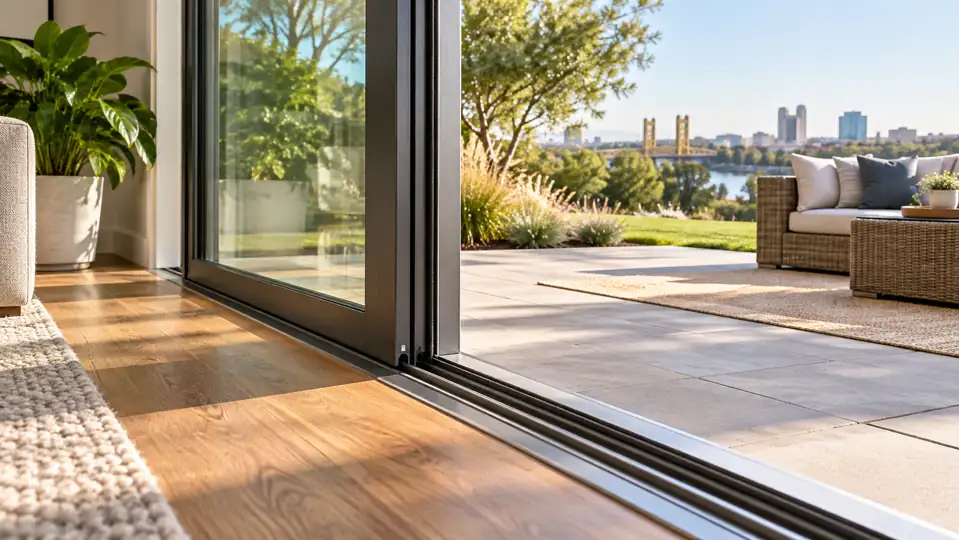
Sand, dust, pet hair and outdoor debris can make the panel harder to move. Vacuum accessible loose material and wipe the track using the door manufacturer's care instructions. Marvin's current maintenance checklist recommends cleaning dirt from sills and tracks, checking exposed hardware screws and verifying smooth operation.
Do not spray a general-purpose oil into the lock, rollers or track unless the manufacturer specifically permits it. Lubricant type and application location vary; the wrong product can attract grit or damage finishes and weatherstripping.
Know when adjustment becomes replacement planning
A serviceable door may need cleaning, receiver adjustment, roller service or compatible replacement hardware. Broader replacement planning becomes more reasonable when the frame is damaged, parts are unavailable, the fixed panel is not secure, the glass or panel is unsafe, or repeated adjustment no longer produces smooth operation and reliable locking.
If replacement is being considered, first compare sliding patio door panel layouts and thresholds and then review energy-efficient patio door ratings. Security, operation, usable opening, sill drainage and glass performance belong in one written scope.
City of Sacramento materials list residential window/door permit forms for like-for-like work, material changes and historic properties. Confirm the current permit and planning path for the exact address before ordering a replacement; nearby jurisdictions may use different requirements.
What to include in the consultation
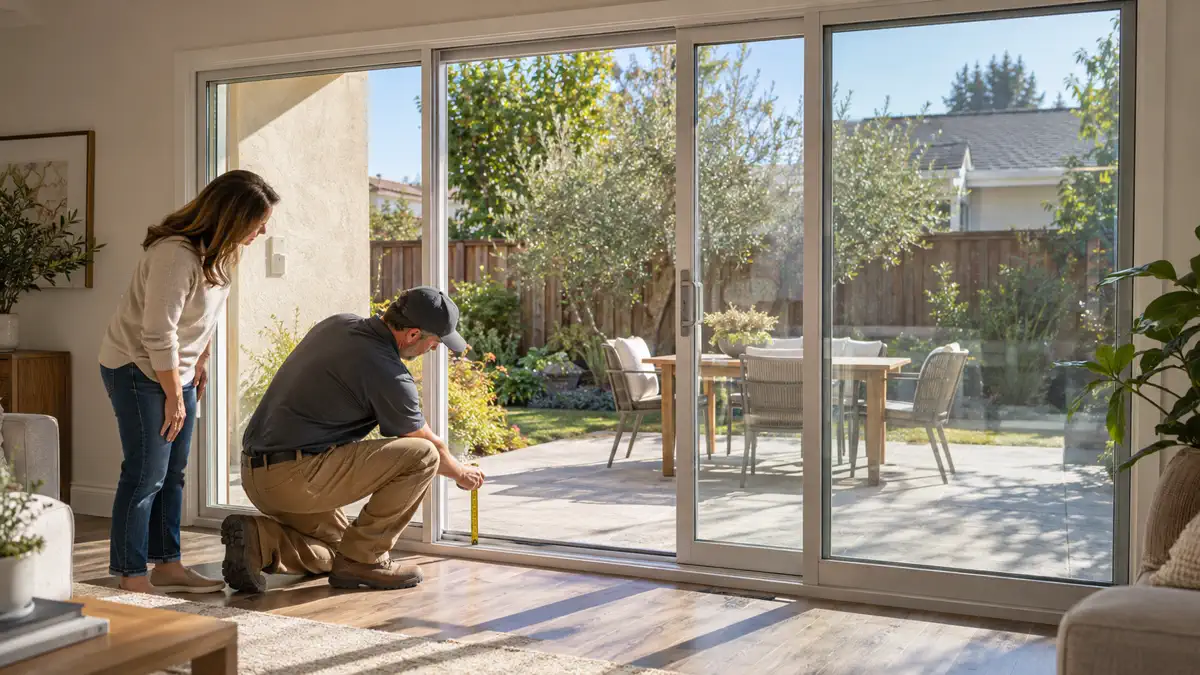
Provide the contractor with the door brand if visible, approximate age, panel count, operating direction and photos of the handle, lock edge, meeting stiles, sill and full opening. Note whether the problem changes with heat, weather or recent floor/deck work.
Ask the proposal to identify:
- Whether the issue is hardware, rollers, panel alignment, frame condition or a combination
- The exact replacement part or new door series
- Primary and secondary locking options
- Final adjustment and lock testing
- Screen, trim, sill, drainage and cleanup scope
- Permit responsibility and product warranty documents
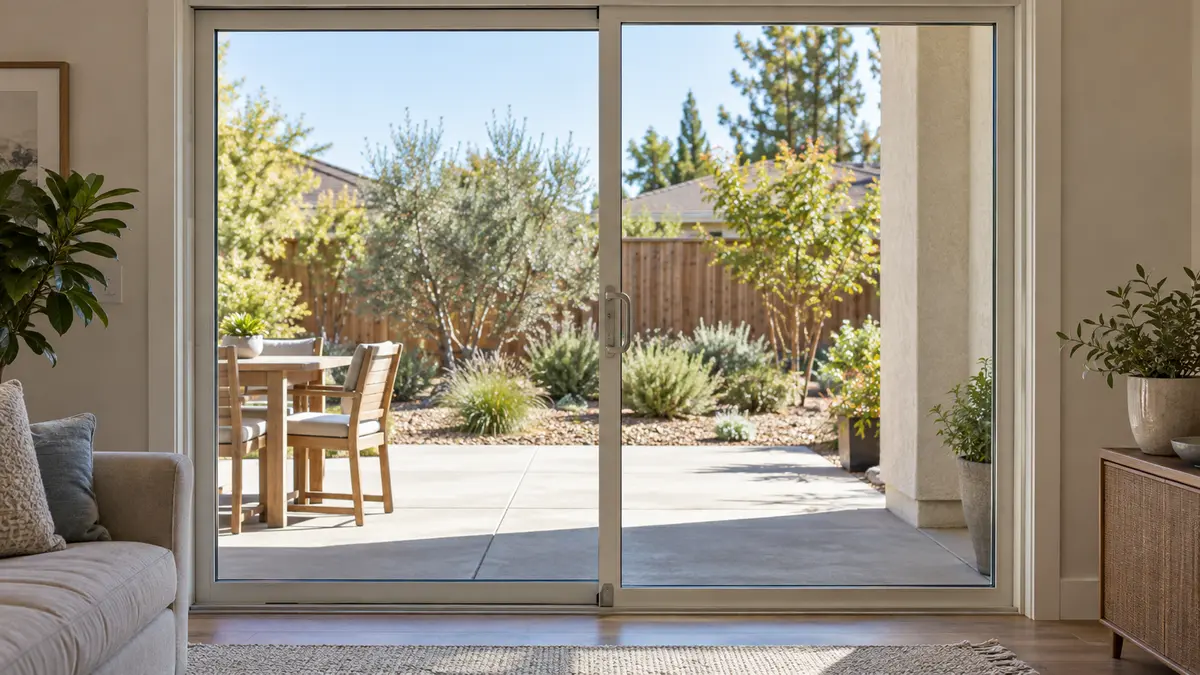
Yellowstone Renovation lists sliding patio doors within its Sacramento windows and exterior openings service. Review the Sacramento service-area page and Project Showcase, then request an opening-specific consultation to confirm the exact patio-door scope available for your home. The image above is an editorial illustration, not a Yellowstone Renovation project photograph.
Frequently asked questions
Should a sliding patio door lock require force?
No. A lock that works only when the panel is lifted or pushed may indicate receiver, roller, panel or frame alignment problems. Diagnose the operating condition before replacing only the handle.
Is a footbolt a replacement for the primary lock?
No. A footbolt is a secondary device on compatible products. The primary lock, interlock, fixed panel, rollers and frame still need to function correctly.
Can I add any auxiliary lock to an existing door?
Not safely by assumption. Confirm compatibility, mounting location, fasteners, clearances and warranty requirements with the door or hardware manufacturer before drilling the frame or panel.
Sources
- Pella — The Parts of a Patio Door
- Andersen — Replace and Adjust Locking Hardware on Gliding Patio Doors
- Andersen — Adjust the Operating Panel
- Marvin — Window and Door Care and Maintenance
- City of Sacramento Police — Home Burglary Prevention
- City of Sacramento — Minor Permit Application Form Bundles
- U.S. Consumer Product Safety Commission — Childproofing Your Home