Protect landscaping before exterior work begins by mapping what stays, defining no-traffic zones, choosing one crew access route, locating irrigation and writing down who handles temporary removal and restoration. A few drop cloths placed after demolition starts are not a complete plan. Deck, fence, siding and window work can affect plants through foot traffic, excavation, falling debris, heat, dust and repeated material handling.
The goal is not to promise that every leaf will remain untouched. It is to identify valuable or vulnerable features, keep avoidable damage out of the work zone and make unavoidable changes part of the agreed scope.
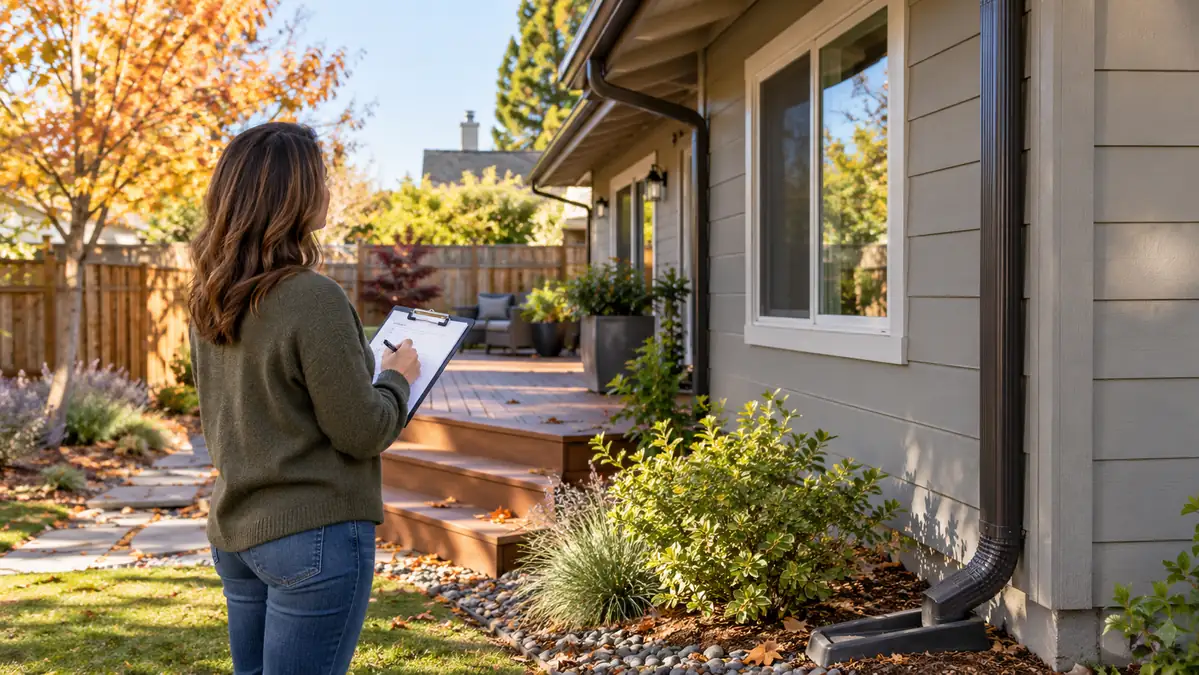
Start with a simple site-protection map
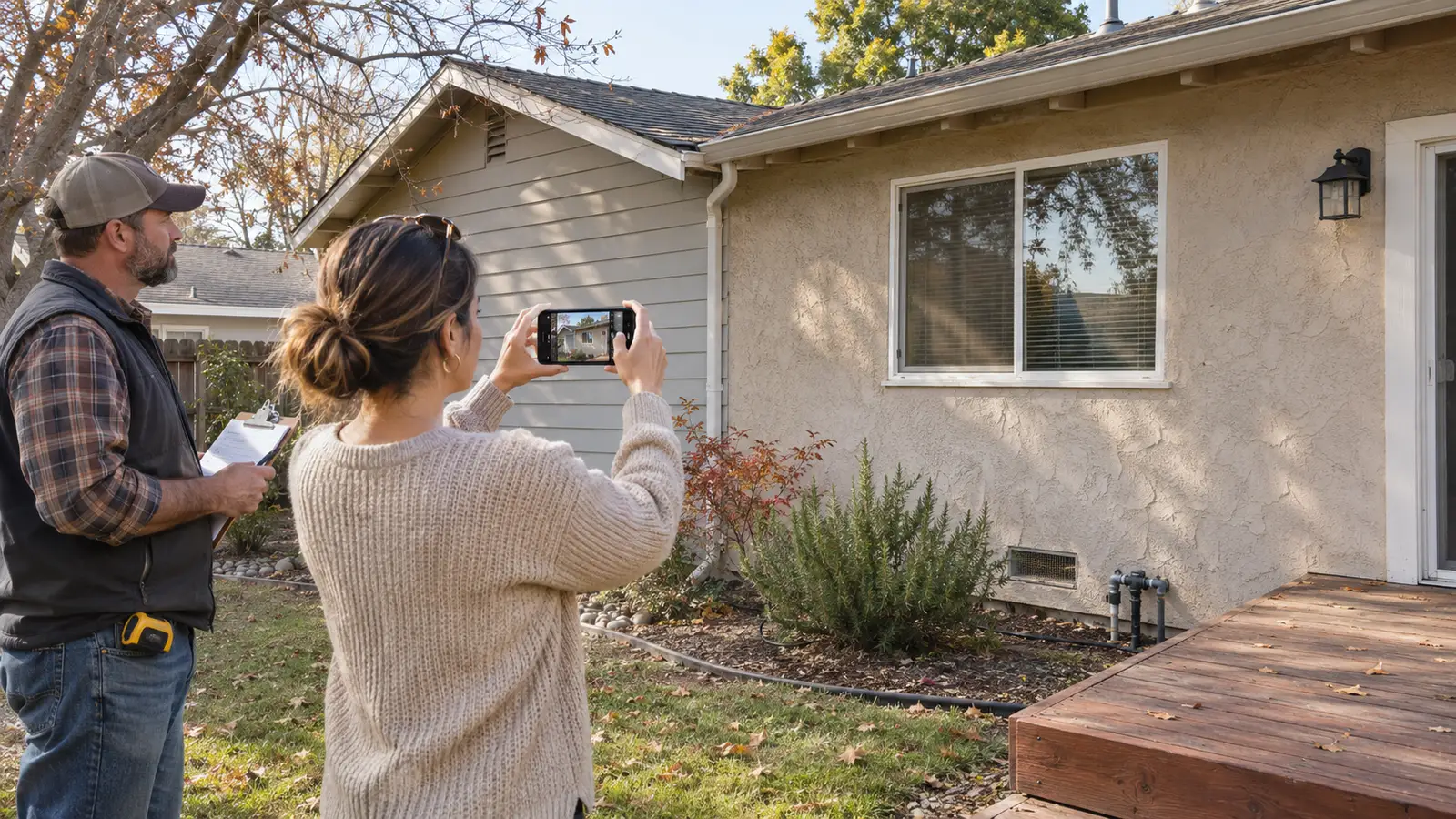
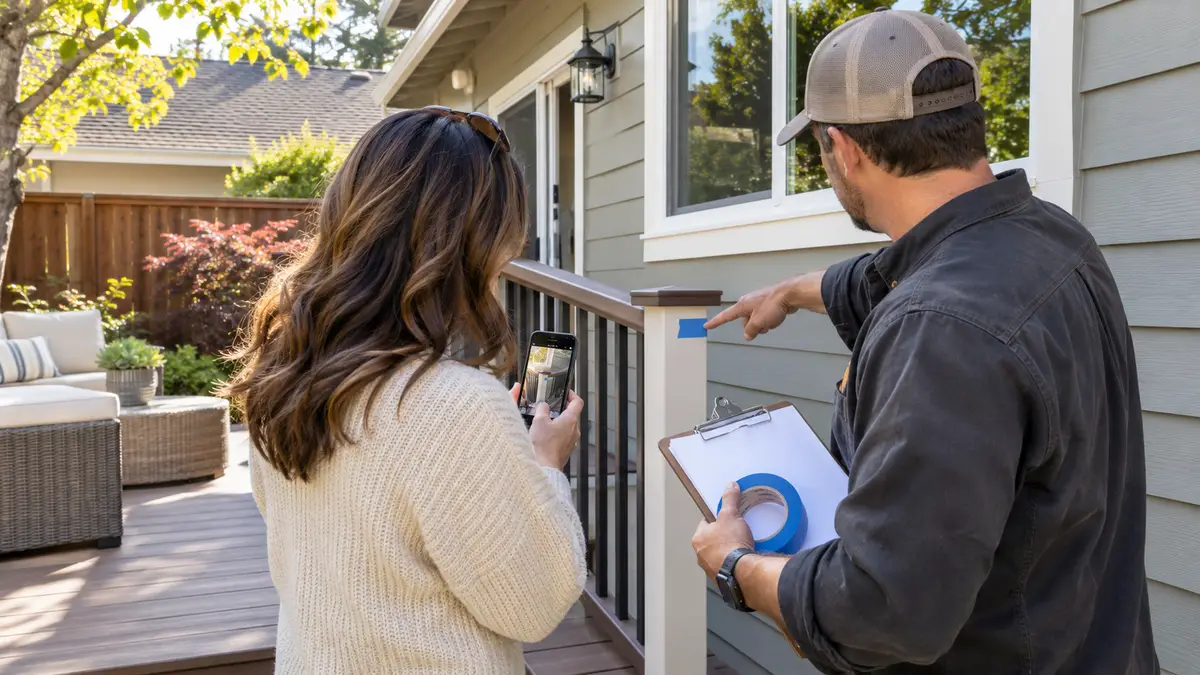
Walk the property with the estimator before materials are ordered. On a photo or sketch, mark:
- Trees, large shrubs, planting beds and lawn that should remain
- Sprinkler heads, drip tubing, valve boxes and controller zones
- Fences, gates, narrow side yards, steps and finished hardscape
- The crew entrance, material path and debris-removal route
- Staging, cutting and waste-container areas
- Scaffolding, ladder and lift locations when known
- Downspouts, drains and low areas where water or debris can collect
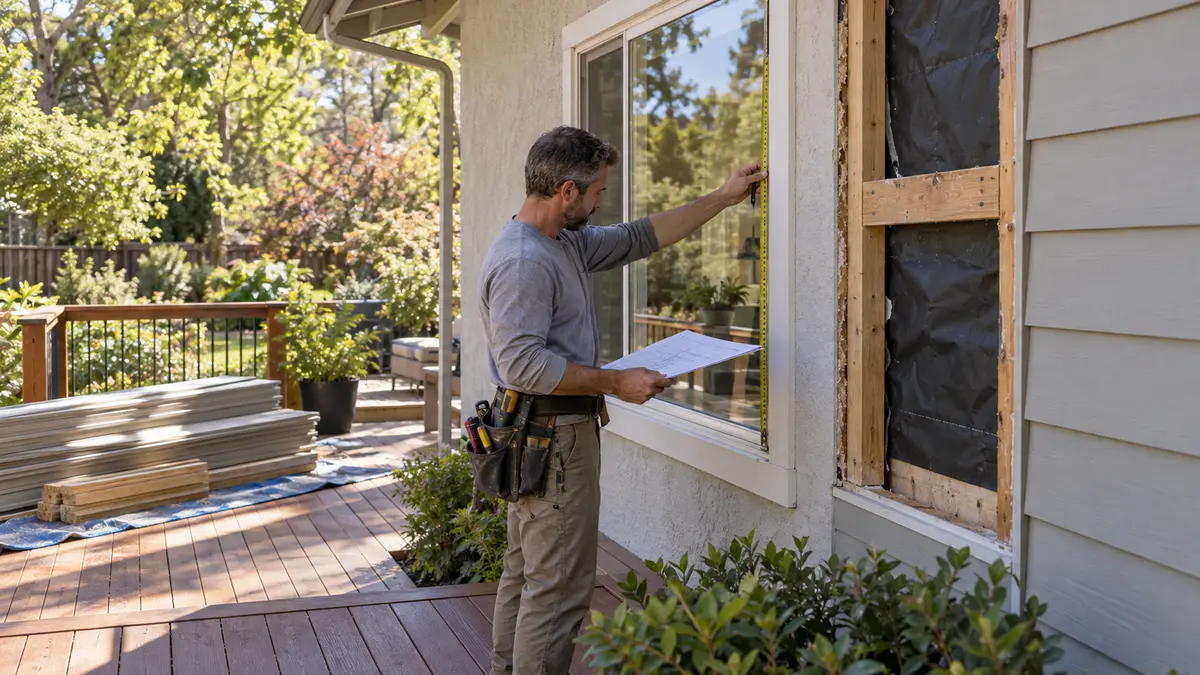
Add measurements at the narrowest access point. A route that works for a person may not work for a siding panel, long fence rail, window unit or cart of demolition debris. If there is no practical route that preserves a bed, decide before work whether selected plants will be relocated by a qualified landscape professional or treated as an explicit restoration item.
Photograph the entire route and the landscaping beside it. Dated, wide-angle photos create a useful pre-work record without pretending to diagnose plant health.
Give trees a real protection zone
A tree trunk wrapped with a board is not protected if workers repeatedly drive, dig or stack materials over important roots. The International Society of Arboriculture explains that a tree's critical root zone can extend far from the trunk and recommends having an ISA Certified Arborist define a tree protection zone when construction may affect it.
Use a stable, visible boundary established for the specific tree and project. Inside that boundary, the plan may prohibit:
- Vehicle and equipment traffic
- Soil, lumber, pallets and dumpster storage
- Trenching or grade changes
- Washout, fuel and chemical storage
- Fasteners, signs or temporary utilities attached to the tree
Do not invent a universal radius from a blog post. Species, size, condition and the planned disturbance matter. If a footing, fence post, scaffold base or access route conflicts with a mature tree, pause the layout and involve an arborist before cutting roots or pruning large branches.
Sacramento also regulates work on City trees and certain private protected trees. The City's Urban Forestry page says an approved permit is required before work on a City or private protected tree. Confirm the address, tree status and proposed work with the responsible jurisdiction rather than assuming normal construction access authorizes pruning or root disturbance.
For deck work involving excavation, use our more specific guide to deck footings near roots, irrigation and hardscape.
Locate irrigation before digging or staging
Run each irrigation zone with the owner before work when it is safe and practical. Mark visible heads, drip emitters, valve boxes and wet areas, then note which zones may need to be isolated. A visible sprinkler does not reveal every lateral line, control wire or buried repair.
Contact 811 before covered excavation and follow the ticket instructions. USA North 811 notes that its utility members mark facilities they own and operate; private lines such as landscape irrigation, landscape lighting and power to a detached structure may not be marked. The scope should therefore state how known private systems will be located and what happens if an unrecorded line is found.
Avoid placing pallets or a debris bin over valve boxes or sprinkler heads. At closeout, test the affected zones with the owner or landscape professional and document any agreed repairs before covering the area with mulch or new planting.
Build one safe access and staging plan
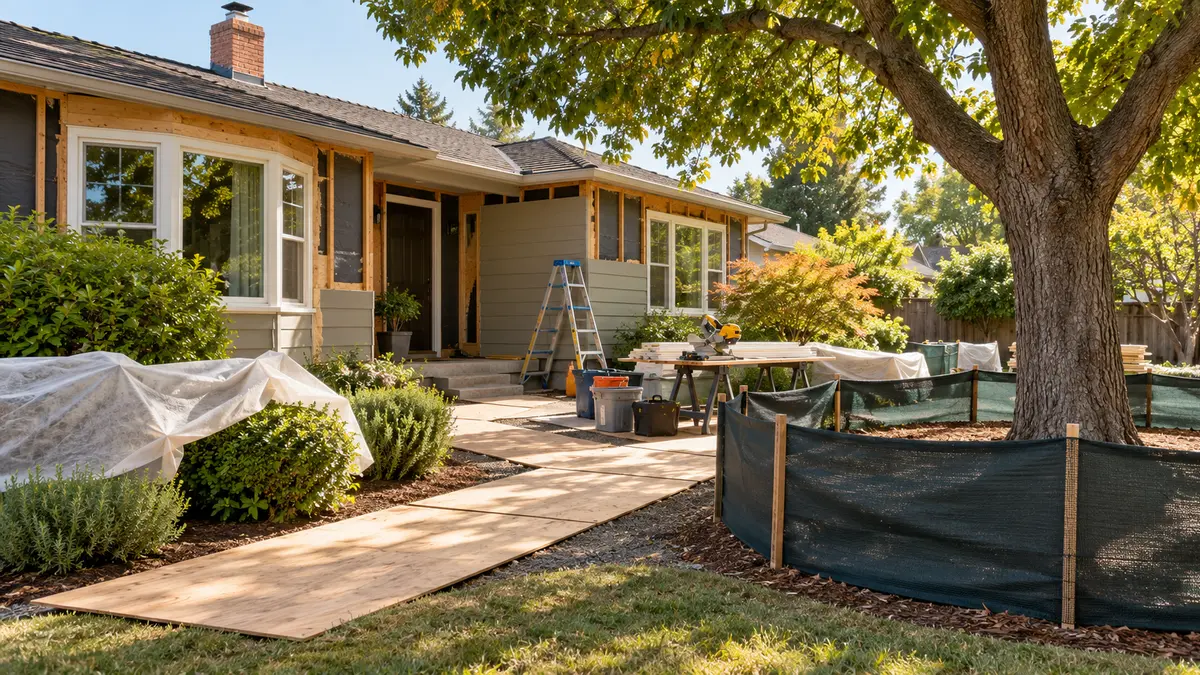
Choose the shortest workable route that avoids root zones and fragile beds. Ground protection should suit the actual surface and load: a light walkway for foot traffic is different from a route carrying equipment or heavy materials. Protection also must not create a trip edge, trap water against the home or conceal an irrigation leak.
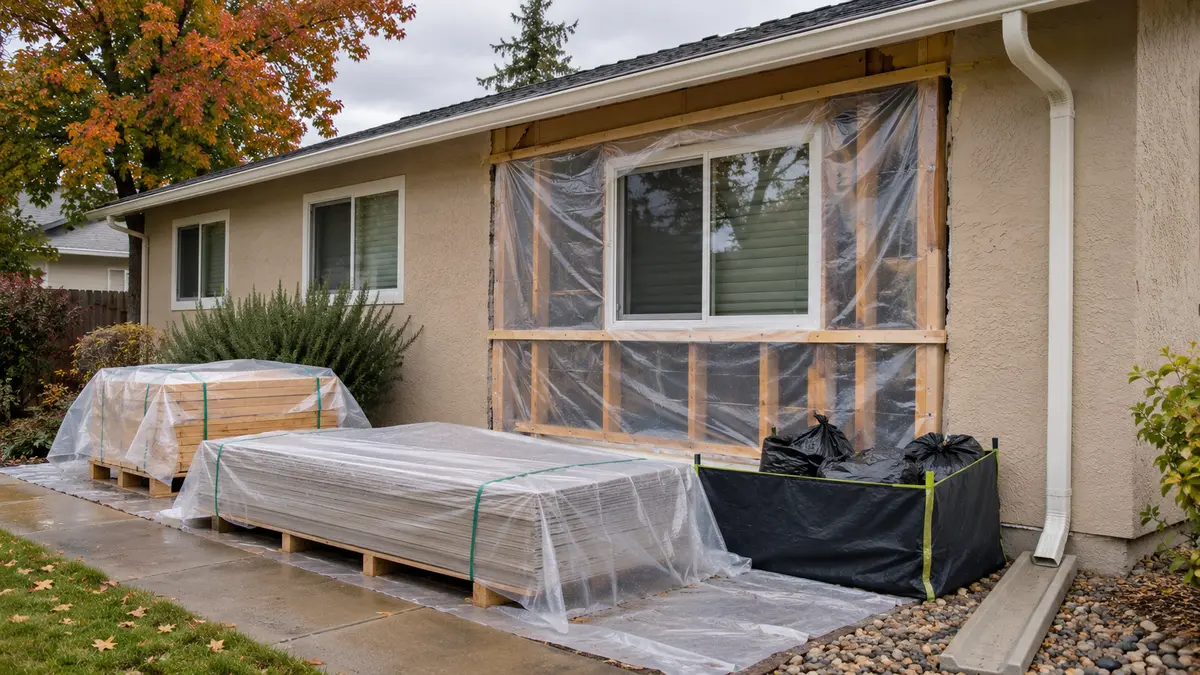
Keep cutting and material staging away from the plants being protected. Siding scraps, sawdust, fasteners and packaging spread farther than the installation area, especially when a path crosses the yard. Define where materials arrive, where demolition debris leaves and where the crew performs cutting before the first delivery.
For projects involving several assemblies, coordinate this plan with the Sacramento deck, siding and window project sequence. Repeatedly moving the same protection for independent crews is less reliable than one shared site plan.
Protect shrubs without overheating them
Prune or relocate plants only with the owner's approval and appropriate plant-care advice. Do not tie branches back so tightly that they split, and do not use a shrub as a support for cords, tools or building materials.
Use breathable, temporary protection where practical and inspect it during the day. An impermeable sheet left directly over foliage in Sacramento sun can trap heat and block air. Protective fabric also should not remain in place longer than needed or interfere with the plant's irrigation plan.
When siding or window work requires clear access to the wall, record the working clearance before the job. “Protect landscaping” is too vague if a large shrub touches the siding and prevents removal, flashing or inspection. The written scope should say whether it stays and is carefully tied back, is professionally relocated, or is removed and replaced.
Control dust, chips and runoff at the source
Protection should catch debris before it settles into mulch, gravel or dense planting. Use containment appropriate to the work and clean it during the project rather than waiting for the final day. Exterior projects that disturb painted surfaces may be subject to additional lead-safe work rules; the applicable requirements depend on the building and scope.
Keep sediment, wash water, paint residue and loose debris out of storm drains. EPA guidance explains that stormwater can carry sediment, debris and chemicals from construction sites into drainage systems and waterways. Dry cleanup and contained waste handling are usually more controllable than washing debris across a driveway or planting bed.
Match protection to the exterior service
Different work creates different landscape conflicts:
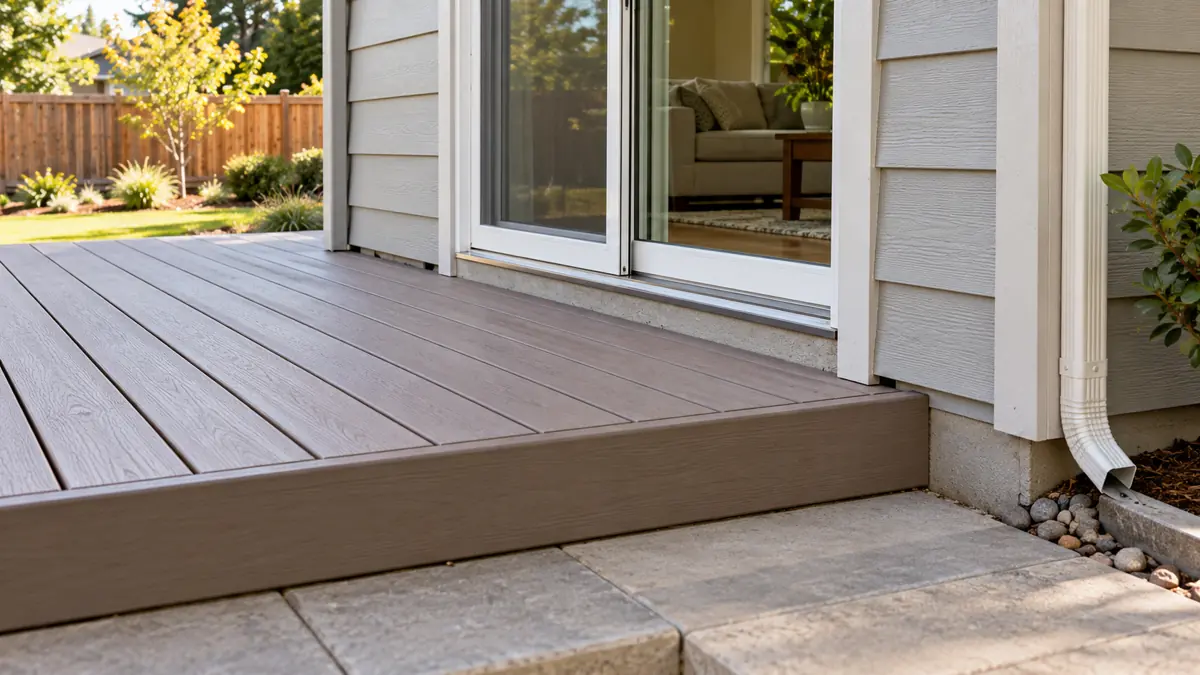
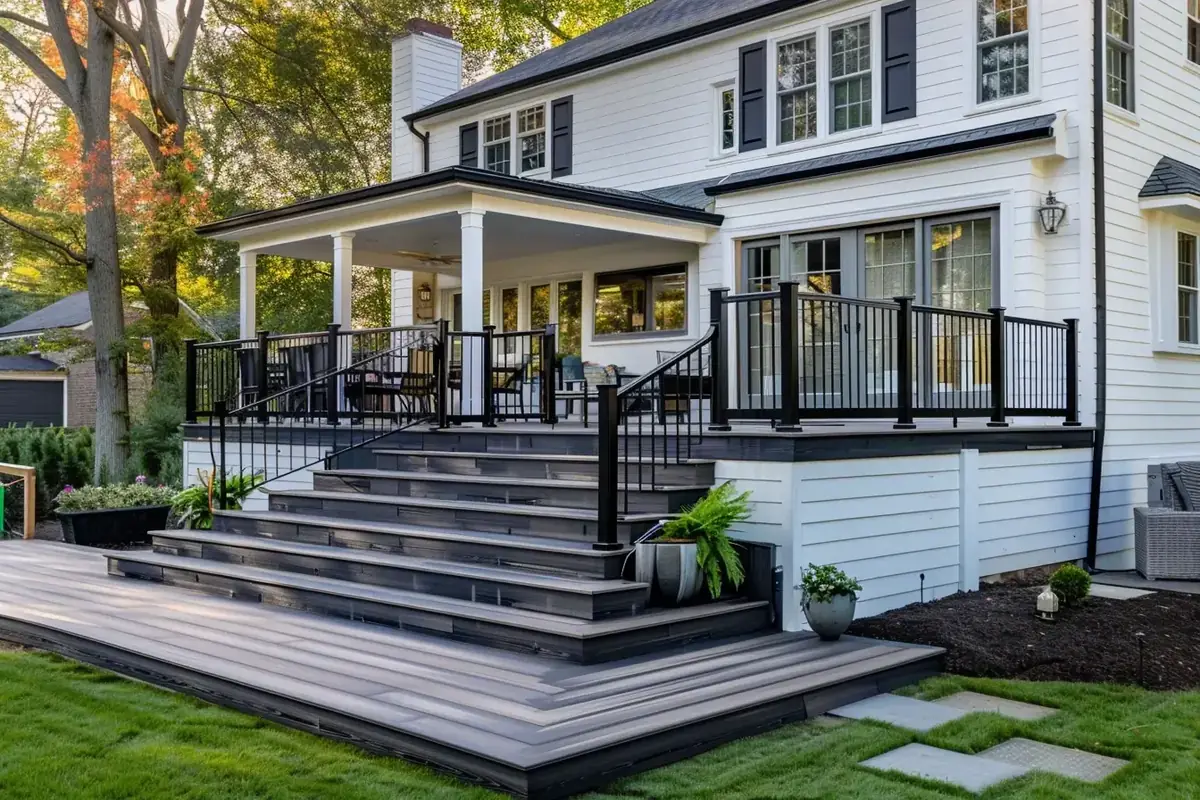
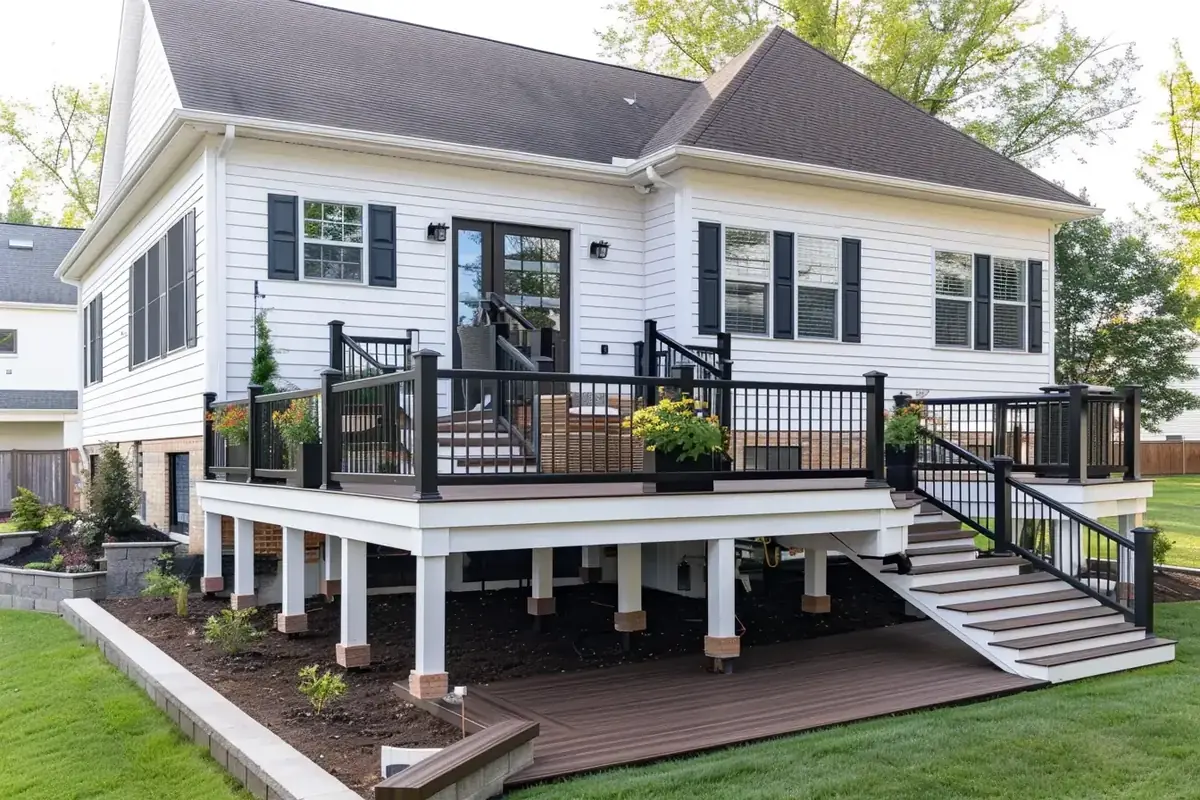
- Decking: footing excavation, long-board delivery, framing access and material storage can affect roots, irrigation and hardscape. Review the Sacramento deck service before the layout is finalized.
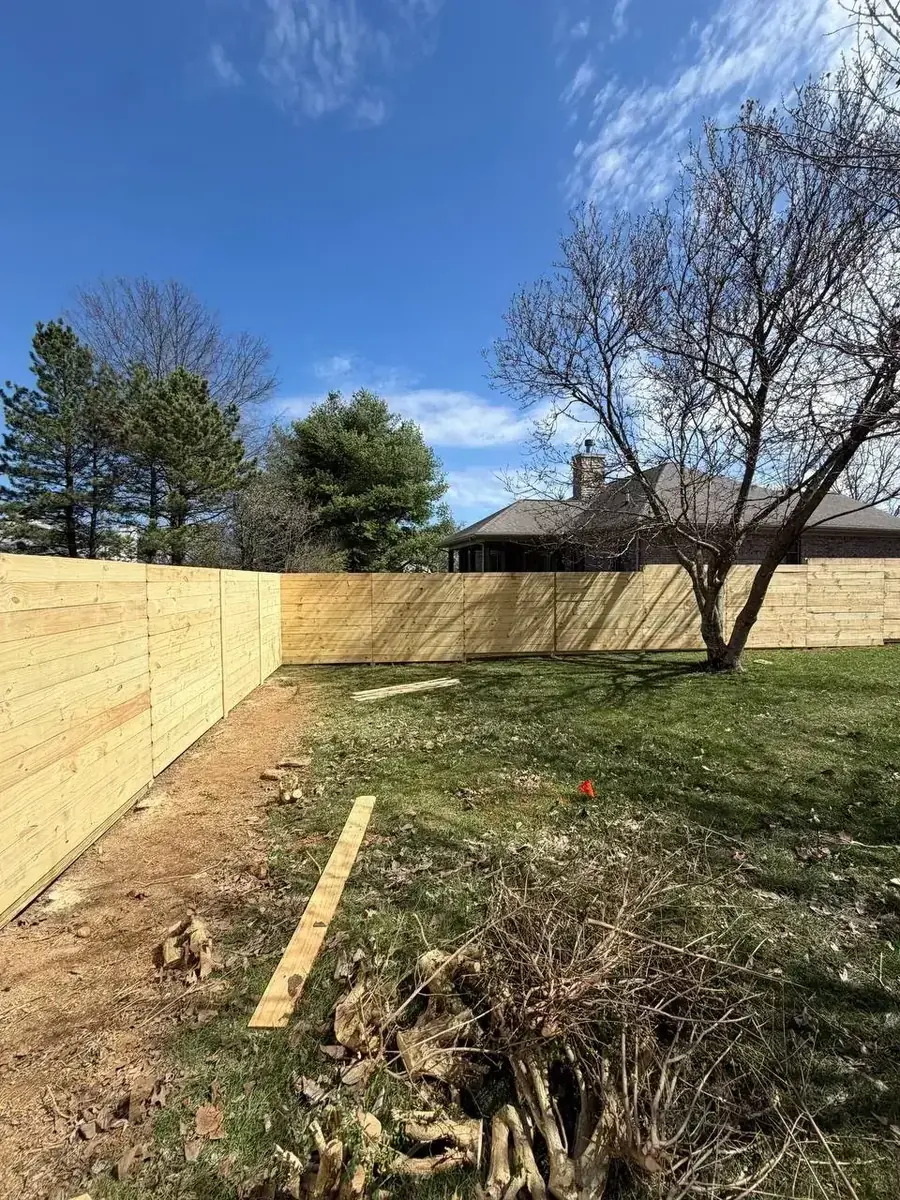
- Fencing: post holes, demolition and access to both sides of a fence may conflict with roots, vines, drip lines or a neighbor's planting. Start with the Sacramento fence service.
- Siding: crews need continuous wall access for removal, flashing and installation; shrubs against the house can hide moisture conditions and restrict ladders or scaffold. See Sacramento siding replacement.
- Windows and sliding patio doors: glass handling needs a clear, stable route, while interior and exterior openings need coordinated dust and weather protection. Review the windows and sliding patio doors service.
The Sacramento service-area page is the strongest local starting point, and the Project Showcase shows completed work without claiming the editorial image on this page is a customer project.
Put restoration and closeout in writing
Before signing, ask the proposal to identify:
- Landscaping and irrigation included in protection
- Approved access, staging, cutting and debris routes
- Plants that must be moved, pruned or removed—and by whom
- Tree-protection responsibility and any arborist or permit coordination
- The process for concealed roots or private lines
- Daily debris and fastener cleanup
- Irrigation testing and landscape restoration at closeout
Walk the route at the end of the job before temporary protection disappears. Check agreed surfaces, beds, valve boxes and irrigation operation, then record any punch-list item with a location and photo. Restoration should follow the written scope, not an assumption that every contractor bid included the same work.
Plan the work around the property—not through it
Yellowstone Renovation can evaluate access, staging and adjacent landscape conditions as part of a Sacramento exterior scope. Request an on-site consultation and share photos of the work area, narrowest access point, mature trees, irrigation and any plant that is important to preserve.
Frequently asked questions
Should I move plants before the contractor arrives?
Move only portable items and plants identified in the agreed plan. A mature shrub or tree may need a landscaper or arborist, and moving it without coordination can remove evidence the estimator needed to plan clearances.
Does calling 811 locate sprinkler and landscape-lighting lines?
Not necessarily. USA North 811 states that member utilities mark facilities they own and operate, while private irrigation, landscape lighting and similar owner-side lines may not be marked. Discuss private locating and known system records separately.
Can a contractor cut a root that blocks a footing or fence post?
Do not treat root cutting as an automatic field adjustment. Root importance varies, and Sacramento tree rules may apply. Stop, document the conflict and involve the designer, arborist and jurisdiction as appropriate before changing the layout.
Who should repair damaged irrigation or landscaping?
The contract should answer that before work starts. Identify what is protected, what is intentionally altered, who performs repairs and how irrigation will be tested at closeout.