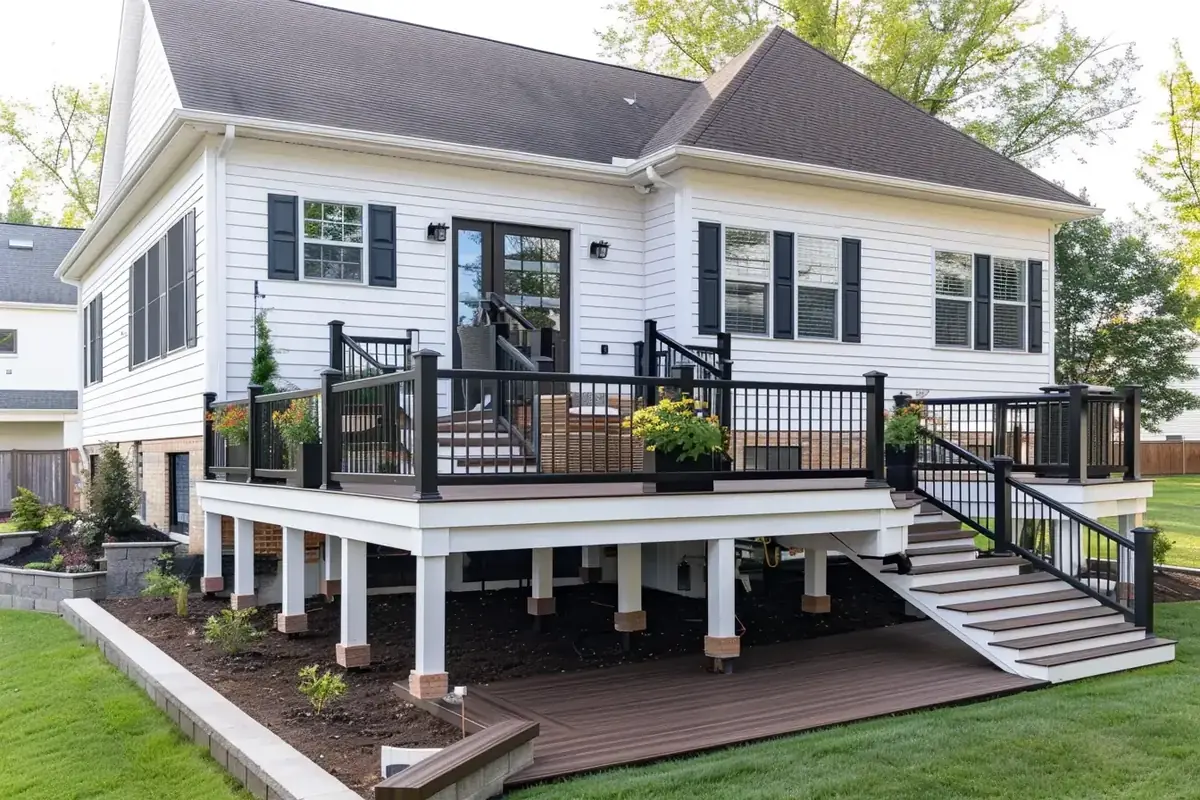

The most useful question for every exterior bidder is: “Can you show me exactly what is included, excluded and assumed?” A low total and a high total are not comparable until both contractors describe the same work. One proposal may include demolition, wall or framing repairs, permits, finish restoration and cleanup; another may include only the visible installation.
Use the following questions before choosing a bid for a deck, fence, siding, window or sliding patio-door project in Sacramento. They are not a substitute for reading the contract or getting legal advice. They are a practical way to turn broad promises into a scope you can compare.
1. What exact area and work does this estimate cover?
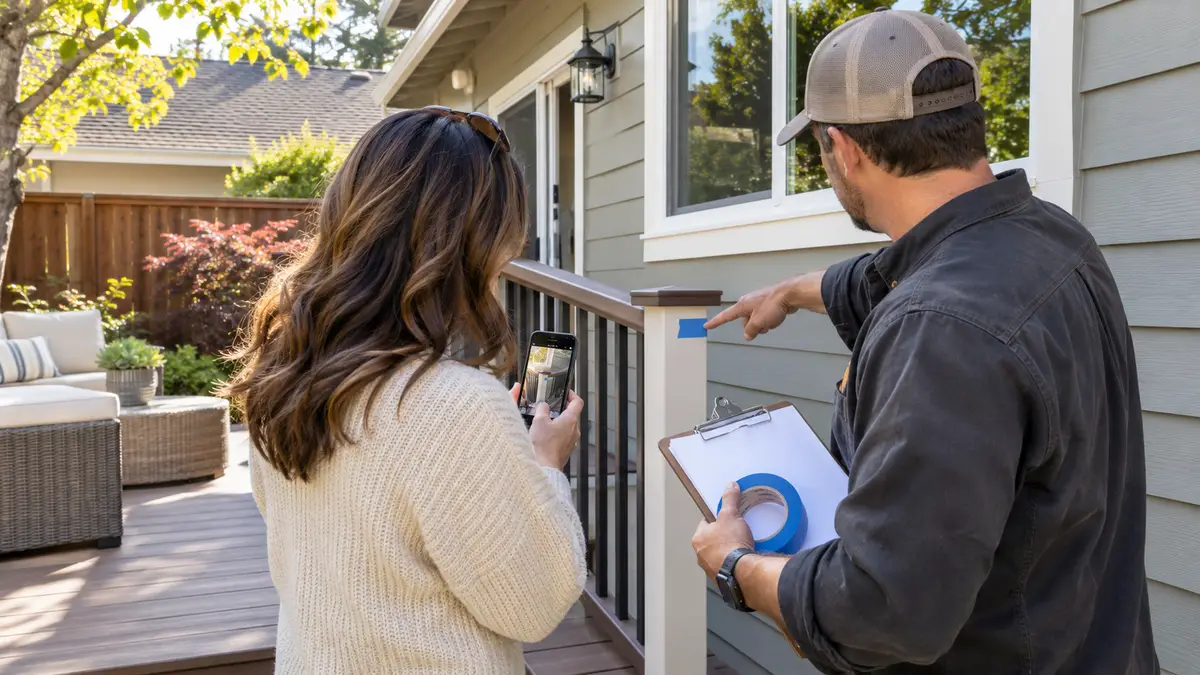
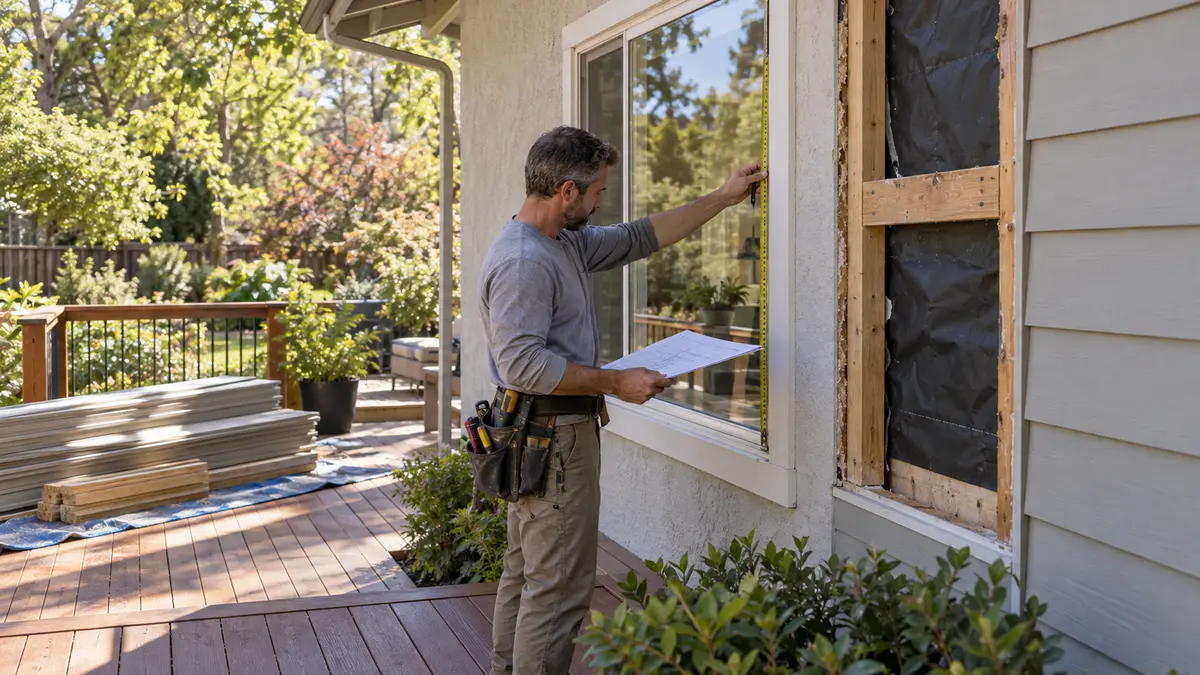
Ask the estimator to mark the work on photographs, an elevation sketch or a simple site plan. The proposal should identify which deck, fence run, wall elevations, window openings or patio door it covers.
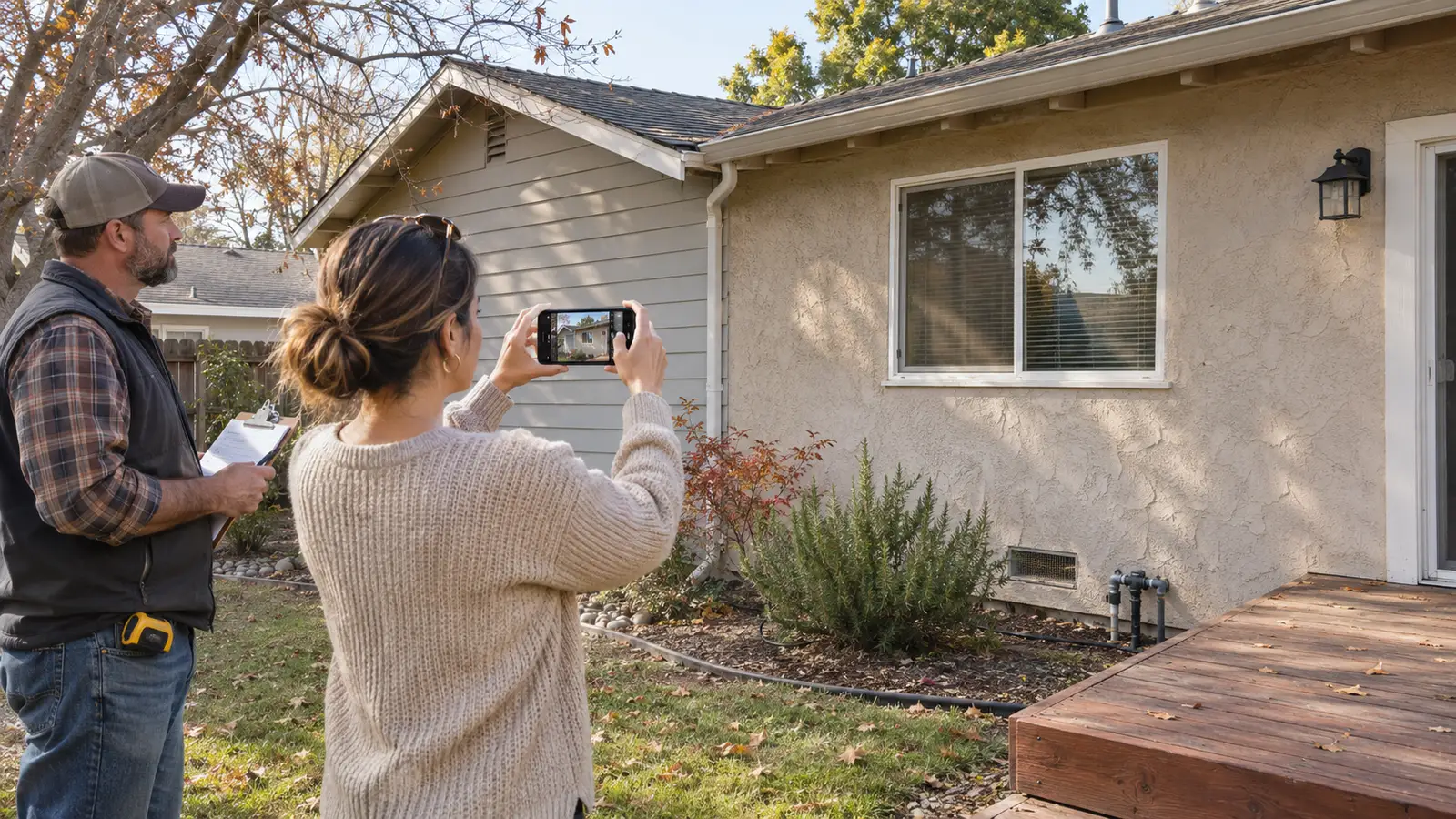
Before anything is removed, use the Sacramento pre-demolition exterior photo checklist to record wide location views, material transitions, site access and items designated to remain. The images should support the written scope rather than replace it.
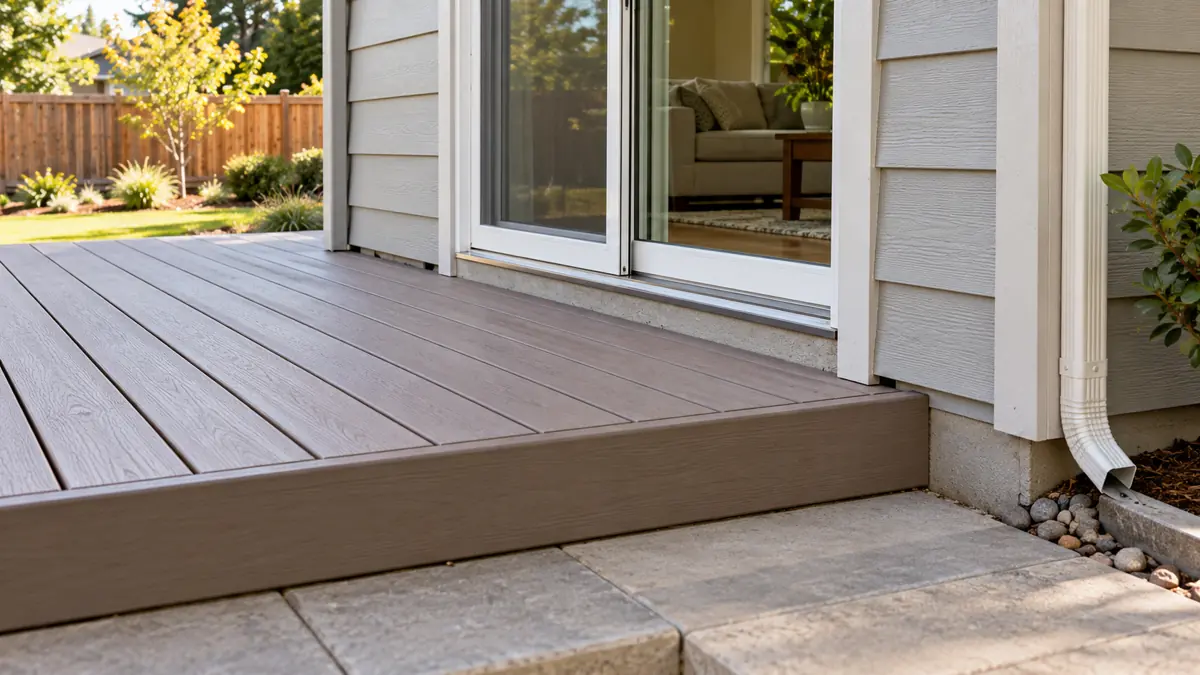
Clarify whether measurements are approximate for budgeting or final for ordering. For multi-trade work, identify every transition where one scope meets another—for example, siding around a new window, a deck beside a patio-door threshold or a fence gate next to existing concrete.
2. Which materials and installation details are specified?
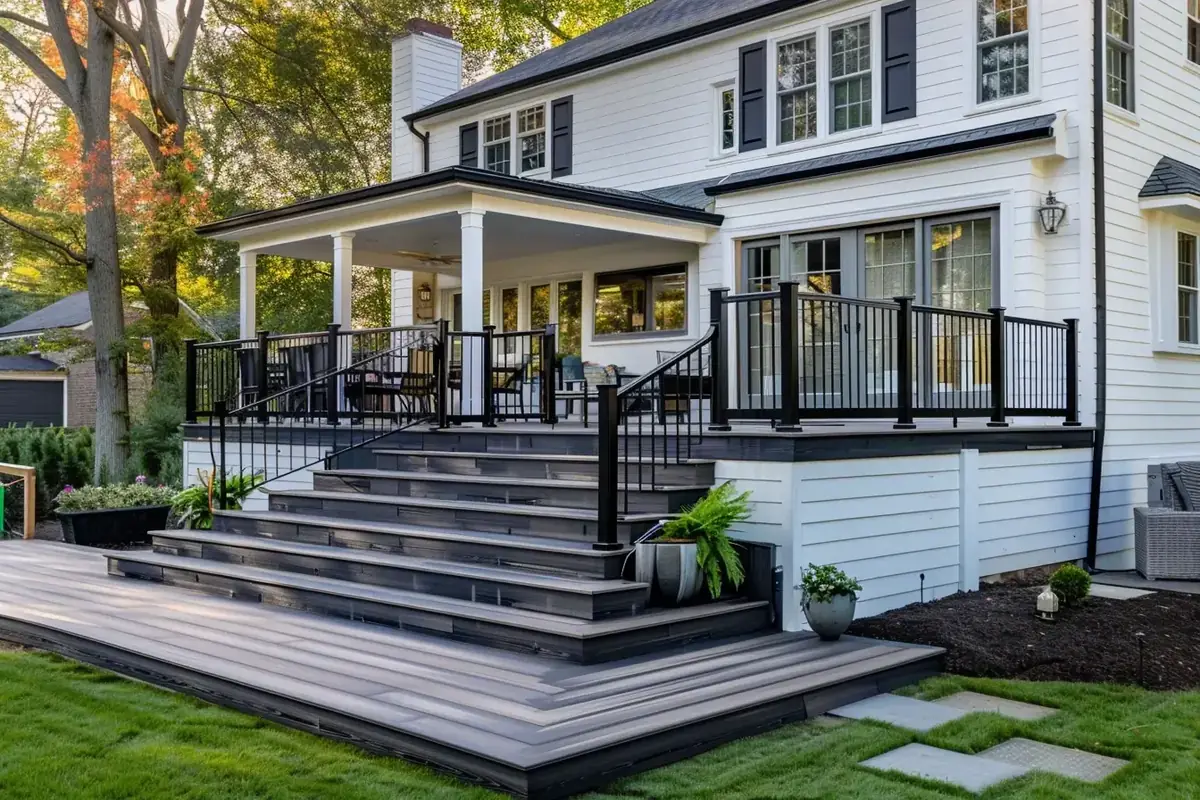
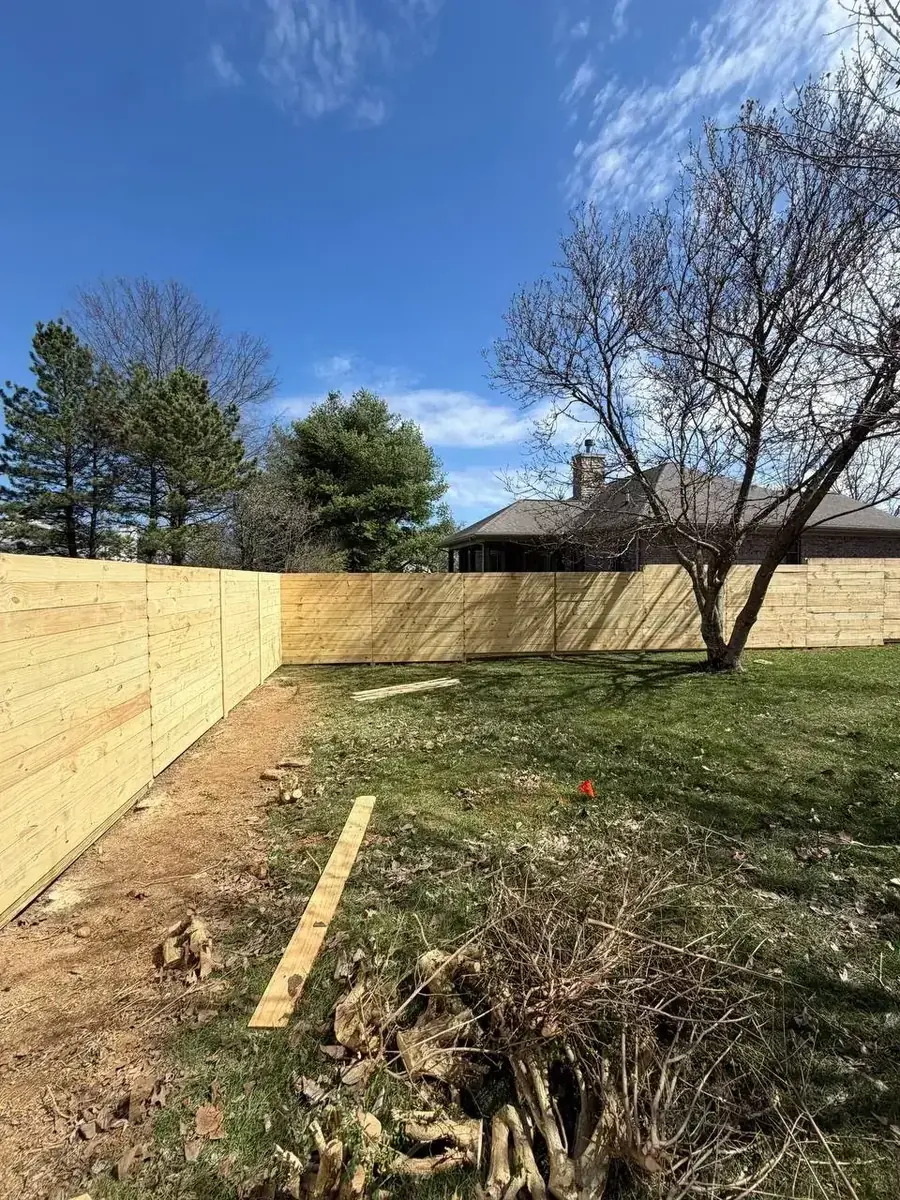
“Composite deck,” “wood fence,” “fiber-cement siding” and “replacement window” are categories, not complete specifications. Ask for the manufacturer, product line, profile, color or finish, visible trim and fastening method when those decisions are known.
The proposal should also identify the less-visible parts that affect the assembly: framing and blocking, posts and concrete, water-resistive barrier, flashing, sill pan, sealants and compatible fasteners. If a selection is not final, the estimate should state the allowance or decision deadline rather than quietly substituting an unspecified product.
3. What stays, what is removed and what is protected?
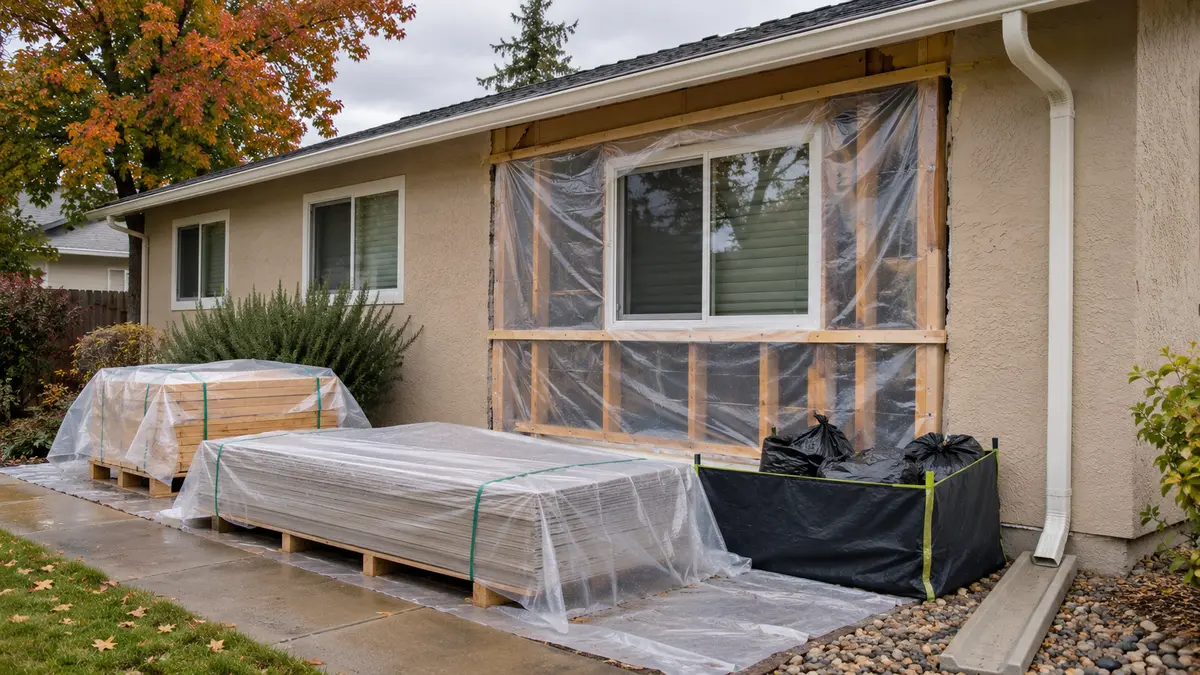
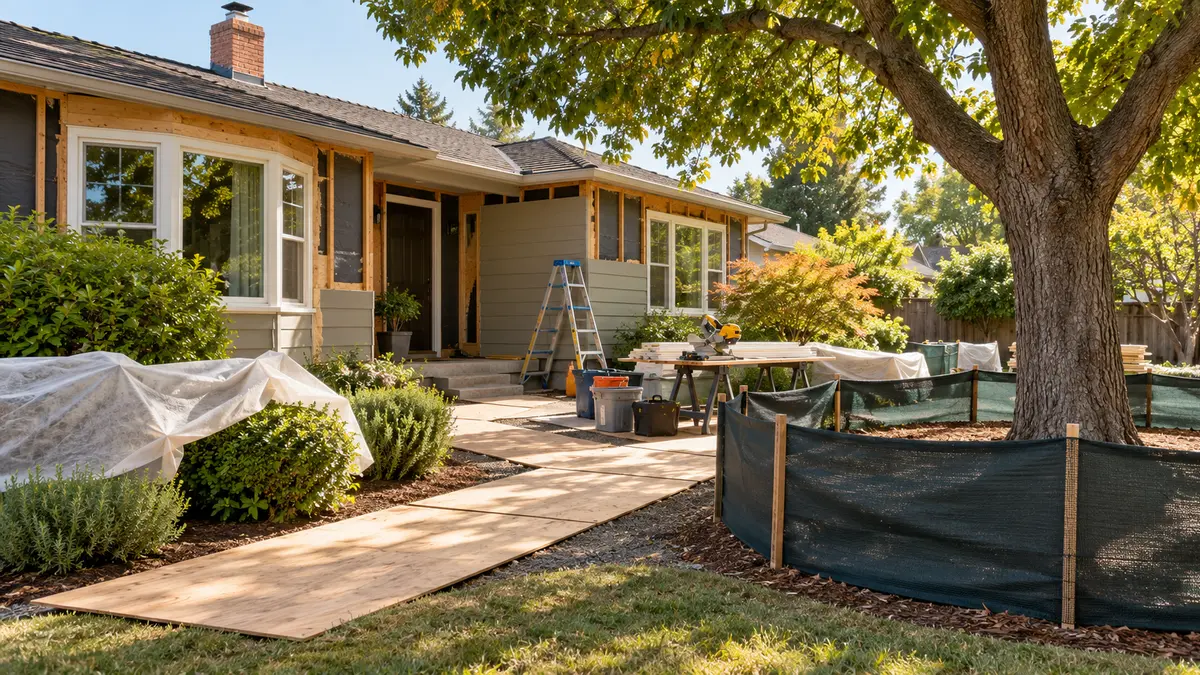
Demolition language should be specific. Ask whether the contractor will remove the existing material, underlayment, trim, fasteners, footings or damaged substrate. Confirm which landscaping, hardscape, interior finishes, irrigation components and reusable materials must be protected.
Also ask where material will be staged and how the crew will reach the work area. A narrow side yard, occupied room, steep grade or finished patio can change the handling plan even when the installed square footage is identical.
If trees, shrubs or irrigation sit beside the work, use the Sacramento landscaping-protection checklist to define root zones, access, staging and restoration before demolition begins.
4. How will concealed damage be handled?
No estimator can verify every joist top, wall cavity, rough opening or buried footing before removal. The important question is not whether the proposal promises “no surprises.” It is whether the proposal defines a fair process when a concealed condition appears.
Ask for a documented inspection point after selective demolition. The process should explain who photographs the condition, how repair options are described, how additional work is priced and who approves it before the crew proceeds. Trade-specific examples are covered in our Sacramento siding estimate guide and deck resurfacing framing guide.
5. Who is responsible for permits and inspections?
Permit requirements depend on the address, jurisdiction and scope. Do not accept “permits are never needed” or “the homeowner can handle it later” as a universal answer. Ask each bidder:
- Which authority is expected to review the project?
- Who confirms whether a permit is required?
- Who prepares and submits the documents?
- Are permit fees included, excluded or listed as an allowance?
- Who schedules inspections and corrects work if an inspection identifies an issue?
For a property inside the city, start with the City of Sacramento's required-permits guidance. A Sacramento mailing address does not by itself establish the permitting authority, so verify the project address before relying on city-specific instructions.
6. Is the contractor's license information current and relevant?
Ask for the business name and license number exactly as they will appear on the agreement, then check the record through the California Contractors State License Board's license lookup. Review the status and classifications rather than treating the printed number alone as proof.
If a salesperson—not the license holder—negotiates the home-improvement agreement, ask whether that person must be registered as a Home Improvement Salesperson and verify the record when applicable.
7. What insurance information will be provided?
Ask how the contractor documents workers' compensation and commercial general liability coverage. CSLB explains that workers' compensation is required when a contractor has employees, while general liability coverage is not universally required; the written contract should disclose information about both.
Do not assume a license bond and liability insurance serve the same purpose. If coverage is important to your decision, request current documentation and verify it with the listed source rather than relying on an old certificate image.
8. What is excluded from the price?
A short exclusion list often reveals more than a long sales description. Ask specifically about:
- Engineering, plans, permits and fees
- Demolition, hauling and disposal
- Rot, sheathing, framing or substrate repair
- Paint, stain, stucco, drywall and interior trim
- Irrigation, electrical, plumbing and landscape restoration
- Furniture moving, dust protection and final cleaning
- Temporary security or weather protection
An exclusion is not automatically a problem. The problem is discovering it after assuming another contractor's broader scope was “the same job.”
9. What schedule assumptions are built into the bid?
Ask for the expected sequence, a reasonable start window and the events that can shift it. Material availability, permit review, inspections, weather, site access and approved change orders can all affect timing.
For work involving several exterior systems, request a sequence that protects water-management details rather than scheduling each trade independently. Our Sacramento deck, siding and window sequence guide shows why openings, flashing, siding and final deck work sometimes need coordinated inspection points.
10. How are payments connected to progress?
The agreement should show the contract price, down payment and progress-payment schedule. Ask what completed milestone supports each payment and what documentation you receive.
CSLB's consumer guidance says the standard home-improvement down payment may not exceed 10% of the contract price or $1,000, whichever is less, subject to a limited blanket-bond exception. It also warns homeowners not to pay for work not completed or materials not delivered. Verify the current rule and any claimed exception directly with CSLB before signing.
11. How will change orders work?
Ask to see the process before demolition begins. A change order should describe the added or removed work, price effect and schedule effect, and it should be approved in writing before the changed work proceeds.
Avoid relying on “we will figure it out later.” Exterior projects often expose conditions that genuinely could not be seen during estimating. A written process protects both homeowner and contractor by separating the original scope from a documented discovery.
12. What will closeout include?
The final stage should be more than collecting the balance. Ask whether closeout includes:
- A homeowner walk-through and written punch list
- Required final inspections
- Cleanup and disposal
- Product care and warranty documents
- Photographs of details that will become concealed
- Confirmation that doors, windows, gates and drainage paths operate as intended
When work is nearly complete, use the Sacramento exterior-work punch-list guide to document each item by location, scope reference, agreed correction and follow-up evidence.
If the bidder references a previous job, use it to understand workmanship and scope—not to assume the same product, site condition or result will apply to your property. Yellowstone Renovation's Project Showcase provides examples across exterior work, while the Sacramento service-area page outlines the local starting point.
Compare bids on one page
Create one row for each question and one column for each bidder. Write the proposal page number beside every answer. If an item is unclear, ask for a written clarification or revised scope instead of filling the blank with your own assumption.
The goal is not to force every contractor into the same construction method. It is to expose meaningful differences: one bidder may propose more demolition because the existing assembly cannot support the intended detail; another may propose a narrower repair with a defined inspection hold point. Once those differences are visible, the homeowner can evaluate scope, risk and value—not just the bottom-line number.
Request a scope-based Sacramento exterior estimate
Yellowstone Renovation evaluates Sacramento deck work, siding replacement, fence projects and windows or sliding patio doors within the services shown on this site. Request an exterior consultation and bring the same photographs, priorities and questions you give every bidder so the proposed scope can be compared fairly.
Frequently asked questions
Should I automatically choose the lowest exterior bid?
No. First confirm that each bid covers the same area, materials, demolition, repairs, permits, finish work and cleanup. A lower price may be valid, but it may also describe less work.
How many written bids should I obtain?
CSLB recommends obtaining at least three written bids and comparing identical plans, specifications and scope. The useful comparison is not the number of bidders alone; it is whether each bidder had the same project information.
Can a contractor provide a final price without opening the wall or deck?
A contractor can price the visible, defined scope, but some concealed conditions cannot be confirmed before demolition. The proposal should identify assumptions and provide a written review-and-change-order process for discoveries.
Is an estimate the same as the final contract?
Not necessarily. Before work begins, review the actual agreement and verify that the scope, materials, price, payments, permits, schedule, exclusions and promised clarifications are included. Do not rely on verbal additions that never reach the written contract.