A draft at a closed window can come through the moving sash, through joints in the window frame, or around the entire unit where it meets the wall. The repair depends on which boundary is leaking. A sash leak may call for adjustment, hardware or weatherstripping; a frame-to-wall leak can require trim removal and careful rough-opening air sealing. Replacing glass alone does not fix either problem.
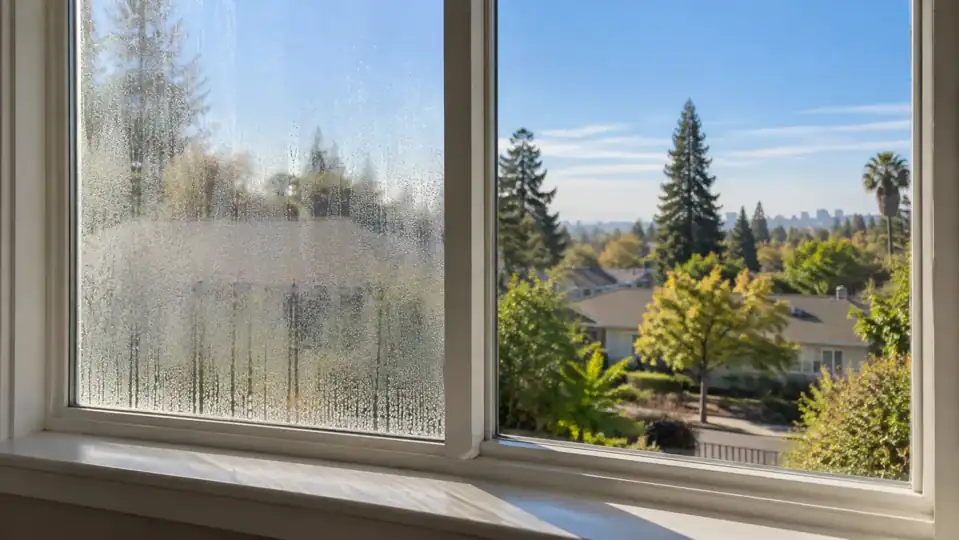
This diagnostic guide is deliberately separate from our article on condensation versus insulated-glass seal failure. Fog between panes is a glass-unit issue. Air that moves around a window is an air-control issue, even when both symptoms appear at the same opening.
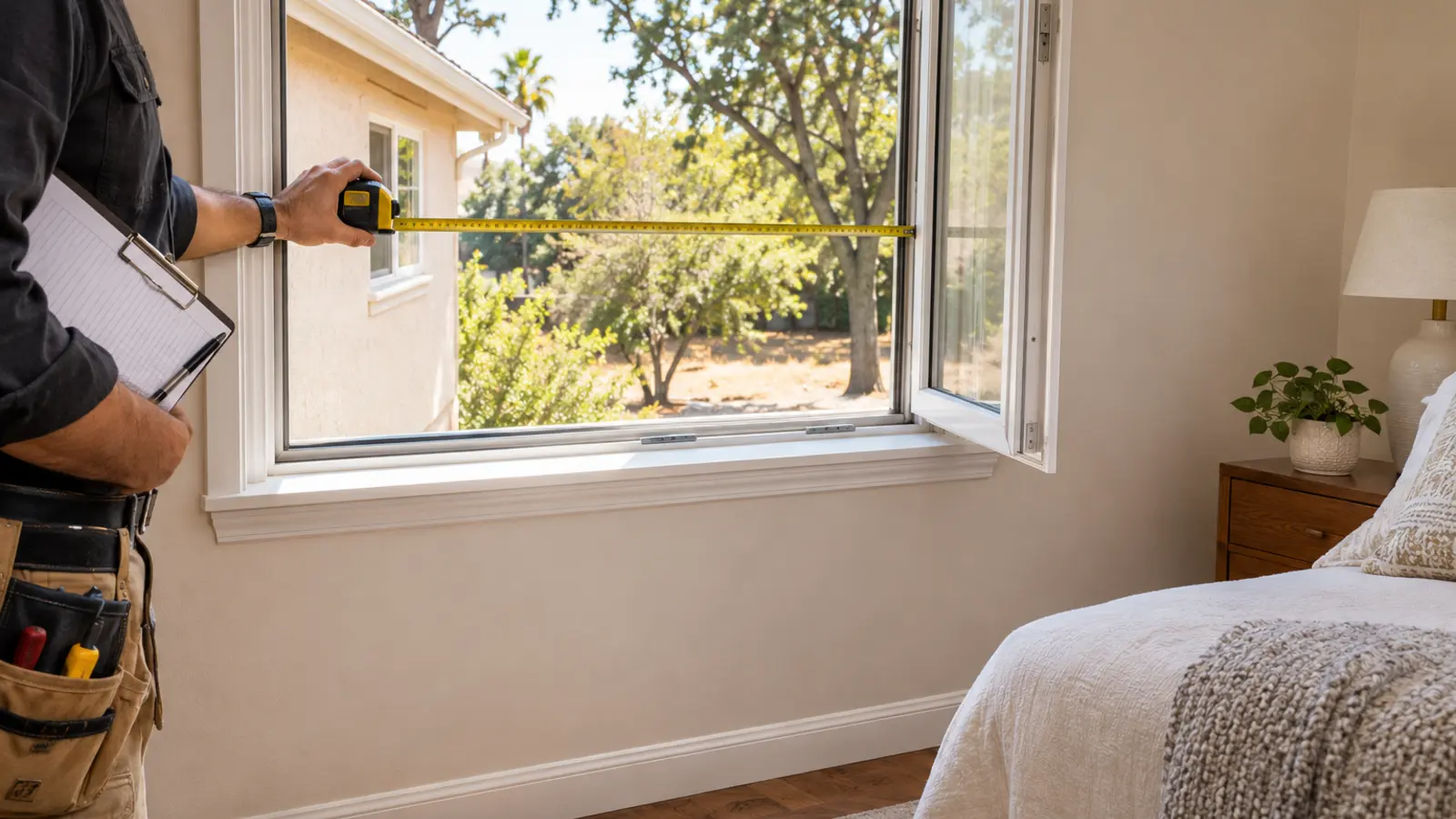
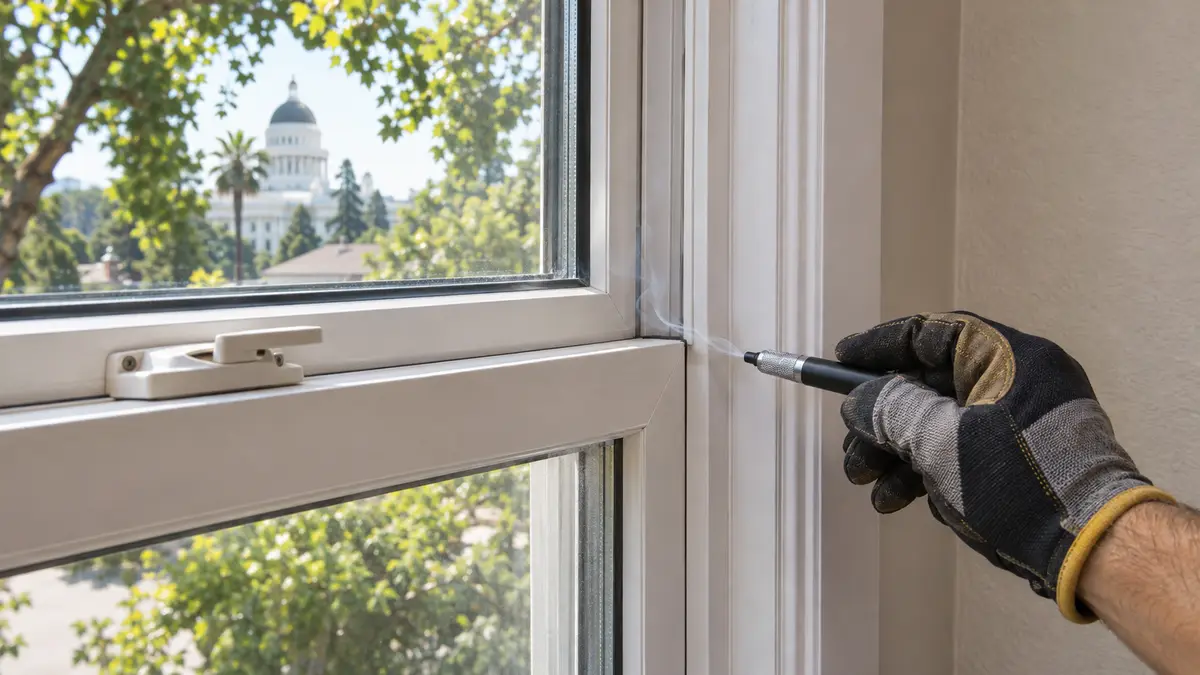
The image above is an original editorial illustration of a diagnostic method, not a Yellowstone Renovation completed-project photograph.
First, confirm that the sensation is moving air
A cool or warm sensation beside glass is not automatically a leak. Glass can create a descending convection current on a cold day or radiate heat toward the room after strong sun exposure. A supply register, ceiling fan or leaky wall outlet can also move air near the window.
Start with the window fully closed and locked. Move a thin tissue or purpose-made smoke pencil slowly around the sash edges, meeting rails, frame corners and interior casing. Compare the suspect window with a similar window on the same wall. Do not use a candle, lighter or other open flame around curtains, finishes or foam materials.
Whole-house pressure affects the result. Exhaust fans, a clothes dryer or a strong wind can make a small leak easier to feel. Record those conditions instead of treating one quick test as a complete diagnosis.
Three leakage boundaries point to three different scopes
1. Air at the sash-to-frame joint
The sash is the operable part that slides, swings or tilts. If tissue or smoke moves only where the closed sash meets the frame, inspect:
- Weatherstripping that is missing, compressed, torn or out of its track
- A lock or keeper that no longer pulls the sash evenly against the seal
- Dirt, paint or debris preventing full closure
- Worn rollers, balances, hinges or other operating hardware
- A sash or frame that is bowed or out of square
A useful comparison is to test the window unlocked, then locked. If the movement drops when the lock engages, sash compression or alignment deserves attention. Do not simply add a second layer of generic foam tape. It can interfere with drainage, operation and locking without correcting worn or misaligned parts.
Repair can be reasonable when the sash and frame are sound and compatible replacement weatherstripping or hardware is available. If the frame is distorted or the sash cannot close uniformly, a small seal replacement may not last.
2. Air through a frame joint or hardware opening
Window frames have corners, tracks, balance pockets, weep systems and product-specific fastener locations. Air concentrated at a corner or hardware opening can indicate a failed joint, missing cap, damaged component or frame distortion.
Keep drainage paths open. Weep holes and tracks are designed to move incidental water outward; caulking them shut can trade a draft complaint for trapped water. The correct repair follows the manufacturer’s details for that exact window, not a blanket bead across every opening.
For an older window with unavailable parts, compare a targeted repair with the remaining condition of the glass, frame, locks and surrounding wall. Our window replacement warning-sign guide explains when repeated component failures justify a broader estimate.
3. Air between the window frame and the wall
If air movement is strongest at the interior casing, stool, drywall return or joint between trim and wall, the likely path is outside the operable sash. The gap between the window unit and the framed rough opening may be missing a continuous air seal, or an old seal may have separated.
The U.S. Department of Energy’s rough-opening guidance distinguishes this gap from the window itself. It recommends an appropriate air seal such as backer rod, caulk or low-expansion foam intended for windows and doors. Fibrous insulation alone does not stop airflow.
Diagnosis may require carefully removing interior casing. The repair should preserve the exterior water-management path: air sealing from the room side is not permission to block the sill’s drainage or cover an unidentified water leak. If staining or soft material appears, pause and determine whether flashing, siding or stucco also needs attention.
Use location, not just draft strength, to guide the estimate
Create a simple opening-by-opening record before requesting work:
| Observation | More likely area to investigate | Possible scope |
|---|---|---|
| Air follows the moving sash edge | Weatherstripping, lock or sash alignment | Clean, adjust, replace compatible seals or hardware |
| Air changes when the window is locked | Sash compression or keeper alignment | Hardware and squareness evaluation |
| Air is concentrated at a frame corner | Frame joint or product component | Manufacturer-specific repair or replacement evaluation |
| Air emerges behind casing or at the wall joint | Frame-to-rough-opening air seal | Controlled trim removal and perimeter air sealing |
| Draft appears with water staining | Opening, flashing or adjacent wall | Water-path investigation before cosmetic sealing |
| Several windows repeat the same pattern | Product, age or repeated installation detail | Inspect representative openings before setting scope |
This table is a diagnostic starting point, not proof by itself. Air can travel through a wall cavity and emerge at trim some distance from the original opening.
What blower-door and infrared testing can—and cannot—show
A blower door creates a controlled pressure difference across the house. Used with a smoke pencil, it can make leakage paths visible and help distinguish one window from broader wall or ceiling leakage. The Department of Energy’s Building America guidance specifically describes blower-door and smoke-pencil checks around rough openings.
Infrared imaging can reveal surface-temperature patterns, but a cold or warm area is not automatically air movement. Glass temperature, solar exposure, missing insulation and thermal bridging can create similar patterns. Interpret the image together with pressure and smoke testing rather than using a thermal picture as a stand-alone diagnosis.
Decide between adjustment, perimeter repair and replacement
Adjustment or component repair
This is the narrowest scope. It may fit a sound window with serviceable locks, rollers, balances or weatherstripping. The estimate should name the parts, operation test and warranty rather than promising only to “seal the window.”
Interior perimeter air sealing
This can fit a sound window whose rough-opening gap is accessible behind casing. The scope should include trim removal and reinstallation, the specified sealant or low-expansion window-and-door foam, protection of drainage paths, interior finish repair and a verification test.
Insert or full-frame replacement
Replacement becomes more relevant when the unit is distorted, deteriorated, unsafe to operate or no longer repairable. An insert keeps more of the existing frame; a full-frame installation exposes more of the opening and provides better access to flashing and air-sealing transitions. Review the tradeoffs in our Sacramento retrofit-versus-full-frame window guide.
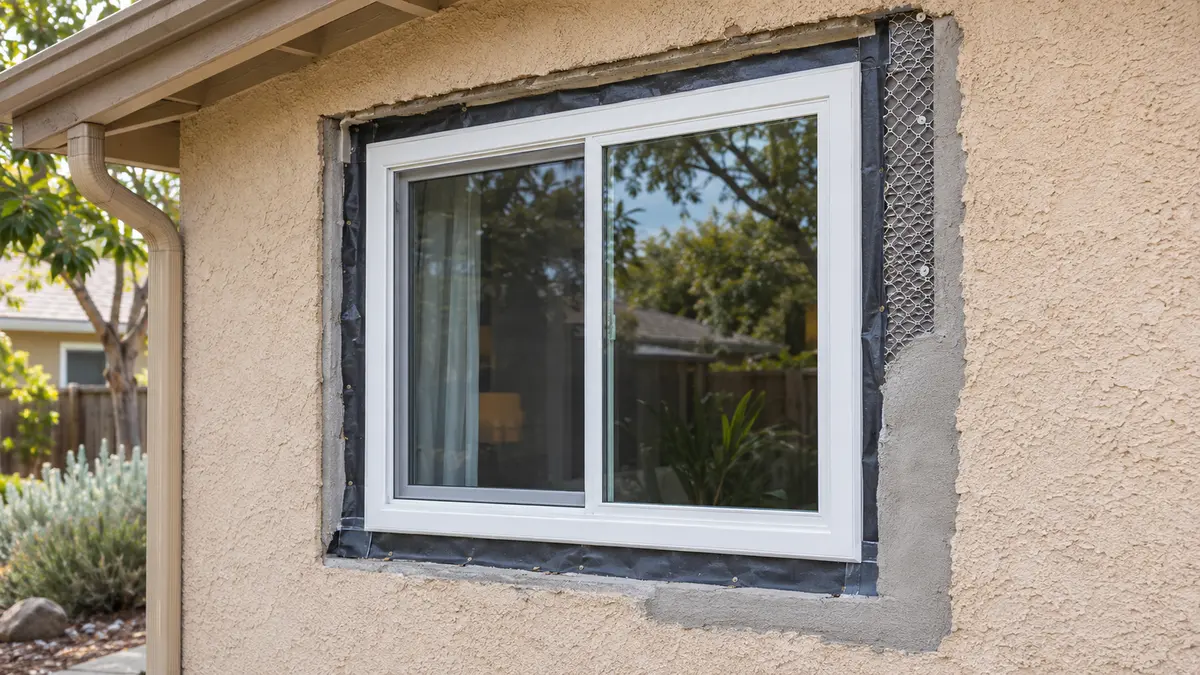
When stucco must be opened, use a coordinated proposal for the window, flashing and finish restoration. Our window and stucco scope checklist shows what that estimate should define.
Sacramento permit and planning note
Small adjustments or weatherstripping are not the same scope as window replacement or opening alteration. The City of Sacramento currently includes window replacements in its required building-permit guidance. The address, jurisdiction, installation method and opening changes determine the applicable process, so verify the requirement before ordering work.
For replacement products, compare the exact label and certified data rather than relying on a model name alone. The National Fenestration Rating Council explains that its residential certification covers U-factor, solar heat gain, visible transmittance, air leakage and condensation performance. Product air-leakage ratings describe the tested window unit; they do not certify the field-installed connection between that unit and the wall.
Plan a window air-leak evaluation
Yellowstone Renovation provides window replacement services for Sacramento-area homes. Review the Sacramento service-area page and the company’s Project Showcase to understand its exterior-remodeling work, then request an on-site consultation.
Before the visit, note which windows leak, the exact edge where air appears, whether locking changes it, and whether there is staining or difficult operation. That information helps keep a weatherstripping repair from turning into an unnecessary replacement—or a concealed installation leak from being covered with cosmetic caulk.
Frequently asked questions
Can I caulk between the sash and frame?
Not if the window is meant to open. Permanent caulk across an operating joint can disable the window and may block drainage. Use the compatible weatherstripping or hardware specified for the product after confirming the leak location.
Does a draft mean the insulated-glass seal failed?
No. A failed insulated-glass seal causes fog or moisture between panes; a draft is air moving through or around the assembly. The same old window can have both problems, but one does not prove the other.
Will new windows fix every draft around the opening?
Only if the installation scope addresses the actual path. A good replacement unit can still leak at the perimeter if the frame-to-wall air seal is incomplete. The proposal should identify how that connection will be sealed and verified.
Should every drafty window be replaced?
No. Serviceable weatherstripping, locks or balances may solve a sash leak. Replacement is more reasonable when the frame or sash is distorted or damaged, parts are unavailable, operation is unsafe, or the opening needs a broader water- and air-management repair.