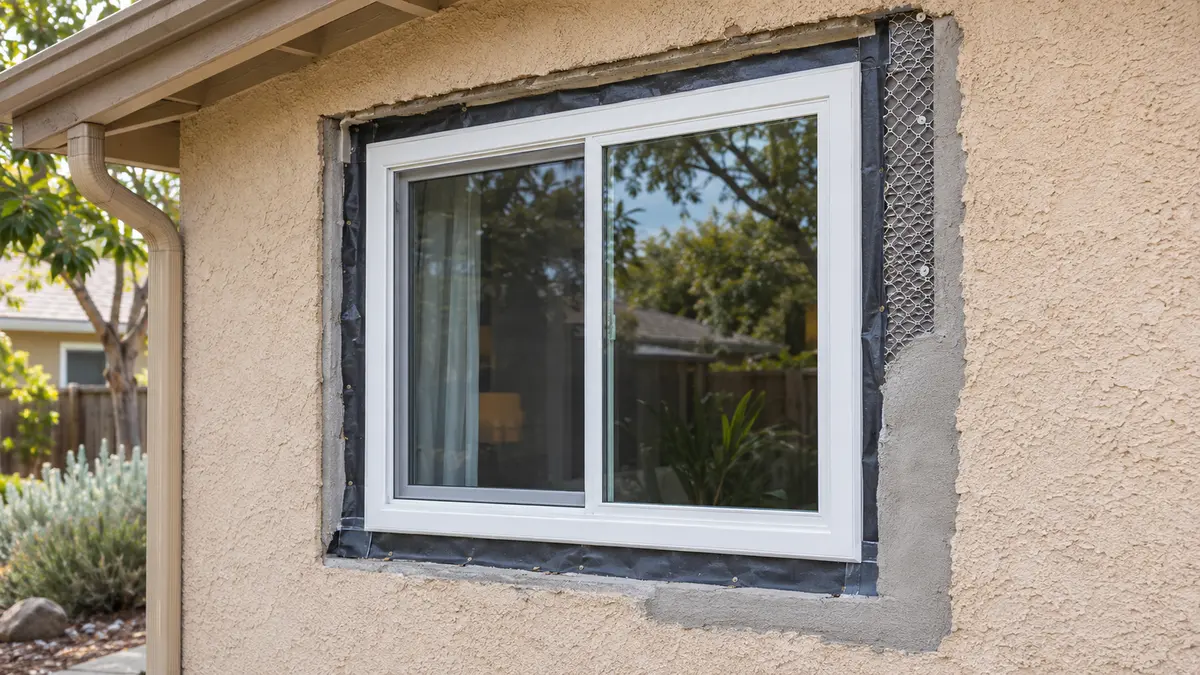
When a window replacement disturbs stucco, the proposal should treat the window opening and the stucco restoration as one coordinated water-management scope. It should identify how much finish is expected to be removed, who repairs flashing and weather-resistive layers, how lath and stucco are rebuilt, what texture and paint matching are included, and how concealed damage changes are approved.
This is narrower than choosing an insert or full-frame window. Our Sacramento insert-versus-full-frame guide explains what stays and what comes out. This article focuses on the repair zone around a stucco opening after that installation method is selected.
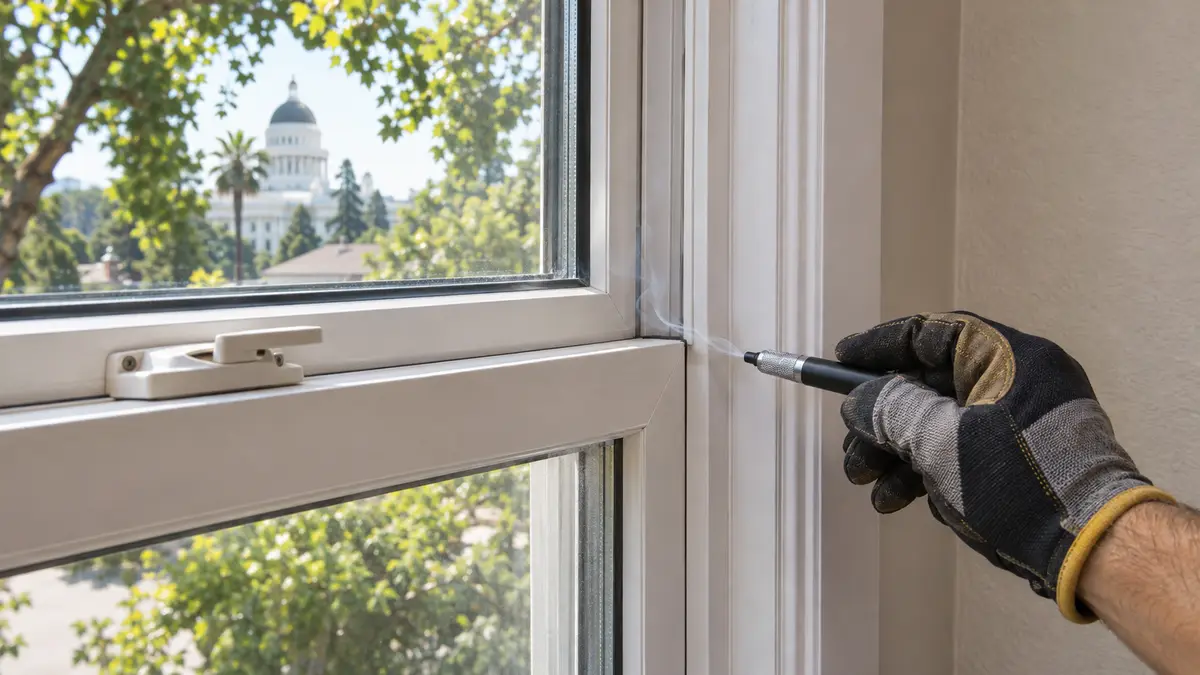
The image above is an original editorial illustration of the repair concept, not a Yellowstone Renovation completed-project photograph.
Start with the exact window installation method
A flush-fin or insert installation may retain the existing frame and avoid opening the stucco when that frame is sound and the product is approved for the condition. Andersen, for example, describes a flush-fin replacement designed to fit within an existing frame on a stucco home, but also directs installers to use the complete instructions for the exact unit.
A full-frame or nail-fin installation usually exposes more of the opening. It may require controlled stucco removal to reach the rough opening, reconnect flashing and inspect concealed materials.
The estimate should not say only “retrofit” or “new construction.” It should show:
- Which old frame components remain
- Whether the stucco is intended to remain intact or be cut back
- The planned window flange, block-frame or flush-fin condition
- How the sill, jamb and head connect to the existing wall
- Which interior and exterior finishes are disturbed
The method can vary by opening. A sound bedroom frame may suit an insert while a leaking kitchen opening needs full-frame access.
Define the stucco demolition boundary before work begins
“Patch stucco as needed” is not a complete scope. Ask for the expected cutback around each affected opening and the conditions that could expand it.
Removal needs enough access for the specified flashing and stucco tie-in without needlessly damaging sound wall area. The extent may change when demolition reveals loose stucco, damaged paper, corroded lath or an unsound old patch.
A useful scope identifies:
- The assumed repair width around the opening
- Protection for glass, roof surfaces, landscaping and interiors
- How stucco is cut to limit uncontrolled cracking
- Who removes debris and protects the opening overnight
- The approval process if sound material is farther away than expected
Avoid a fixed promise that every patch will be identical before the underlying conditions are visible.
Flashing, paper and lath come before the finish coat
The visible texture is the last layer, not the water-management plan. The U.S. Department of Energy's Building America guidance says existing openings should be evaluated for water intrusion and damage before replacement. When full removal is appropriate, adjacent trim or cladding may need to come off so the rough opening can receive new flashing.
The repair sequence should address:
- A sill pan or approved sill-flashing detail
- Jamb flashing that laps over the sill treatment
- Head flashing integrated to direct water outward
- Connection to the existing weather-resistive barrier or building paper
- Repair or replacement of damaged sheathing before covering
- Lath attachment and compatible transitions to sound existing work
- Preservation of designed window drainage paths
The Stucco Manufacturers Association publishes separate details for nail-flange windows, sill pans and window conditions in stucco walls. Those resources show why one surface bead of sealant cannot substitute for layered flashing and wall integration. The selected window and stucco systems still control the project-specific detail.
Separate known work from concealed conditions
The contractor can inspect visible conditions before demolition but cannot guarantee that hidden paper, framing and sheathing are sound. Use a hold point after removal and before covering. State who photographs the opening and how price or schedule changes receive written approval.
Common concealed findings include:
- Soft or stained sheathing
- Prior reverse-lapped flashing
- Missing or torn paper
- Corroded lath or fasteners
- Framing that is out of square
- Old patches with incompatible or loose edges
Do not let a broad “wood repair included” sentence hide an unlimited allowance. Define the included quantity or unit basis and the change-order process.
Specify all stucco restoration layers
The patch description should identify more than color. Restoration can involve paper or WRB, lath, base coats and the finish coat. Assign responsibility for each layer and any return visits.
Ask these questions:
- Is this a finish-only repair or a full-depth patch to the wall assembly?
- What material and lath system will connect to the existing work?
- How will patch edges be prepared?
- Which base and finish coats are included?
- Who provides texture samples and approves the closest match?
- Is painting limited to the patch, the surrounding wall section or the full elevation?
Texture can often be blended closely, but an invisible match should not be promised. Existing paint has weathered and previous repairs may use another texture. Define the blend area and realistic appearance standard.
Coordinate paint, trim and interior restoration
Exterior completion may require primer and paint beyond the patch. State whether the price includes a spot blend, wall section or another defined limit. Record color and sheen instead of relying on “match existing.”
Also identify:
- Exterior trim, foam bands or decorative details
- Interior casing, stool and apron
- Drywall or plaster returns
- Interior paint and caulk
- Screens, blinds and window coverings
- Final cleaning and glass protection
If the wall will later receive new siding, coordinate the opening before closing either project. Our guide to replacing siding around existing windows explains WRB, trim and future-window decisions from the siding side of the same junction.
Schedule inspection before the stucco hides the opening
The applicable authority depends on the address. The City of Sacramento lists window replacement among work requiring a permit and currently provides application bundles for residential window and door permits. Its electronic plan-check page identifies residential window changeout as a minor-permit type that generally does not require plans, while commercial projects do.
Sacramento County separately states that a permit is required for retrofit and cut-in replacement. Its published policy calls for a rough-frame inspection when a new window is installed or an opening changes, before exterior stucco or siding is added.
The proposal should identify:
- Who confirms the jurisdiction
- Who obtains the permit
- Which inspection is required before patching
- Who schedules and attends it
- What documentation remains at closeout
Do not cover flashing, framing or the flange before a required inspection simply to keep the stucco crew moving.
Use a line-item checklist for every affected opening
For each window, record:
- Window ID, size, operation and installation method
- Retained and removed components
- Expected stucco cutback and protection
- Rough-opening inspection and concealed-condition procedure
- Sill, jamb and head flashing method
- Paper/WRB and lath restoration
- Stucco base and finish layers
- Texture sample and acceptance method
- Exterior and interior paint boundaries
- Trim, drywall, screens and cleanup
- Permit, inspection and photo responsibilities
This turns a vague allowance into a scope the trades can follow in sequence.
Plan a Sacramento window and stucco scope
Yellowstone Renovation provides window replacement in Sacramento and can coordinate the opening with exterior finish work. Review the Sacramento service-area page, browse the company's exterior Project Showcase and request an on-site window consultation.
Bring interior and exterior photos of every opening, note any leak history, and identify prior stucco patches. The site visit should determine which openings can retain their surrounding finish and which need a planned repair zone.
Frequently asked questions
Does every replacement window require cutting stucco?
No. Some approved insert or flush-fin installations retain a sound existing frame and avoid opening the stucco. Full-frame or nail-fin work generally needs more access. The existing frame, leak history, product instructions and project goals determine the method.
Can stucco texture be matched perfectly?
A skilled repair can often blend texture closely, but age, prior repairs, aggregate, application technique and paint weathering affect the result. Define the sample, blend area and paint boundary rather than promising invisibility.
Who should repair the flashing—the window installer or stucco contractor?
The proposal should assign the work by name and show the handoff. One contractor may perform both scopes, or separate trades may coordinate them, but flashing and the wall's weather-resistive layer must be inspected before lath and stucco cover the opening.
What happens if rot is found after stucco removal?
Pause at the documented inspection point, photograph the condition and obtain an approved repair scope before covering it. The original proposal should explain any included allowance and how additional work is priced.