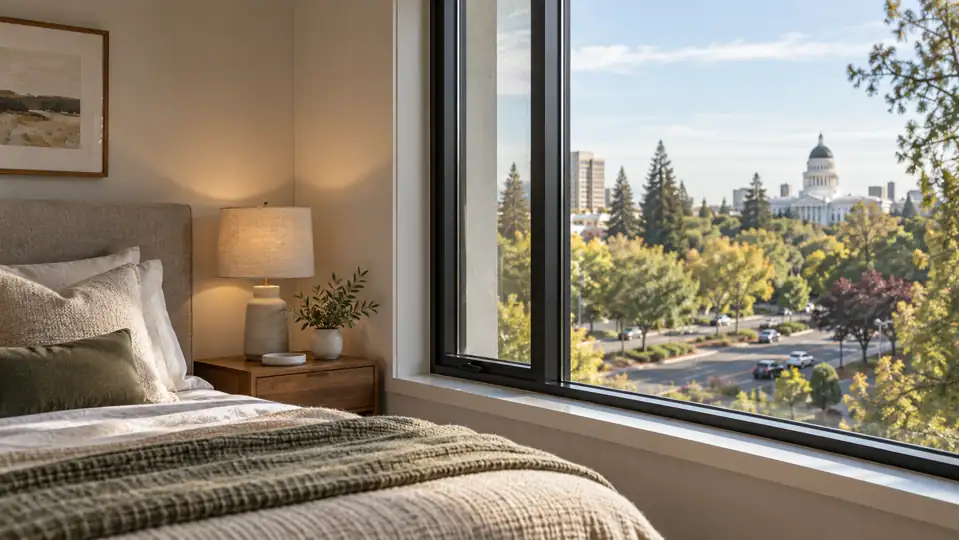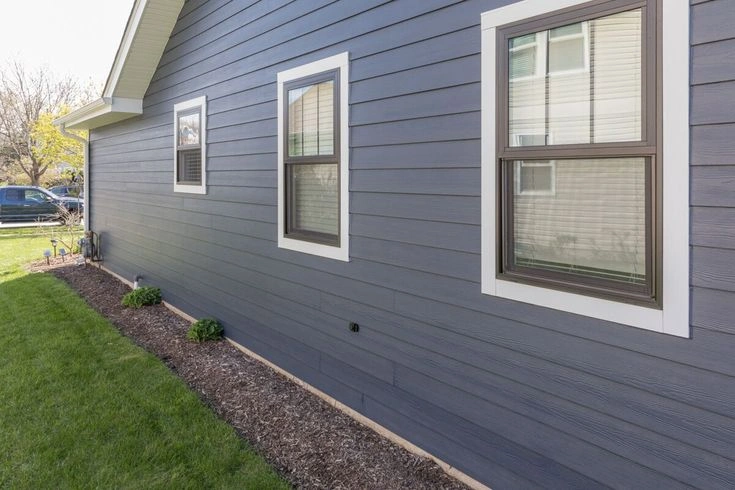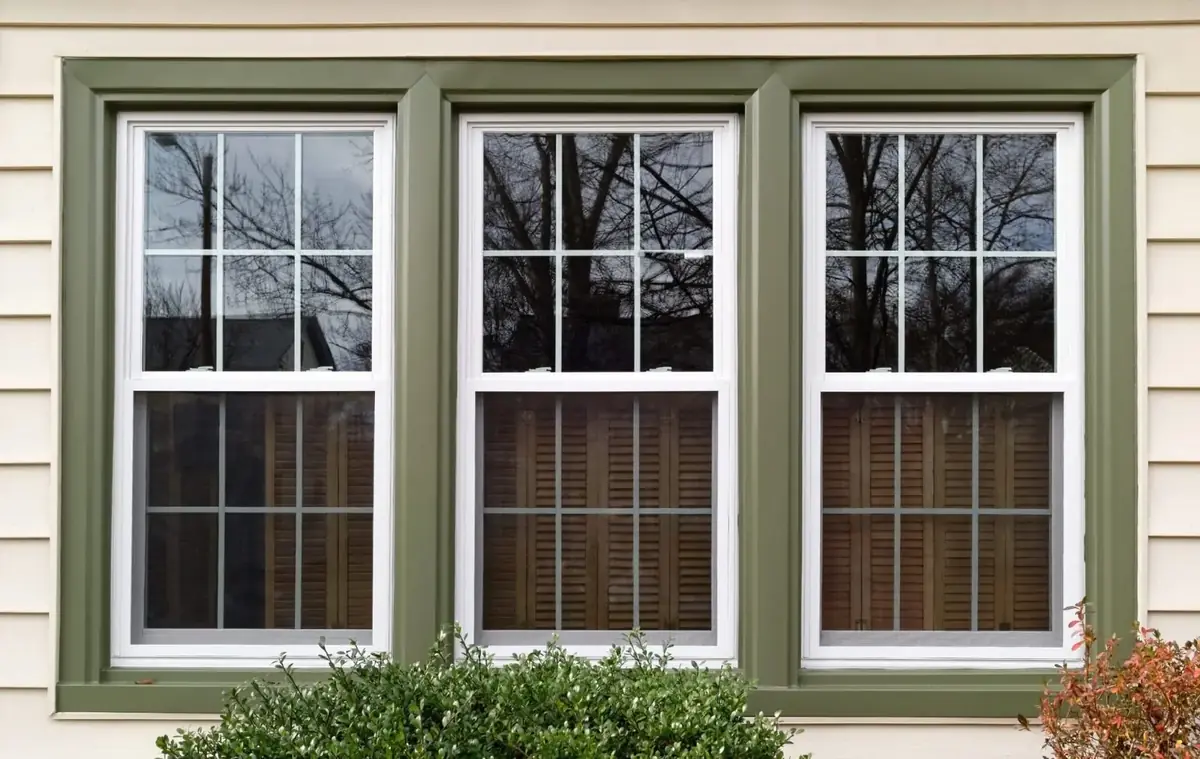
A hot west-facing room does not automatically need new glass or a full window replacement. First document when the room becomes uncomfortable, confirm that direct afternoon sun is the trigger, and test a safe temporary shade outside the glass. If the room improves while the window remains shaded, solar exposure is an important part of the problem. If drafts, failed seals, water staining or poor operation remain, the window itself still needs a closer evaluation.
This shade-first approach does not rule out replacement. It helps a Sacramento homeowner define what a replacement must solve—and prevents a sound window from being blamed for a problem created mainly by exposure.
Why west-facing windows feel different
West-facing glass receives low-angle afternoon sun. That timing matters because the sun can reach deep into a room late in the day, creating glare and warming interior surfaces. The U.S. Department of Energy's daylighting guidance notes that controlling heat and glare is especially difficult at east- and west-facing windows.
The effect can vary from one opening to the next. A mature tree, neighboring building, deep porch or exterior screen can protect one window while an identical window nearby remains exposed. Interior layout also matters: dark flooring, a sofa close to the glass, an open stairwell or a room with limited air circulation can change how the heat feels.
That is why “the upstairs room is hot” is not yet a window diagnosis.
Run a three-day window and shade check
Choose several clear afternoons rather than judging one unusually hot or cloudy day. Keep notes simple and comparable.
1. Record the time and location
Write down when direct sun reaches the glass, when glare becomes noticeable and when the room feels uncomfortable. Compare the affected room with another room on a different elevation. A basic room thermometer can help you compare conditions, but it is not a substitute for a building assessment.
Photograph the window from indoors and outdoors while staying safely at ground level. Include nearby eaves, trees, patio covers and adjacent walls. Note whether the problem started after a tree was removed or a shade structure changed.
2. Test shade before the sun reaches the glass
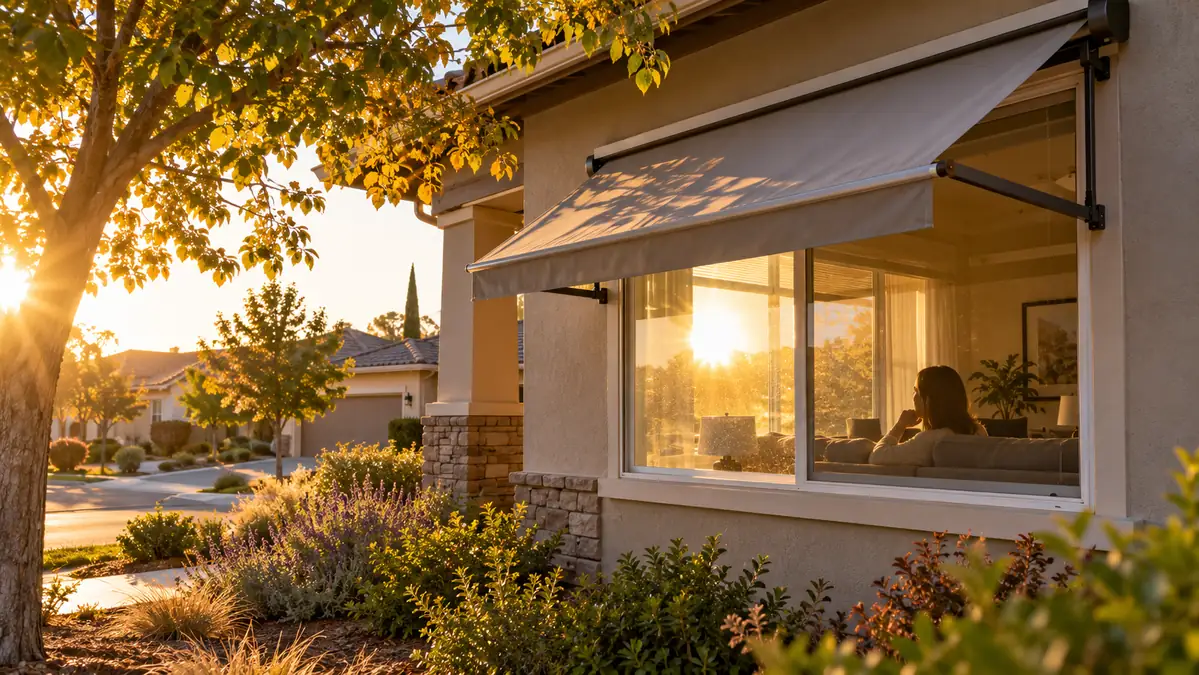
For a diagnostic test, shade the exterior of an accessible window without blocking required exits, damaging the building or creating a wind hazard. A professionally fitted exterior screen, operable awning or existing shutter can be useful. Even the shadow from a patio umbrella positioned safely away from the wall may help reveal whether direct solar exposure is driving the discomfort.
Do not tape reflective material to the glass, fasten a makeshift cover into siding or block a bedroom egress opening. Glass manufacturers may also restrict some applied films or attachments, so review the product instructions and warranty before changing the glass surface.
3. Keep the indoor conditions consistent
Use roughly the same thermostat setting, interior blinds and room doors during each comparison. If one day has the air conditioner off and another has it running, the result says little about the window. Record unusual factors such as cooking, many occupants or a portable fan.
The useful question is not “Did the room become perfect?” It is “Did reducing direct sun materially change the timing or severity of the problem?”
What the result can tell you
The room improves substantially with exterior shade
Solar exposure is likely an important contributor. A permanent shading strategy may deserve evaluation before replacement. Options can include an exterior screen, an operable awning, a porch or pergola planned with the wall assembly, or landscape shade that will not interfere with the foundation, roof or utilities.
Exterior attachments need correct fastening and water management. An awning mounted through stucco or siding is not merely a decorative accessory; the connection points must be compatible with the wall and integrated so water does not enter behind the cladding. Check HOA rules and property-specific requirements before ordering or attaching anything.
Shade helps, but the room still feels drafty or the window does not work
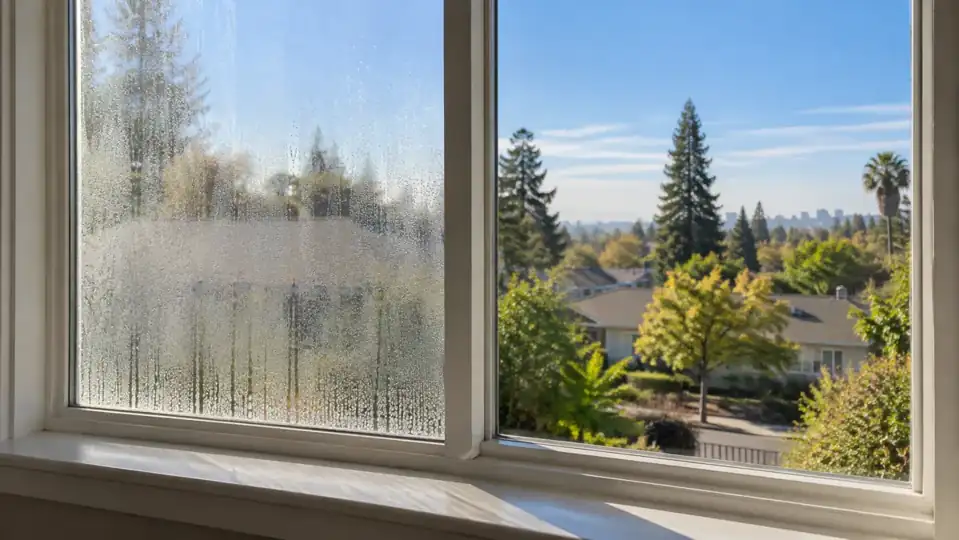
There may be two problems. Worn weatherstripping, weak locks, a distorted sash or gaps at the opening will not be corrected by shade. Likewise, shade will not repair fog trapped between panes, soft trim or water staining.
Use the Sacramento window repair-or-replacement checklist to separate glass, hardware, frame and installation symptoms. If the problem is moisture rather than heat, start with the condensation and failed-seal guide.
Shade changes very little
Do not conclude that replacement is automatically required. Check whether the room has attic or wall insulation issues, duct imbalance, air leakage elsewhere, high internal heat gain or limited airflow. A whole-room comfort problem can have more than one cause.
If replacement remains under consideration, ask for the whole-product performance label for the exact window size and configuration, not a generic brochure.
When glass performance belongs in the conversation
The National Fenestration Rating Council evaluates complete fenestration products using ratings including U-factor, Solar Heat Gain Coefficient (SHGC), Visible Transmittance and air leakage. For a sun-exposed opening, SHGC helps describe how much solar heat the rated product admits; visible transmittance helps compare daylight.
A lower SHGC can reduce admitted solar heat, but the lowest available number is not automatically the correct choice for every opening. Daylight, color appearance, orientation, shade and the rest of the home should be considered together. Compare the label for the actual quoted product and ask whether one glass package across every elevation makes sense.
Our Sacramento guide to NFRC window ratings explains those numbers without reducing the decision to “double pane” or “Low-E.”
Shade, glass replacement or a full new window?
Use the least invasive solution that addresses the verified cause.
- Consider shade first when the window operates correctly, remains dry and the discomfort closely follows direct sun.
- Ask about an insulated-glass-unit replacement when a seal has failed but the sash and frame are sound and the product is serviceable.
- Evaluate full replacement when the frame is damaged, operation or locking is unreliable, repeated air or water leakage traces to the opening, or the existing product cannot deliver the needed performance.
- Coordinate a broader assessment when the entire room stays hot even after the sun leaves the glass.
New glass and exterior shade can also work together. The point of the test is to specify the right combination rather than assume one product will solve every comfort issue.
Questions to bring to a Sacramento window consultation
- Which elevations and rooms are causing the problem?
- What hours receive direct sun, and what existing shade is present?
- Does the concern involve heat, glare, drafts, condensation, water or operation?
- What are the exact NFRC U-factor, SHGC and visible-transmittance ratings?
- Is the proposal for glass-only service, insert replacement or a full-frame scope?
- How will exterior trim, flashing, siding and interior finishes be handled?
- Would a shade attachment affect the wall, drainage, warranty or required exit path?
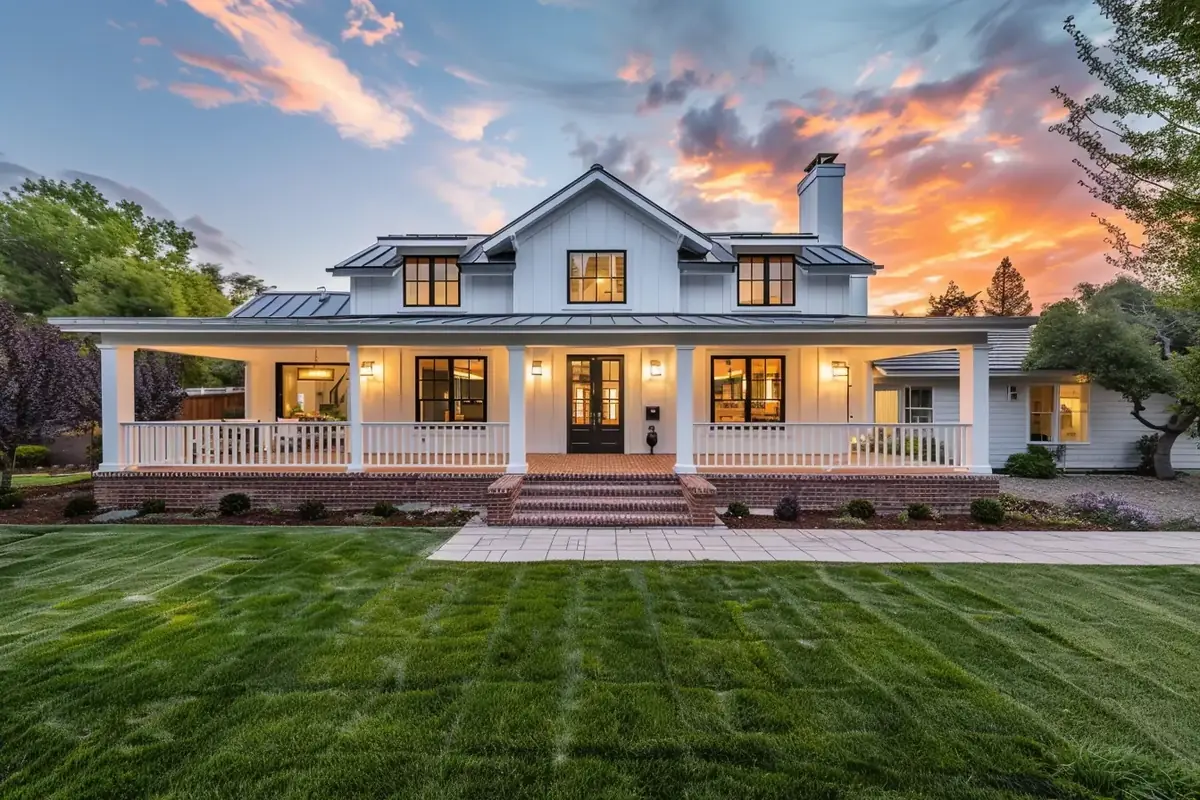
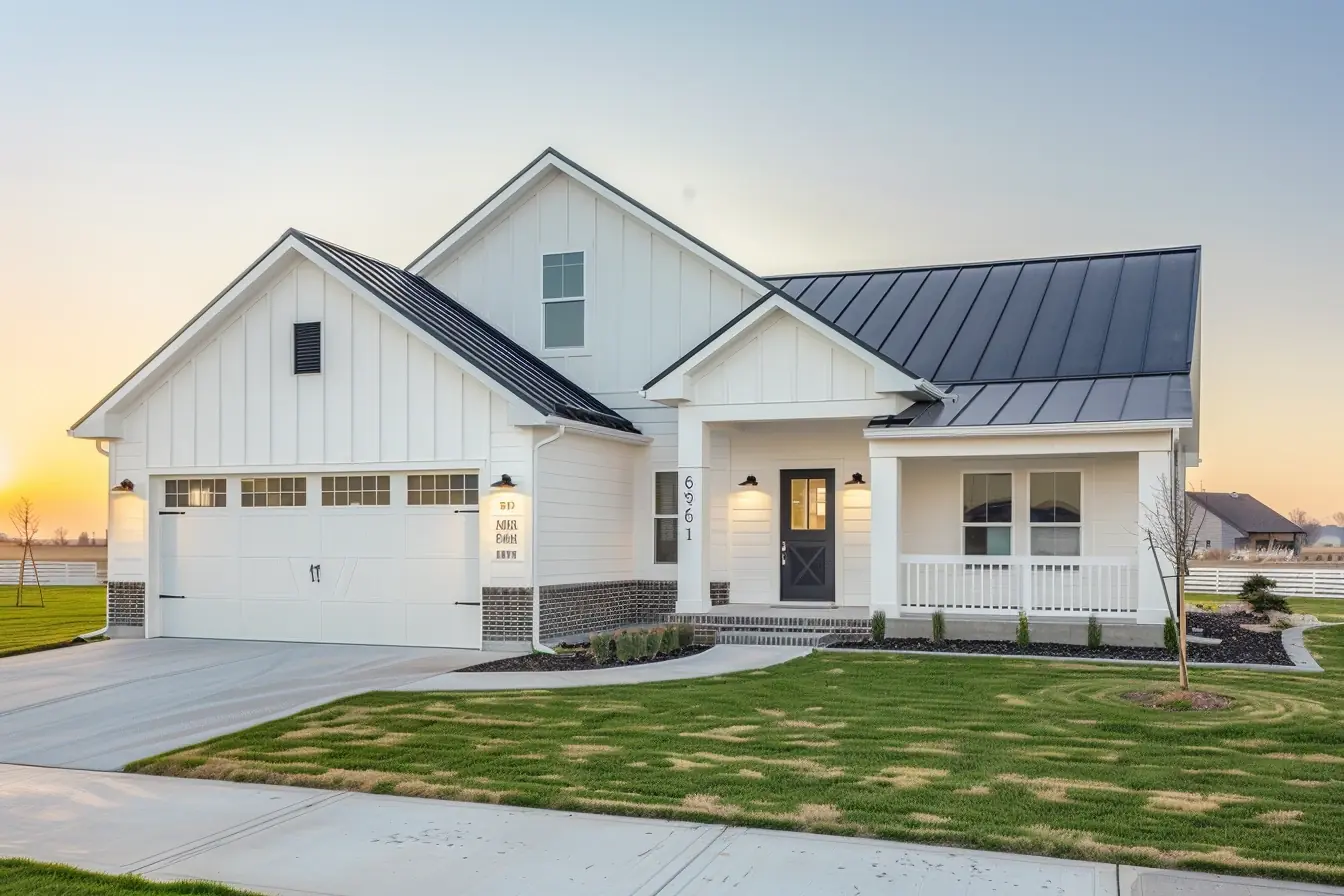
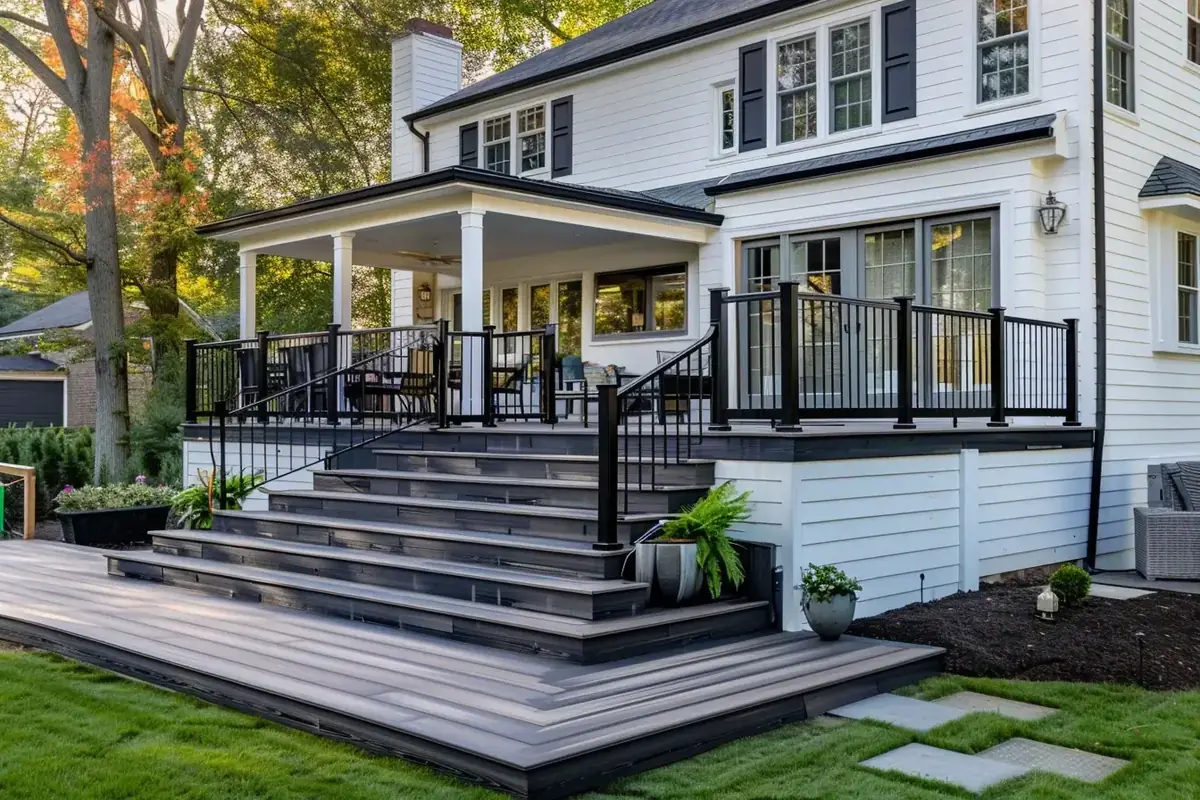
Yellowstone Renovation provides window replacement and exterior-opening coordination for Sacramento-area homes. Review the broader Sacramento exterior service page and Project Showcase to understand the team's work, then request an on-site window consultation. Bring your afternoon photos and notes so the estimate can start with the problem rather than a preset product.
Frequently asked questions
Are interior blinds enough for a west-facing window?
Interior blinds can control glare and privacy, but they act after sunlight reaches the glass. They are useful in a layered plan; a shade-first diagnosis tests whether stopping direct sun before it reaches the window changes the room.
Does a hot window mean its seal has failed?
No. Solar-warmed glass and a failed insulated-glass seal are different conditions. Fog or droplets trapped between panes suggest a seal problem; afternoon heat by itself does not.
Should every window in the house use the same glass package?
Not automatically. Orientation, glass area, existing shade, daylight goals and product availability can differ by elevation. Compare the exact rated configurations and keep the exterior appearance coordinated.
Can Yellowstone Renovation install an awning?
The Sacramento site verifies window replacement and exterior coordination, but it does not currently list awnings as a standard service. Ask during the consultation whether shade work is available or should be coordinated with a specialist.