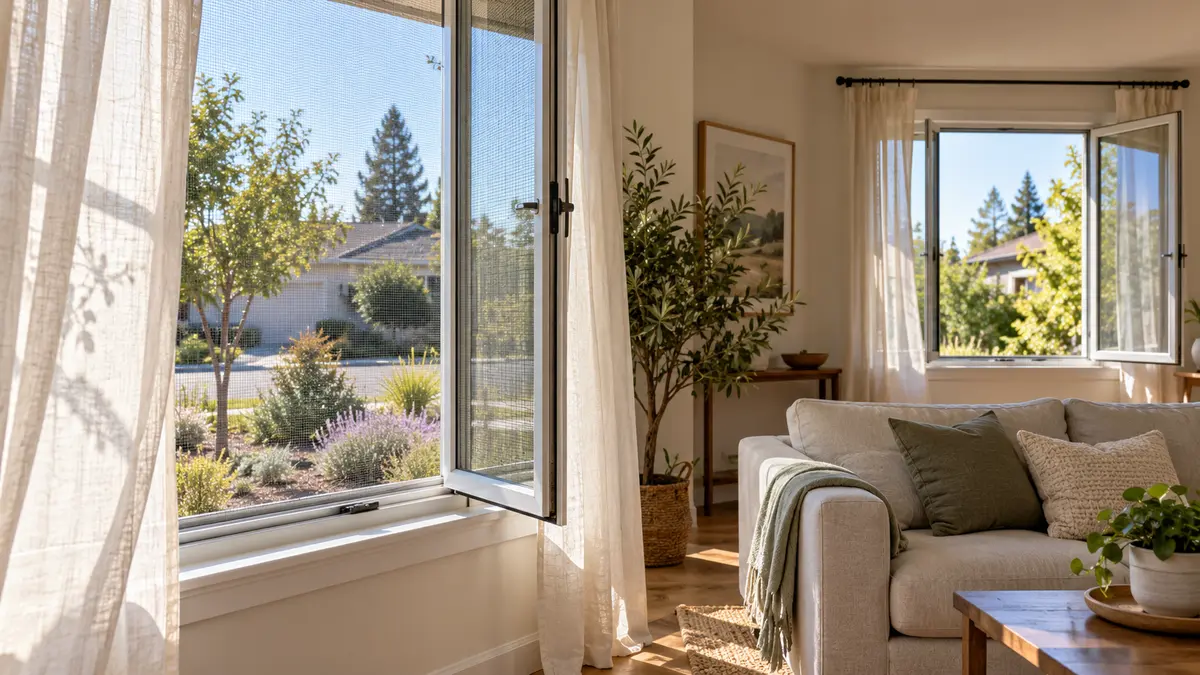
Opening every window is not automatically the best way to cool a Sacramento home. Natural ventilation is most useful when the outdoor air is cooler and acceptably clean, and when the house has a deliberate path for air to enter and leave. During the hottest afternoon hours—or when wildfire smoke or other outdoor pollution is present—closing the windows may be the safer, more comfortable choice.
For a window replacement estimate, do not treat screens as an afterthought. Compare the usable opening, screen type, hardware, room layout and safe operating height together. A large glass area can still provide limited ventilation if only a small portion opens or if furniture, a damaged screen or difficult hardware keeps the sash closed.
Start with the time of day, not the calendar
Sacramento can have warm days and substantially cooler nights, which creates an opportunity for evening or early-morning “night flushing.” The U.S. Department of Energy's Building Science Education program explains that natural cooling works best where nights are cool and regular breezes are available: cooler air removes heat from the house and its interior materials before the next warm period.
That does not mean windows should stay open all day. Before opening them, compare:
- Outdoor temperature with indoor temperature
- Outdoor air quality and smoke conditions
- Wind direction and security conditions
- Whether the air conditioner is operating
- Noise, pollen and occupant sensitivities
- Rain or irrigation near the opening
When outdoor air becomes warmer than the indoor air, open windows can add heat instead of removing it. Close and latch them before the hottest period, use appropriate shade, and follow the home's cooling plan. Natural ventilation complements mechanical cooling; it is not guaranteed to replace it.
During extreme heat, follow public-health guidance rather than relying on an open window or fan alone. The CDC warns that fans should not be the sole cooling method in very hot conditions. If the home cannot remain safe, use an air-conditioned location or local cooling resource.
A screen keeps insects out; it does not create airflow
Air movement needs a pressure difference and a complete path. One open window in a closed room may provide less exchange than two appropriately placed openings. A practical cross-ventilation plan often uses an inlet on one side of the home and an outlet on another side or level.
Walk the house and identify:
- Cool-air intake. Which opening is shaded and exposed to cleaner, cooler outdoor air?
- Exhaust path. Where can warmer indoor air leave without sending it into another closed room?
- Interior route. Can air move through doorways and halls, or is it blocked by closed doors?
- Operating safety. Can each sash remain open securely without creating a fall, security or egress problem?
- Close-up routine. Who will close and lock the windows before outdoor conditions worsen?
A fan may help move air through the path, but placement matters. DOE guidance for window fans describes exhausting air through one opening while admitting replacement air at another. Follow the fan manufacturer's instructions and do not create an unsafe condition around children, pets, cords or an emergency-exit window.
Compare usable opening area, not just frame size
Window style changes how much of the rough opening is available for ventilation.
- Single-hung windows generally open through the lower sash while the upper sash stays fixed.
- Double-hung windows can provide adjustable upper and lower openings when both sashes are designed to operate.
- Sliding windows typically open through one panel while the other remains in place.
- Casement windows swing outward and can provide a broad opening, but the actual effect depends on sash angle, wind and exterior clearance.
- Awning windows can permit some ventilation while helping shed light rain, subject to the product design and weather conditions.
- Fixed windows provide daylight but no natural ventilation.
Ask the estimator for the operating configuration of every quoted unit. A brochure photograph may show a family of windows without making clear which sash opens in the selected size.
If a bedroom opening is also expected to serve as emergency escape and rescue, do not assume a replacement with similar outside dimensions preserves the required clear opening. Verify the property-specific code and permit requirements before ordering.
Screen mesh is a performance choice
Standard insect screen, finer insect mesh, high-visibility mesh, pet-resistant mesh and solar screen material do not perform identically. Screen manufacturer Phifer explains that a more open weave generally supports more airflow, light and visibility, while lower openness may improve small-insect or solar control at the cost of airflow and view.
That tradeoff belongs in the estimate. Ask:
- What mesh and frame are included as standard?
- Is the screen full, half, exterior, interior or retractable?
- Can it be removed for cleaning without damaging the frame?
- Does a pet-resistant option reduce airflow or visibility?
- Is a solar screen compatible with the glass and warranty?
- Are replacement mesh and hardware locally serviceable?
Do not order the densest screen for every opening by default. A kitchen window used for quick exhaust, a bedroom window opened overnight, a street-facing window and a pet-accessible patio door may have different priorities.
Inspect the details that stop owners from opening windows
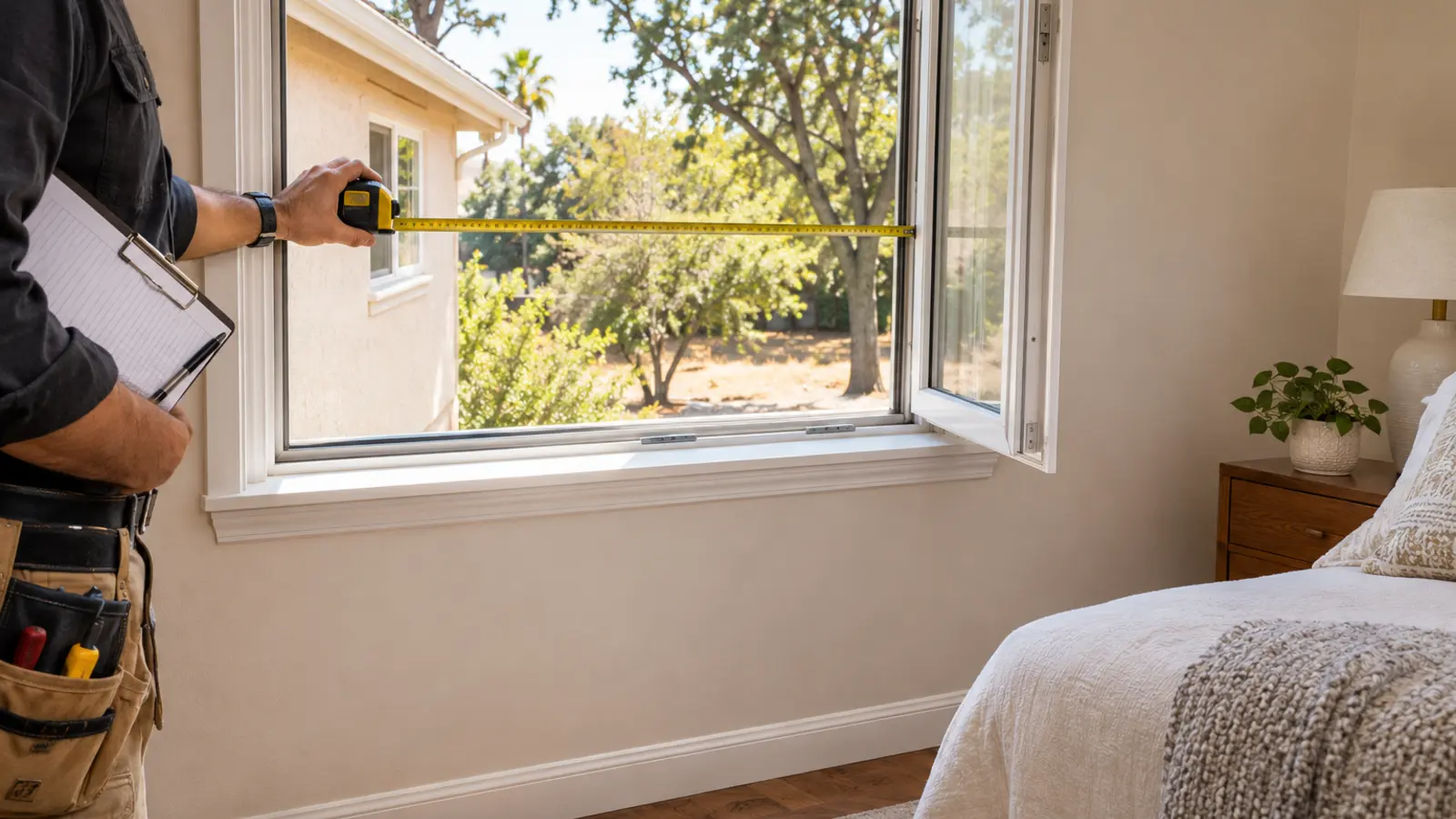
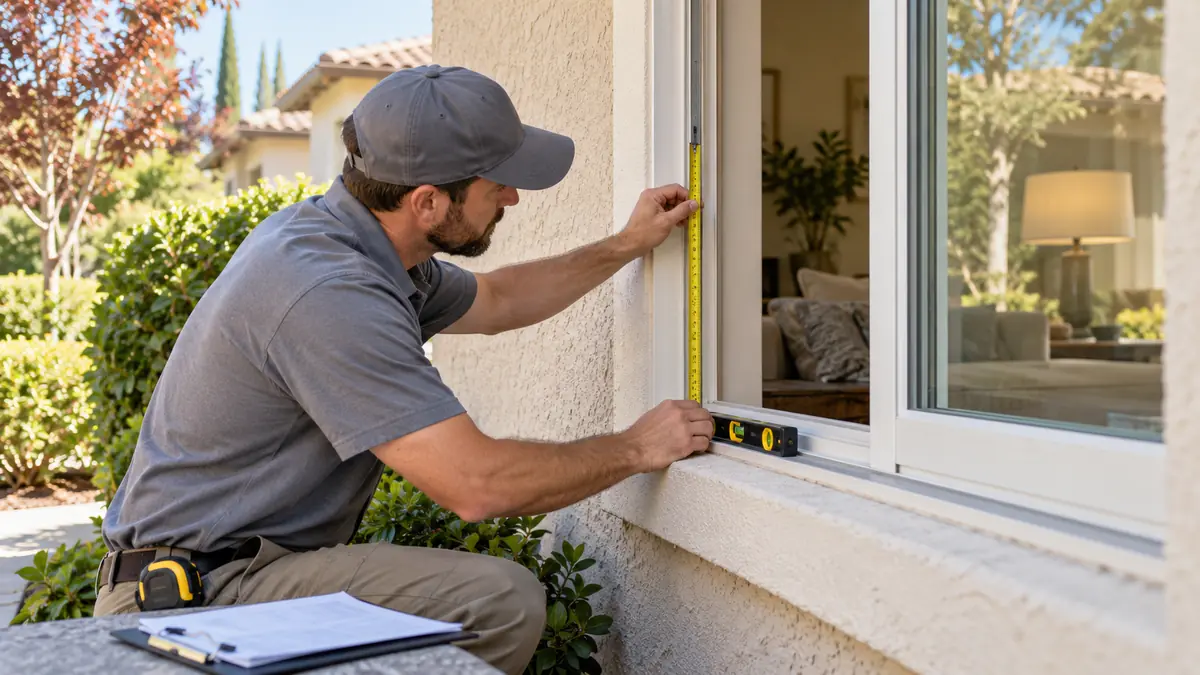
A theoretically operable window provides no ventilation when daily use is awkward. During an on-site review, operate representative windows rather than measuring glass only.
Look for:
- Sashes that bind, drop or will not stay open
- Locks that require excessive force or do not align
- Crank handles blocked by blinds or furniture
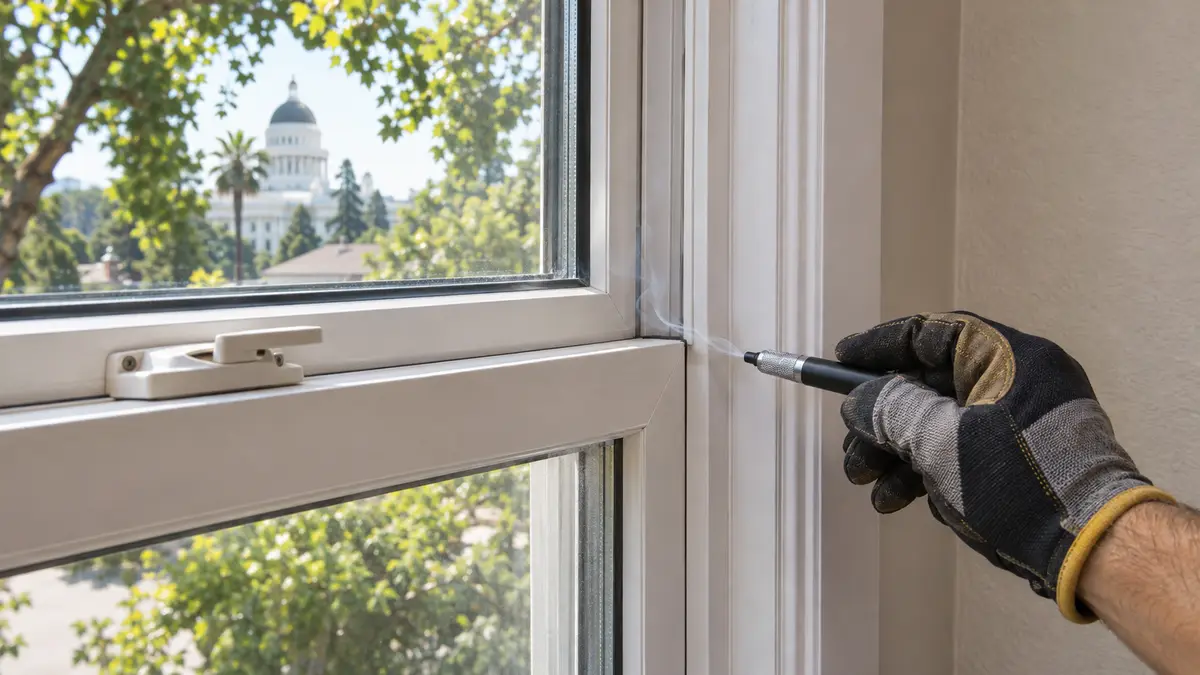
- Screens that rattle, bow or leave gaps at corners
- Torn mesh and loose spline
- Tracks filled with dirt or damaged by repeated screen removal
- Exterior plants or architectural features in the sash path
- Opening controls placed out of comfortable reach
Hardware problems may be repairable. Use the Sacramento window repair-or-replacement checklist before assuming that poor operation requires every frame to be removed.
Keep safety and required functions intact
An insect screen is not a fall-prevention device. It should not be treated as a guard for a child, pet or occupant leaning against it. Window opening-control devices, guards and emergency-release requirements are separate product and code questions.
Keep bedroom escape openings accessible. Do not place a fan, portable air-conditioner panel, fixed security bar or furniture where it prevents required emergency use. Ask the contractor to identify any opening whose safety function changes with the proposed window style, hardware or screen.
Security also affects ventilation habits. A homeowner may avoid opening an otherwise functional ground-floor window because the sash cannot be limited or secured in a partially open position. Discuss manufacturer-approved hardware rather than adding improvised stops that damage the frame or interfere with emergency operation.
Close windows when outdoor air is unhealthy
Sacramento-area smoke conditions can change quickly. The Sacramento Metropolitan Air Quality Management District advises residents who see or smell wildfire smoke to go indoors or move to another location. Its regional guidance also recommends keeping windows and doors closed when outdoor pollution is high.
Check current local air-quality information before using outdoor air for cooling. A screen stops insects; it does not filter wildfire smoke or fine particles. If the house becomes dangerously hot with the windows closed, follow public-health advice for smoke and heat rather than remaining in an unsafe indoor space.
This is another reason to avoid promising that natural ventilation will solve every hot-room complaint. Glass selection, exterior shade, insulation, air sealing, HVAC performance and indoor air cleaning may all belong in the larger plan.
What a window estimate should say about screens and ventilation
A clear estimate should identify:
- Window style and which sash or panel operates
- Approximate usable opening for the selected configuration
- Screen frame, mesh type, color and location
- Whether screens are included for every operable unit
- Screen removal and cleaning method
- Locks, balances, cranks and opening-control hardware
- Compatibility with blinds, furniture and exterior obstructions
- Bedroom egress or other safety conditions requiring verification
- Interior and exterior finish work
- Final operation, latch and screen-fit testing
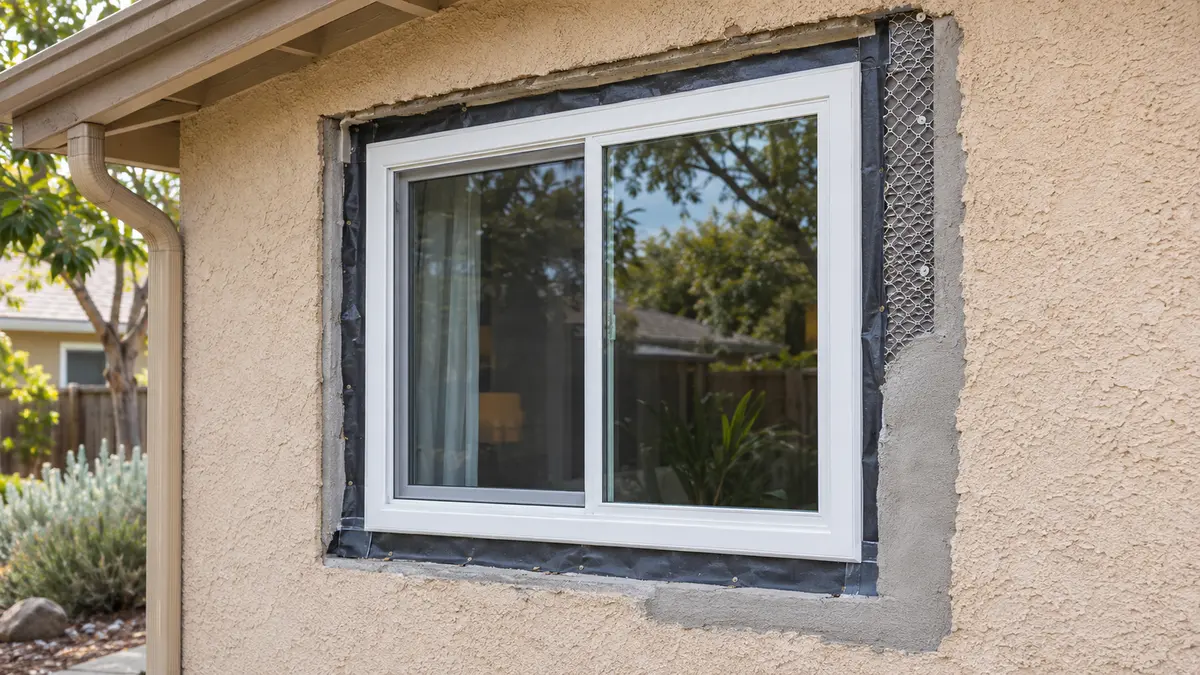
The insert-versus-full-frame window estimate guide explains what should be written about frame removal, flashing, trim and concealed conditions. For rooms that overheat mainly in afternoon sun, first use the west-facing window shade test to separate solar gain from a ventilation problem.
Plan openings around the way the home is used
Yellowstone Renovation provides window replacement services for Sacramento-area homes. Review the Sacramento service-area page and Project Showcase, then request an on-site window consultation. Bring a simple room-by-room list showing which windows you actually open, when you open them, and what prevents comfortable use now.
Frequently asked questions
Do tighter insect screens reduce airflow?
Generally, screen openness affects airflow, light and visibility. Finer or more durable mesh can provide a different balance than standard mesh. Compare manufacturer specifications for the exact screen rather than assuming all dark mesh performs the same.
Should I open windows during the hottest part of the day?
Not automatically. If outdoor air is hotter than indoor air, opening windows can add heat. Natural cooling is most useful when outdoor air is cooler and air quality is acceptable. Follow heat advisories and do not rely on a fan alone in dangerous heat.
Do window screens filter wildfire smoke?
No. Ordinary insect screens are not particle filters. When smoke or outdoor pollution is high, follow local air-quality guidance, close windows and use appropriate filtration or a cleaner-air location as advised.
Does every replacement window include a screen?
Not necessarily. Screen inclusion, mesh, frame color, coverage and placement vary by product and window style. Require the proposal to list them.