Composite vs Wood Deck: Which is Better for California Climate?
Sacramento’s long, hot summers expose decks to strong UV radiation and high surface temperatures. The mild winter rainy season adds a different challenge: moisture management around boards, ledgers, framing, and footings.
Wood and composite can both work well when the product, framing and installation details fit the site. The central question for most homeowners is:
“Should I build a composite deck or stick with natural wood?”
There’s no universal answer — it depends on your budget, maintenance preferences, and long-term expectations.
But I can help you make an informed choice based on what truly works best for California’s climate.
Understanding California’s Climate and Its Impact on Decks
The Sacramento region has a Mediterranean climate with hot, dry summers and mild, rainy winters. These conditions are demanding on outdoor structures, especially decks.
Here’s what that means for deck materials:
- Moisture causes wood to swell, shrink, and eventually rot if not sealed properly.
- UV exposure fades both wood and composite over time, especially on south-facing decks.
- Seasonal movement can open gaps or loosen fasteners if materials are installed incorrectly.
- Winter moisture can encourage mold, mildew, and algae growth in shaded areas.
In short, California’s climate demands materials that resist moisture and temperature swings — and that’s where the debate between wood vs. composite really matters.
Wood Decks — Natural, Classic, and Time-Tested
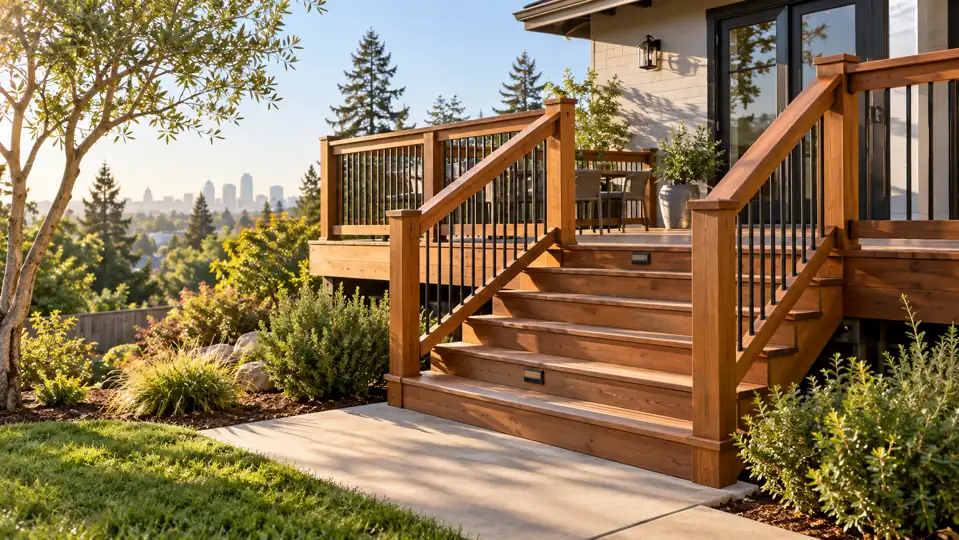
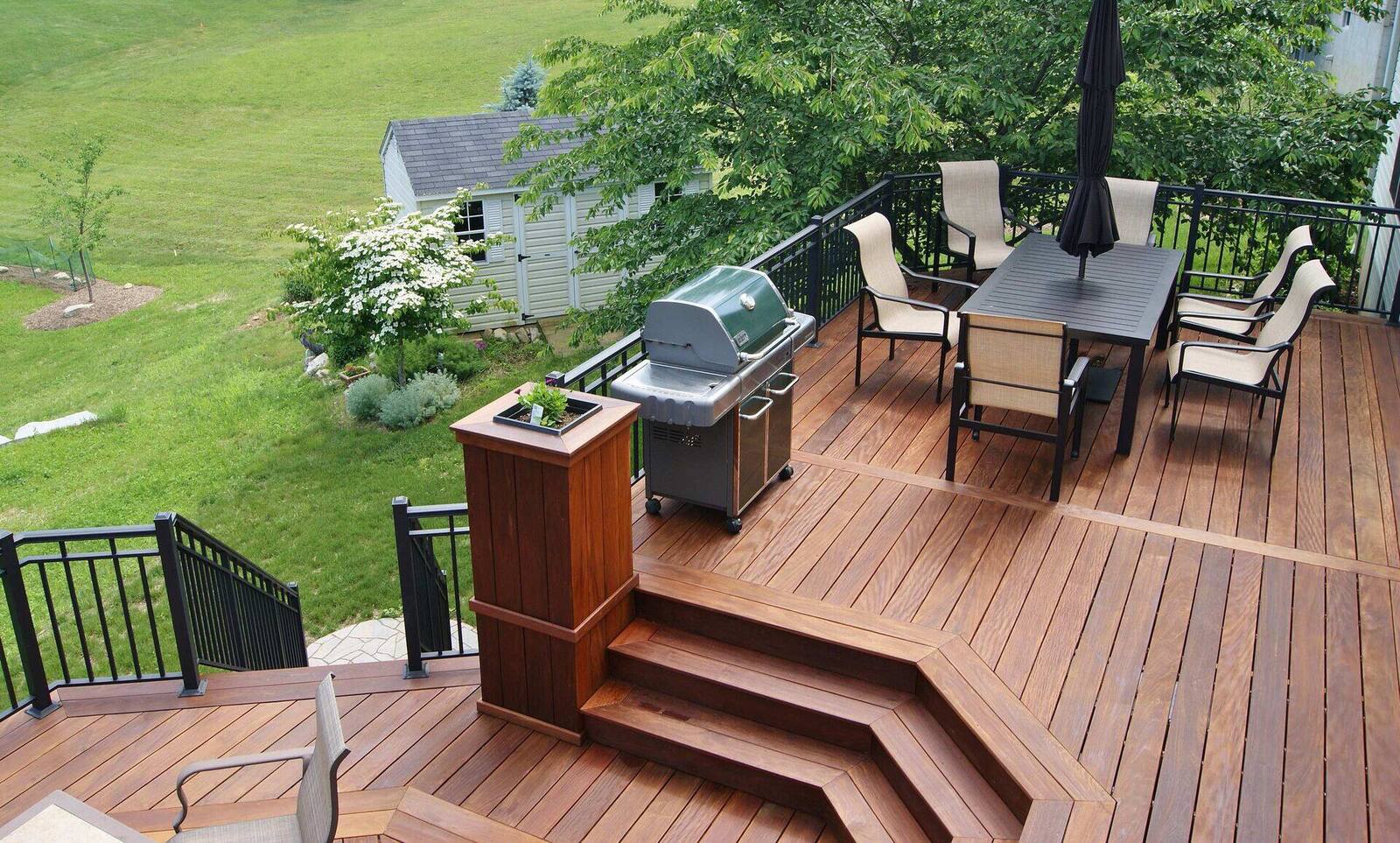
For decades, wood decking has been the traditional choice. It’s warm, natural, and fits perfectly with the look of California homes — from Sacramento suburbs to rural farmhouses.
Advantages of Wood Decking
-
Affordable upfront cost
Pressure-treated pine is still one of the most budget-friendly materials available. It’s easy to source and install, making it ideal for entry-level decks or renovations. -
Natural appearance
Many homeowners love the authentic look, grain, and scent of real wood. It blends beautifully with natural landscapes. -
Customizable
Wood can be sanded, stained, and refinished countless times, allowing you to change its color or restore it after years of use. -
Cool underfoot
Compared to some composite boards, wood stays cooler in direct sunlight.
Disadvantages of Wood Decking
-
Ongoing maintenance
Wood decks need regular care — cleaning, staining, and sealing every 2–3 years. Neglecting it even for one season can lead to cracking or rot. -
Susceptible to moisture
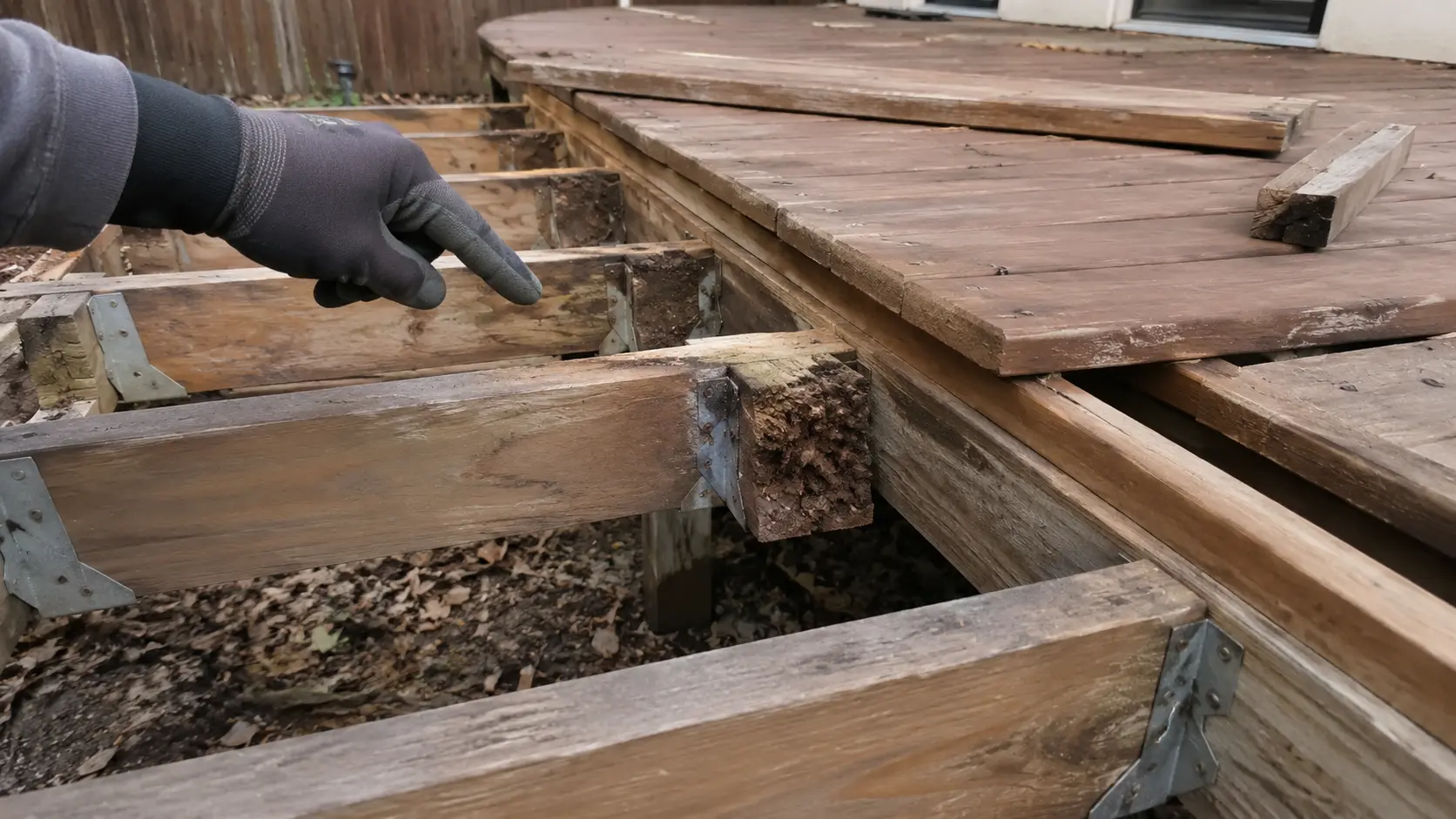
Even pressure-treated lumber absorbs water. In Sacramento’s hot, dry summers and rainy winters, unsealed boards can warp, split, or grow mildew. -
Limited lifespan
A well-maintained wood deck lasts around 10–15 years before major repairs are needed. Without consistent care, that number drops fast. -
Insect and rot damage
Termites and carpenter ants are common here, and untreated areas can become easy targets.
Common Wood Types in California Decks
| Wood Type | Cost per Sq Ft (material only) | Lifespan | Notes |
|---|---|---|---|
| Pressure-Treated Pine | $2–$5 | 10–15 years | Budget-friendly, needs regular sealing |
| Cedar | $6–$9 | 15–20 years | Naturally rot-resistant, beautiful finish |
| Redwood | $7–$10 | 20+ years | Expensive and less common in California |
| Ipe (Hardwood) | $15–$25 | 30–40 years | Premium option, heavy and dense |
Composite Decks — Modern, Durable, and Low-Maintenance
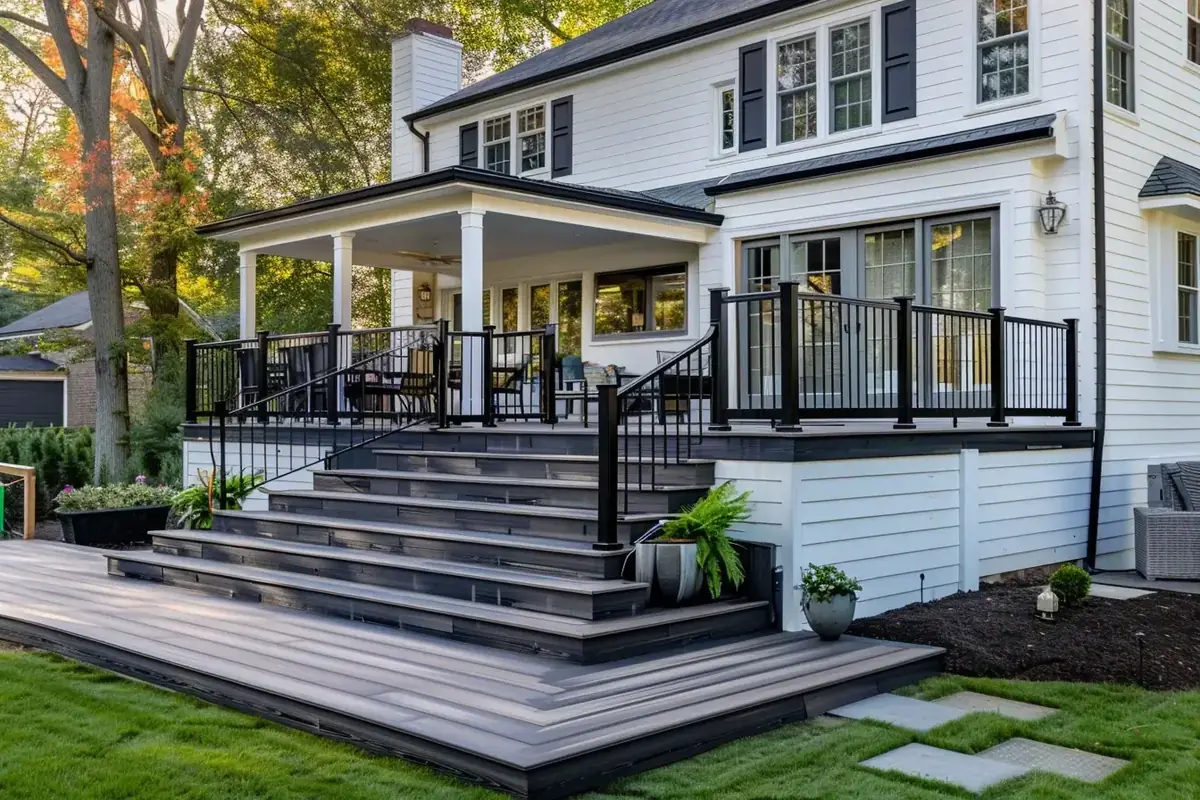
Composite decking was once viewed as a luxury material, but it’s now one of the most popular choices for California homeowners — especially those tired of sanding and staining every few years.
Composite boards are made from recycled wood fibers and plastics, combined with color pigments and protective caps that make them nearly weatherproof.
Advantages of Composite Decking
-
Low maintenance
No staining, sealing, or sanding. Just wash it with soap and water a few times a year. -
Moisture-resistant
Composite decking doesn’t absorb water like wood, meaning no rot, warping, or splintering — even after years of rain and humidity. -
Long lifespan
Most quality brands (like Trex or TimberTech) come with 25–50 year warranties and maintain their color for decades. -
Eco-friendly
Made from recycled materials — a sustainable choice that helps reduce waste. -
Consistent appearance
Boards are manufactured for uniform color and texture, creating a polished, high-end look.
Disadvantages of Composite Decking
-
Higher initial cost
Expect to pay more upfront — usually between $55 and $90 per square foot installed. But over time, lower maintenance often evens it out. -
Heat retention
Darker composite boards can get warm in full sunlight, especially during California summers. -
Less “natural” feel
While newer textures mimic wood grain very closely, some homeowners still prefer the authenticity of real lumber.
Cost Comparison — Wood vs Composite Decks
| Feature | Wood Deck | Composite Deck |
|---|---|---|
| Initial Cost (Installed) | $15 – $40 per sq. ft. | $55 – $90 per sq. ft. |
| Maintenance (10 years) | $2,000 – $4,000 | $200 – $500 |
| Lifespan | 10 – 15 years | 25 – 30 years |
| Long-Term Cost (20 years) | Moderate to High | Lower overall |
| Resale Value | High (if maintained) | Very High |
At first glance, a wood deck looks cheaper — but over 10–15 years, the cost of cleaning, staining, and replacing boards can easily exceed what you’d spend on a composite installation.
Performance in California’s Climate
Now, let’s focus on how both materials hold up in the Sacramento climate — with long dry summers, intense UV exposure, and seasonal winter rain.
Moisture and Rot Resistance
- Wood: Even treated lumber will eventually absorb moisture. Without consistent sealing, water leads to swelling and rot.
- Composite: Impervious to moisture — no swelling, warping, or mold growth. Ideal for shaded or damp areas.
Temperature Fluctuations
- Wood: Expands and contracts significantly with temperature swings, causing cracks and gaps.
- Composite: Expands slightly, but high-quality brands manage this with hidden fasteners and capped designs.
UV and Sun Exposure
- Wood: Fades quickly unless treated with UV-resistant stain.
- Composite: Color fading is minimal; most boards retain over 90% of their tone after years of exposure.
Maintenance Workload
- Wood: Requires yearly cleaning and sealing.
- Composite: Only needs light washing every few months.
Durability
- Wood: Scratches easily; boards can splinter and weaken.
- Composite: Dense, scratch-resistant surface that stays smooth for decades.
Aesthetic Comparison — Traditional vs Modern Appeal
Wood decks offer that classic, warm feel that fits perfectly with California’s traditional home styles — craftsman houses, ranch-style properties, and farmhouses.
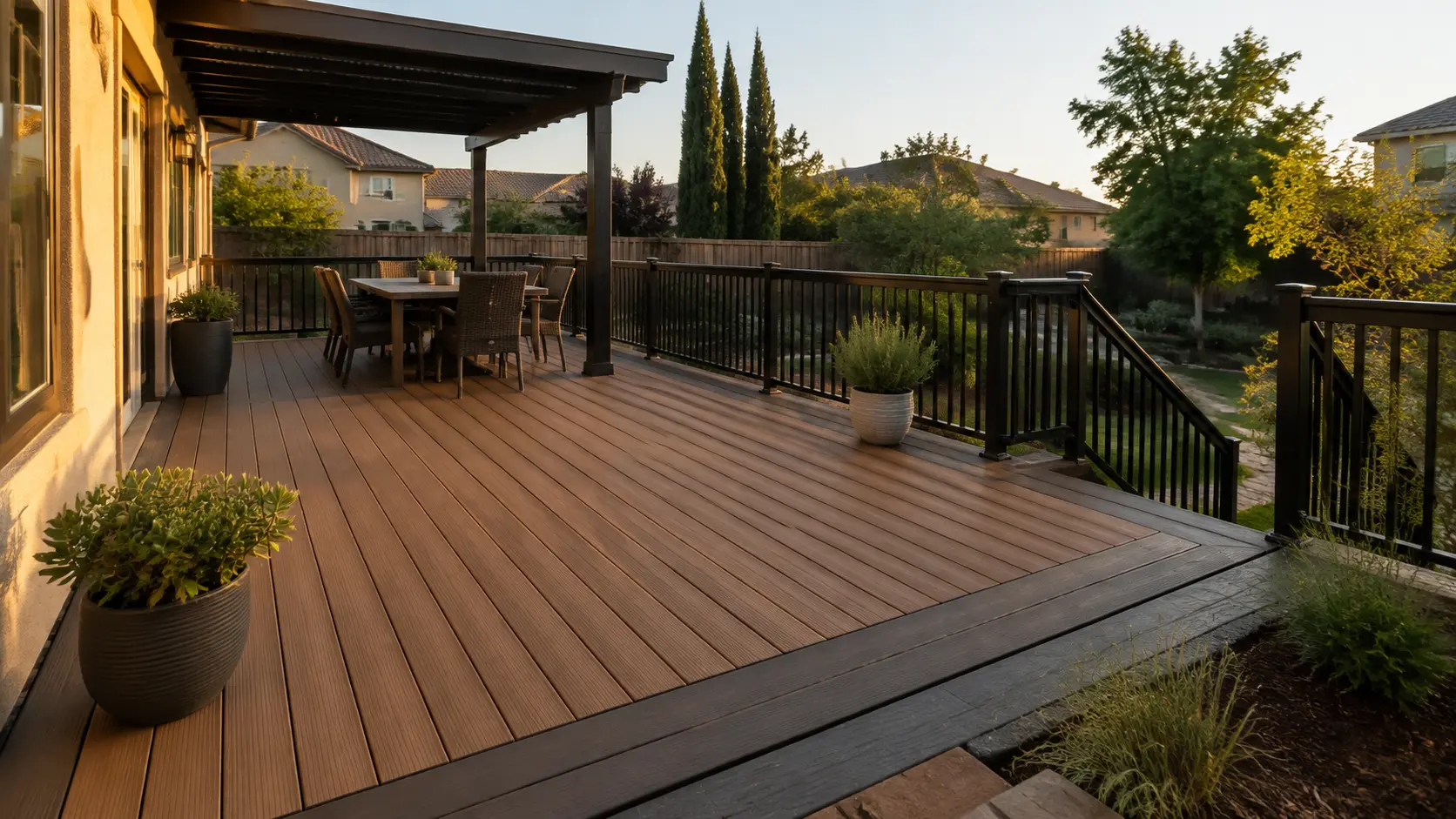
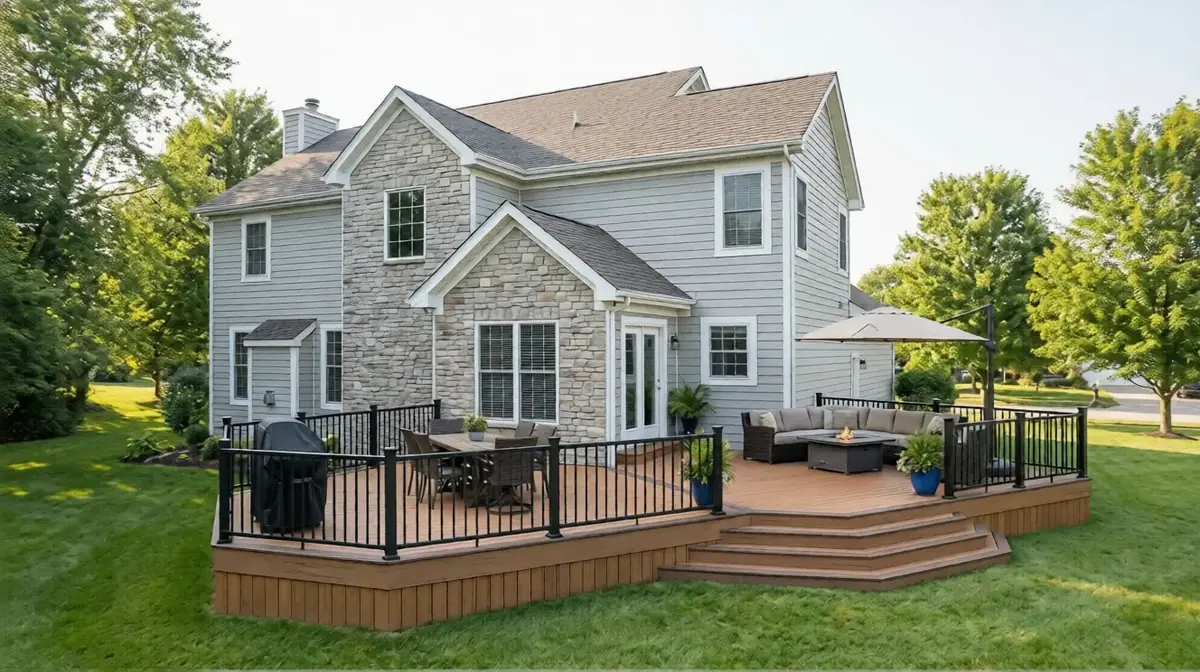
Composite decks, on the other hand, create a sleek, modern look — ideal for newer homes or outdoor living spaces with pergolas, kitchens, and lighting systems.
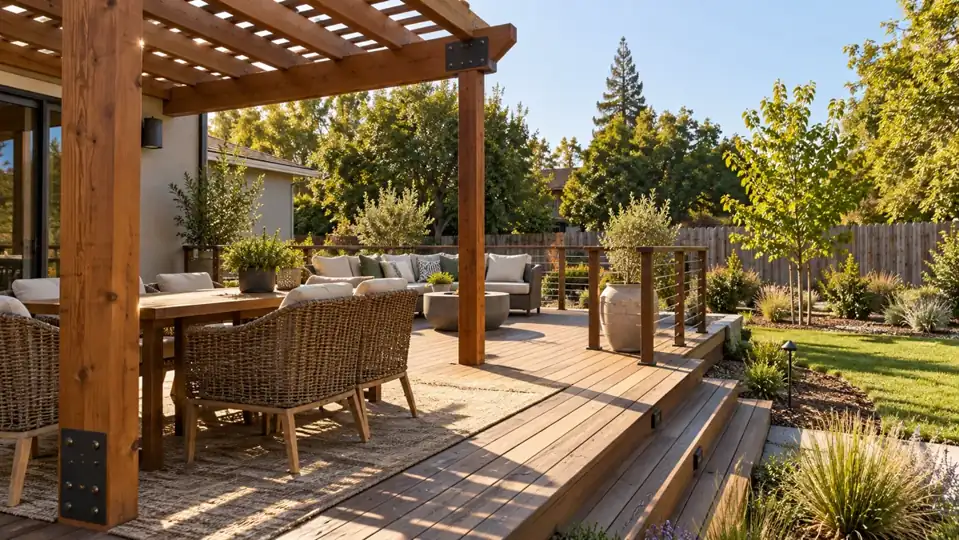
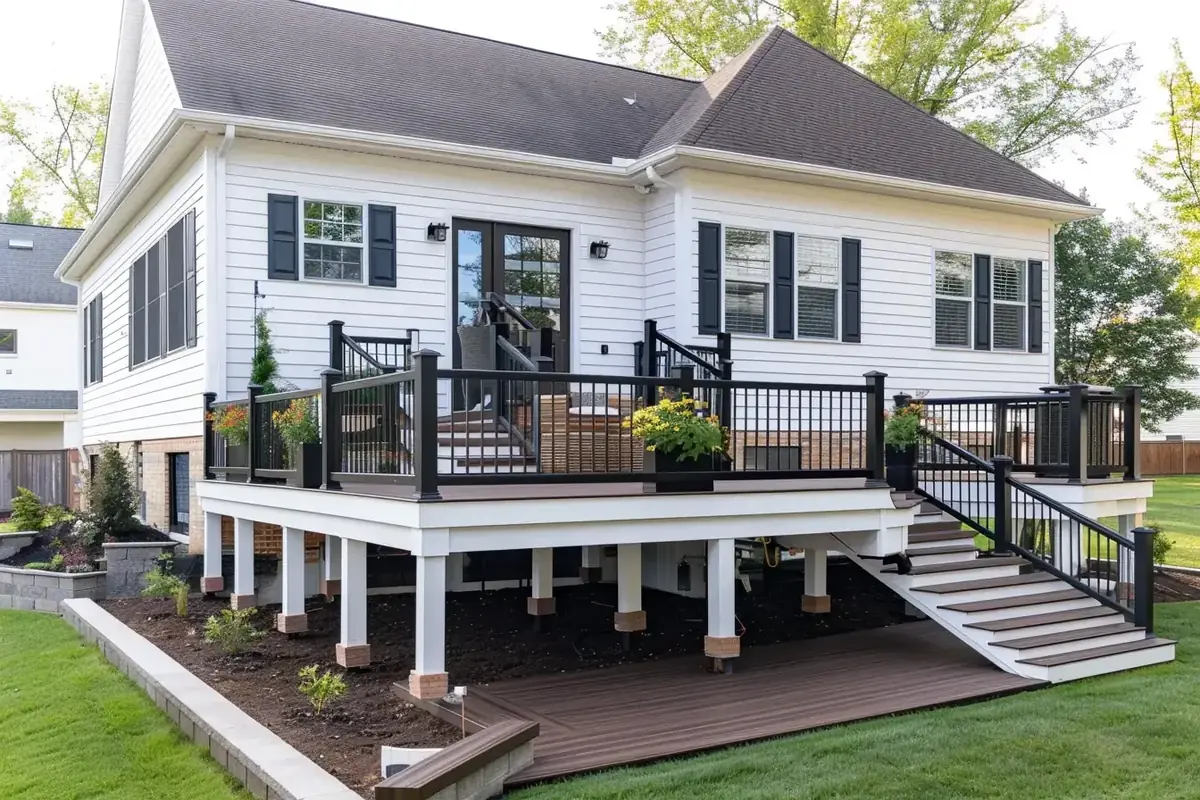
Many homeowners now choose hybrid designs: composite decking with wood posts, trim, or railing accents — combining durability with natural charm.
You can explore more examples and design ideas on our Decking Services page.
Installation and Longevity
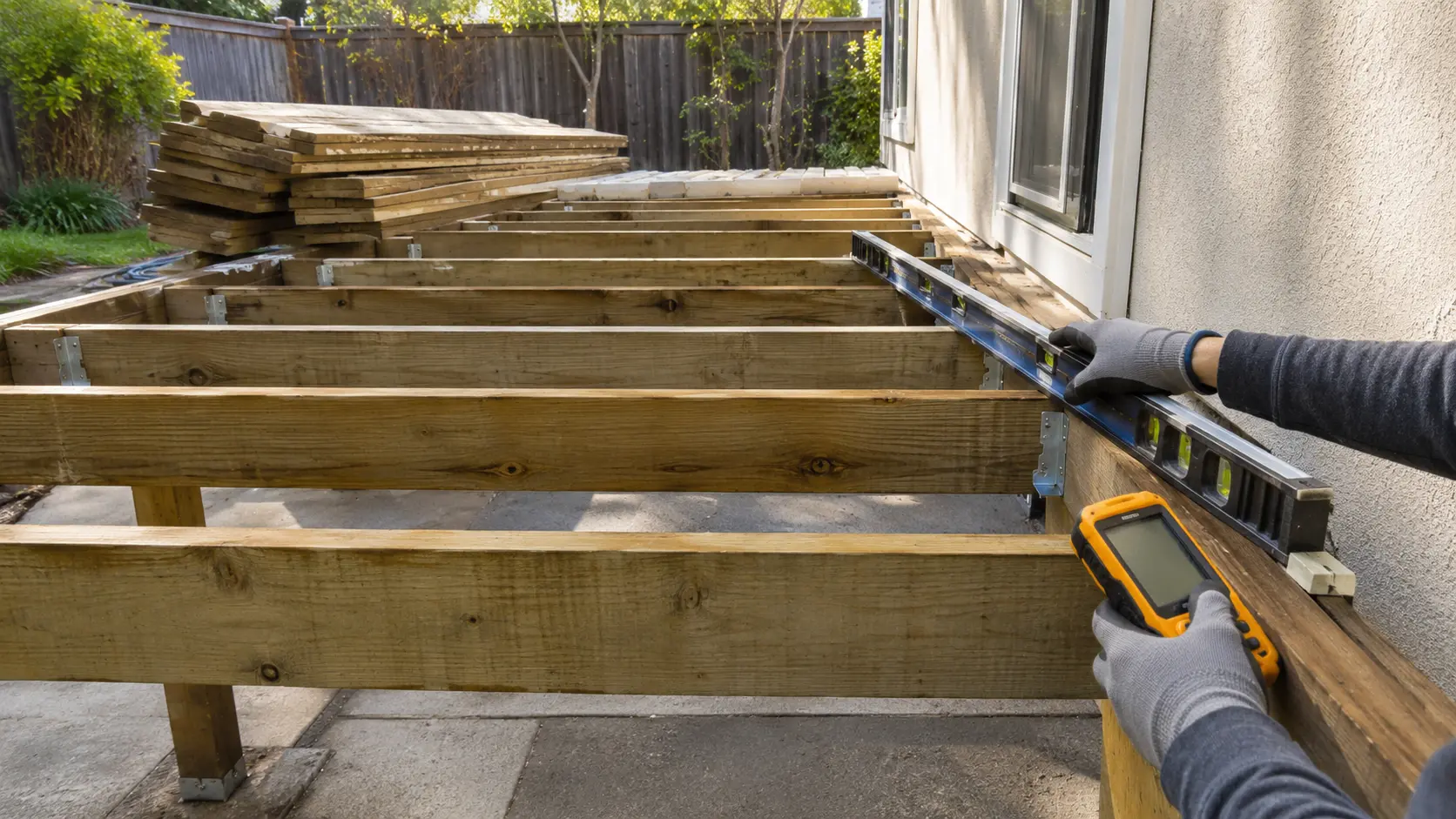
When professionally installed, both wood and composite decks can serve you well for years — but composite has the clear edge in long-term reliability.
A composite deck properly installed with hidden fasteners and capped boards will last 25–30 years with minimal care, while most wood decks start showing serious wear after 8–10 years.
That’s one reason many California homeowners are now choosing composite decking for full replacements — especially when the old wooden frame starts to weaken.
If you’re considering upgrading, check out our Composite Decks page to learn how modern decking materials can transform your outdoor space.
Environmental Impact
Composite decking often gets credit for being “eco-friendly” — and it deserves it.
Manufacturers like Trex and TimberTech use 95% recycled content, combining reclaimed wood fibers with recycled plastics that might otherwise end up in landfills.
Wood, while natural, requires continuous chemical treatments to resist decay. And over time, staining and sealing release VOCs (volatile organic compounds) into the environment.
So while both can be responsibly sourced, composite generally wins on sustainability in the long run.
Which Deck Material Is Better for You?
| Factor | Best Choice |
|---|---|
| Budget-Friendly Build | Wood |
| Low Maintenance | Composite |
| Long-Term Durability | Composite |
| Natural Look | Wood |
| Low-Maintenance Moisture Resistance | Composite |
| Cooler Underfoot | Wood (light stain) |
| Eco-Friendly | Composite |
In Sacramento’s mix of intense sun, summer heat, and winter rain, quality composite decking can perform very well with minimal maintenance.
But that doesn’t mean wood is a bad choice — if you love the warmth of real lumber and don’t mind seasonal maintenance, it’s still a great option.
Final Thoughts from a California Deck Builder
The practical comparison comes down to the tradeoffs below:
- Wood decks offer classic beauty and affordability — but they demand commitment.
- Composite decks cost more up front — but they pay you back in time, durability, and peace of mind.
For most California homeowners today, composite has become the go-to choice — not just for convenience, but because it stands up to our climate better than anything else.
If you’re planning a new deck or replacing an old one, we’d be happy to guide you through materials, design, and cost options.
At Yellowstone Renovation, we specialize in both wood and composite deck construction, designed specifically for California’s weather conditions.
Contact us today for a free on-site estimate, and let’s build a deck that’s ready for every season.
Tags: #CompositeDeck #WoodDeck #Decking #DeckBuilder #CaliforniaDecks #OutdoorLiving #YellowstoneRenovation #DeckMaintenance