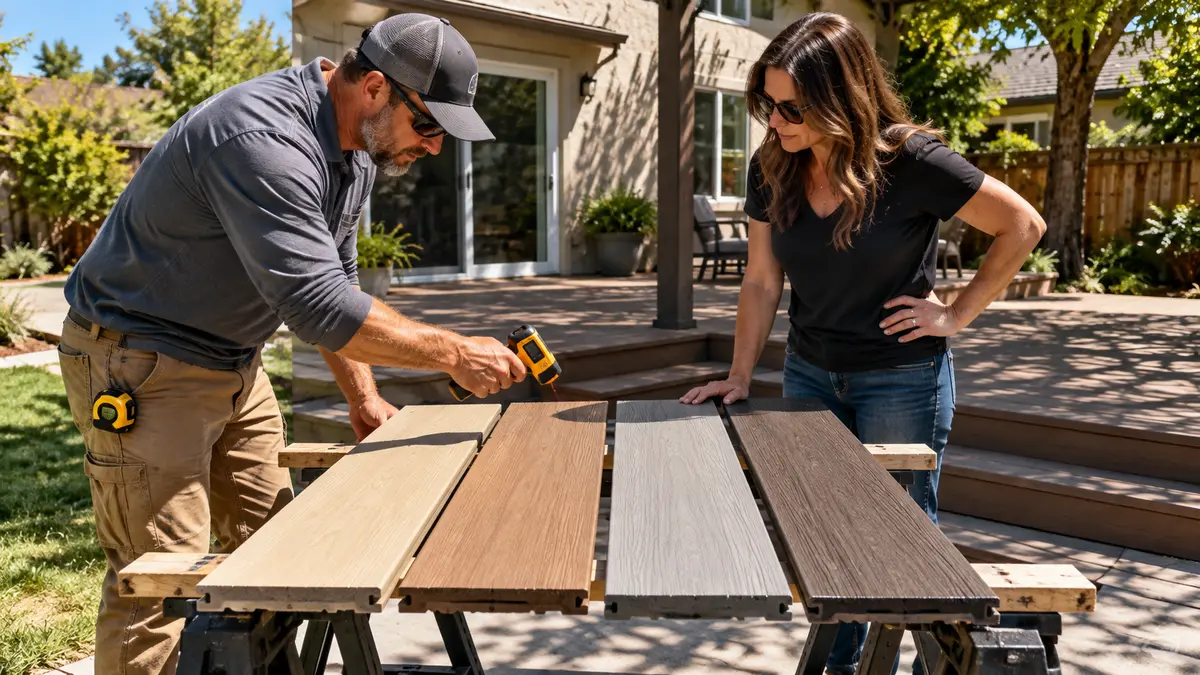
Choosing a lighter composite deck color can reduce surface-heat concerns, but color alone does not predict how a board will feel at a Sacramento home. The specific product, sun angle, shade, airflow and time of day all matter. The best decision is to compare the exact boards you are considering in the place where the deck will be built.
This guide explains a safe, repeatable sample test and the installation questions to settle before ordering material. It complements our broader Trex versus TimberTech comparison by focusing on color and surface heat rather than choosing between brand names.
Why Sacramento exposure deserves an on-site test
Sacramento decks can receive long periods of direct sun. In its July 2026 climate report, the National Weather Service recorded 27 days at or above 90°F at Sacramento Executive Airport, including a monthly high of 104°F. That does not tell us the temperature of any particular deck board, but it does show why a sunny-site comparison is more useful than judging small samples indoors.
No decking should be described as “cool” in full summer sun. Trex notes that outdoor products can become hot and that performance varies with environmental conditions, color and use. TimberTech likewise advises that lighter colors generally stay cooler than darker colors while shade can reduce heat exposure. Those are useful principles, not a substitute for testing the exact product at the home.
Use the exact board, not a color name
“Gray,” “brown” and “cedar” are visual categories, not performance specifications. Two brown boards can have different core materials, caps, pigments and textures. Even within one brand, collections may use different technologies.
Ask the contractor or supplier for full-width samples of the exact:
- Manufacturer and collection
- Color
- Board profile and thickness
- Surface texture
- Current product generation
Some manufacturers offer collection-specific heat-mitigating technology. Treat those statements as claims about the named product, under the manufacturer’s test method—not about every board from the brand. Review the current technical literature and warranty before buying.
A practical composite-deck sample test
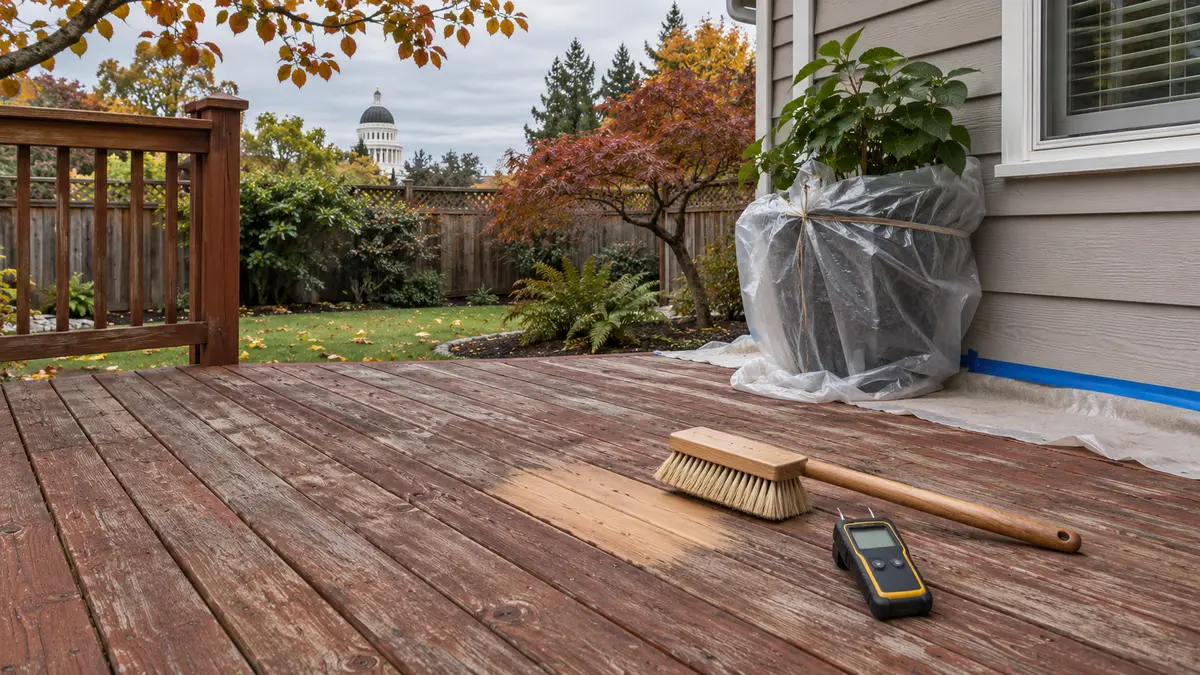
The goal is comparison, not a universal temperature rating. An infrared thermometer can help compare samples placed together, but readings vary with the instrument, angle, surface emissivity and conditions.
1. Re-create the planned exposure
Place all samples side by side where the deck will receive its strongest sun. Set them on the same support with similar airflow below. Do not leave one on concrete and another on soil; the surface underneath can change the comparison.
If the future deck will extend from shade into sun, test in both zones. A west-facing area used in late afternoon deserves a late-afternoon test, not only a morning check.
2. Compare at several times
Record observations in the morning, near peak exposure and later in the afternoon. Note cloud cover, shade and approximate air temperature. Repeat on another clear day if the first test is partly cloudy or unusually windy.
Use the same thermometer position and distance for every board. Record the readings as relative results for that session. Avoid using a single number as a promise of future surface temperature.
3. Evaluate real use safely
Think about who will use the deck and where they will walk. Bare feet, young children and pets make surface comfort more important near doors, stairs and seating areas. Do not test a hot sample with bare skin; use an infrared thermometer and follow its instructions.
Also view each sample from indoors and outdoors. A color that looks balanced in direct sun may appear much darker under a patio cover.
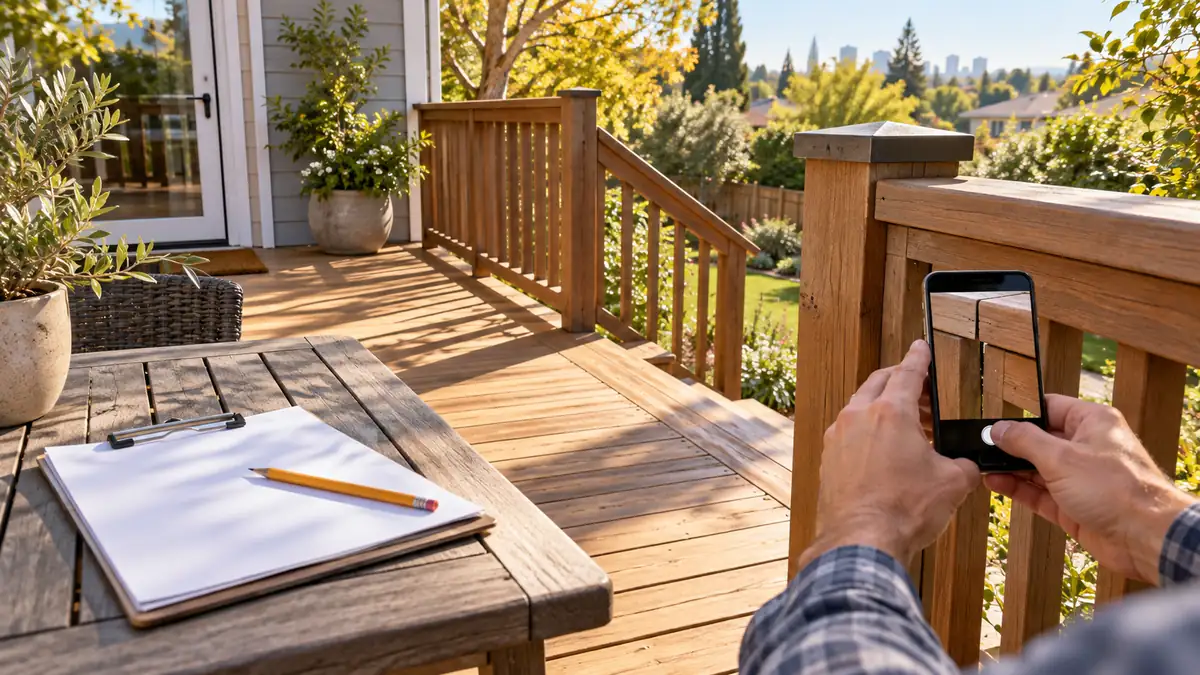
4. Keep a simple comparison sheet
| What to record | Why it matters |
|---|---|
| Exact collection and color | Prevents ordering a similar-looking but different board |
| Sun and shade times | Connects the sample result to actual use |
| Relative thermometer readings | Makes the side-by-side comparison more objective |
| Glare and color appearance | Reveals how the finish looks at different angles |
| Texture under dry and damp conditions | Helps assess the surface, without replacing published slip data |
| Available profiles | Confirms stairs, borders and exposed edges can be detailed correctly |
Use color layout to manage tradeoffs
A light field color is often the simplest starting point when heat comfort is a priority. A darker picture-frame border or accent can add contrast without covering the whole walking surface in the darkest board. That detail still needs careful placement: borders, stair treads and landings are high-traffic areas.
Color also affects maintenance expectations. Sacramento dust and pollen may be more visible on some dark, uniform finishes; very light colors can show other marks. Samples should be viewed clean and with a little ordinary outdoor dust before the final choice.
Ask how much color and grain variation the collection is designed to have. For boards with strong variation, the installer may need to lay out material from several packages before fastening so the finished surface looks intentional.
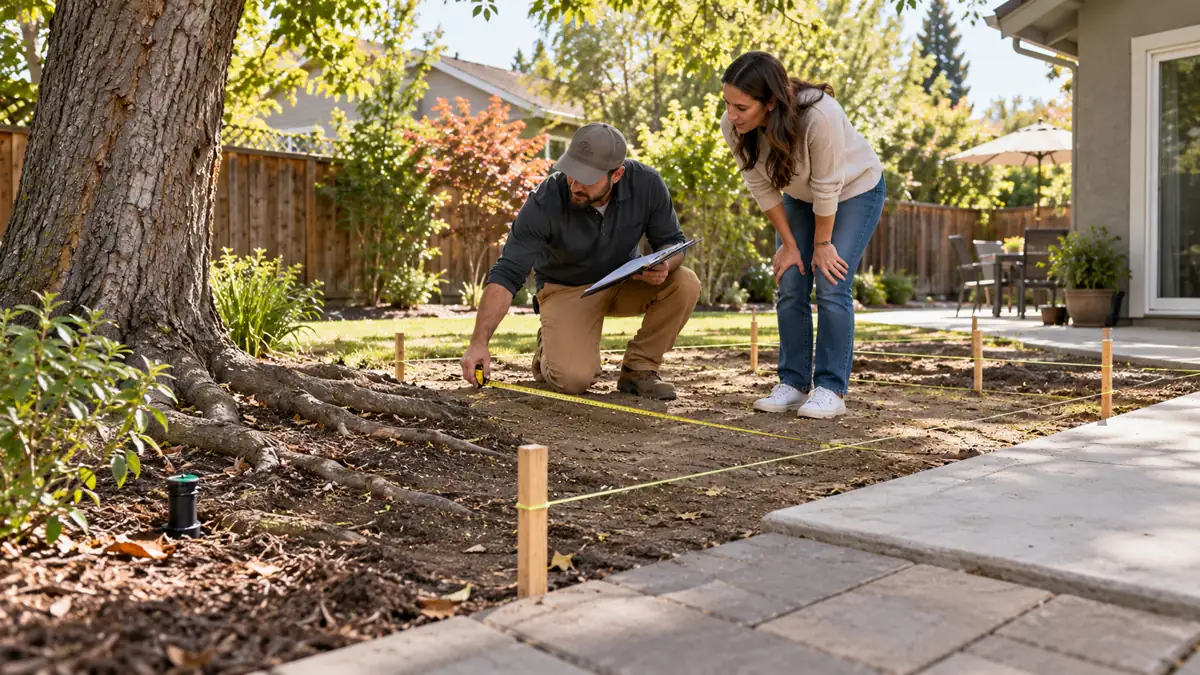
Plan shade before framing and ordering
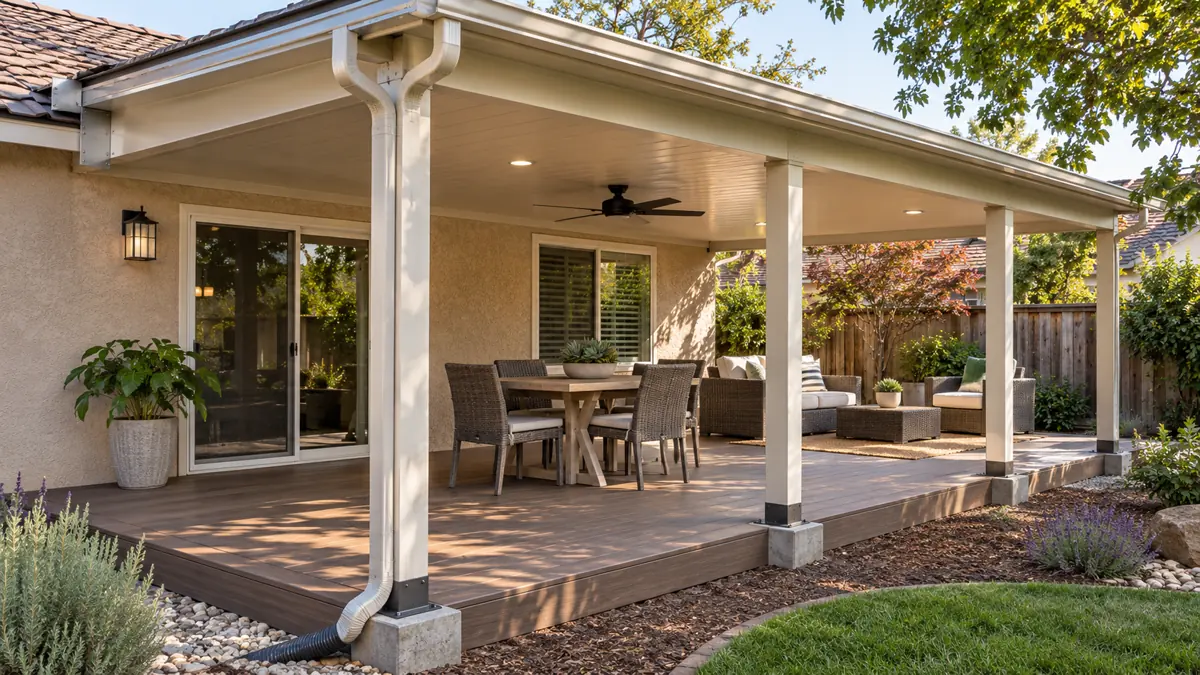
Shade can matter as much as board color. Map the house shadow, nearby trees and intended umbrella or furniture locations. Our guide to planning shade for a Sacramento deck covers orientation and early design decisions in more detail.
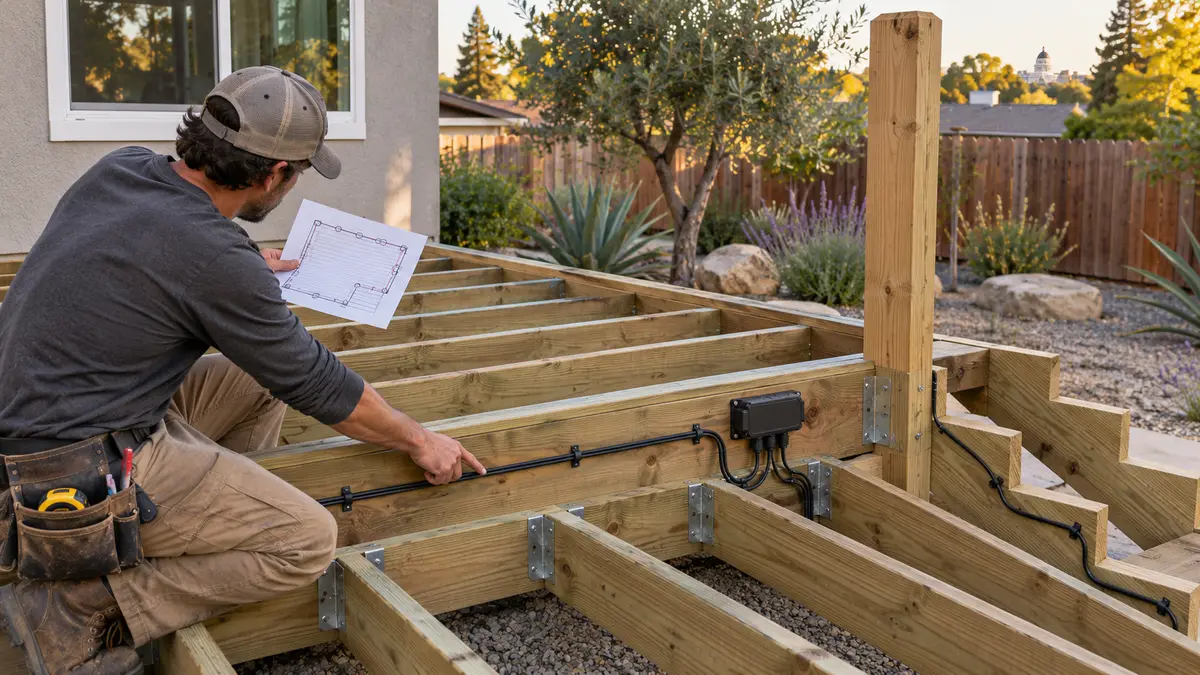
If a permanent cover or pergola is part of the plan, identify it before structural design begins. Posts, footings, ledger conditions and local review requirements may affect the deck scope. Do not assume an added cover can simply be attached after the deck is complete.
Shade also moves through the day and season. A sample that is shaded in October may receive direct sun during another part of the year, so combine the test with an exposure review rather than relying on one moment.
Heat is one part of a durable deck selection
The coolest-feeling sample is not automatically the correct board. Confirm that the collection works with the full deck design, including:
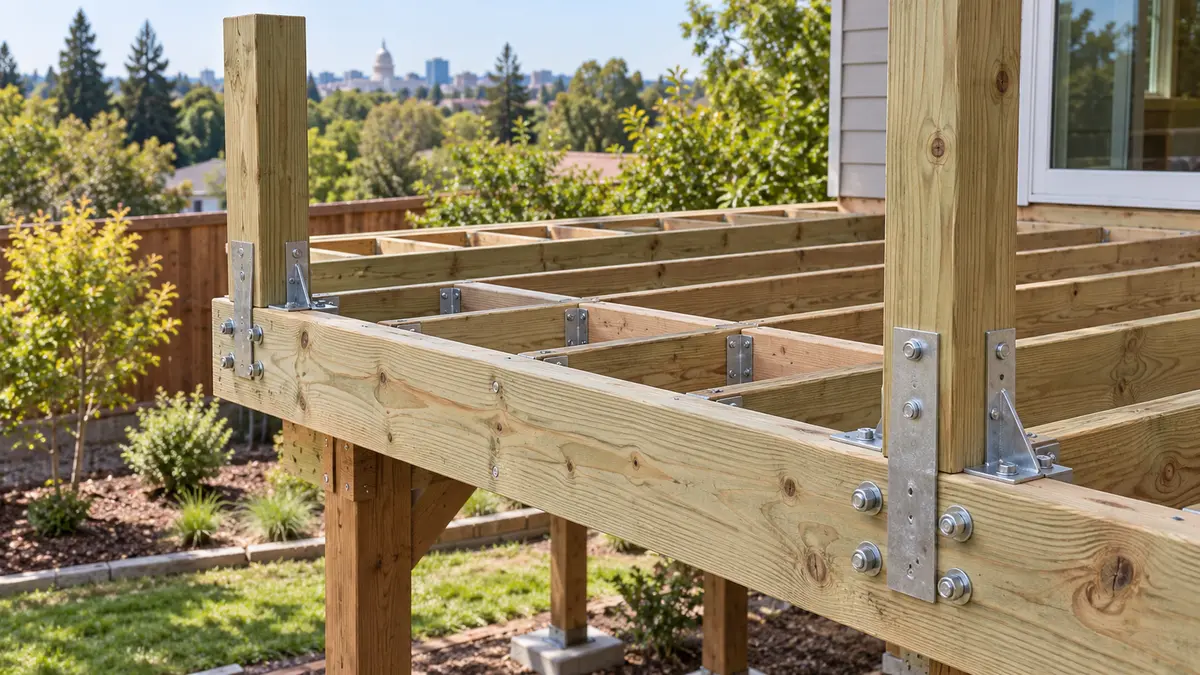
- Manufacturer-required joist and stair-stringer spacing
- Hidden fasteners, face fasteners and plugs
- End gaps, butt-joint support and ventilation
- Square-edge or grooved profiles for borders and stairs
- Railing, fascia and drainage details
- Current warranty terms and local product availability
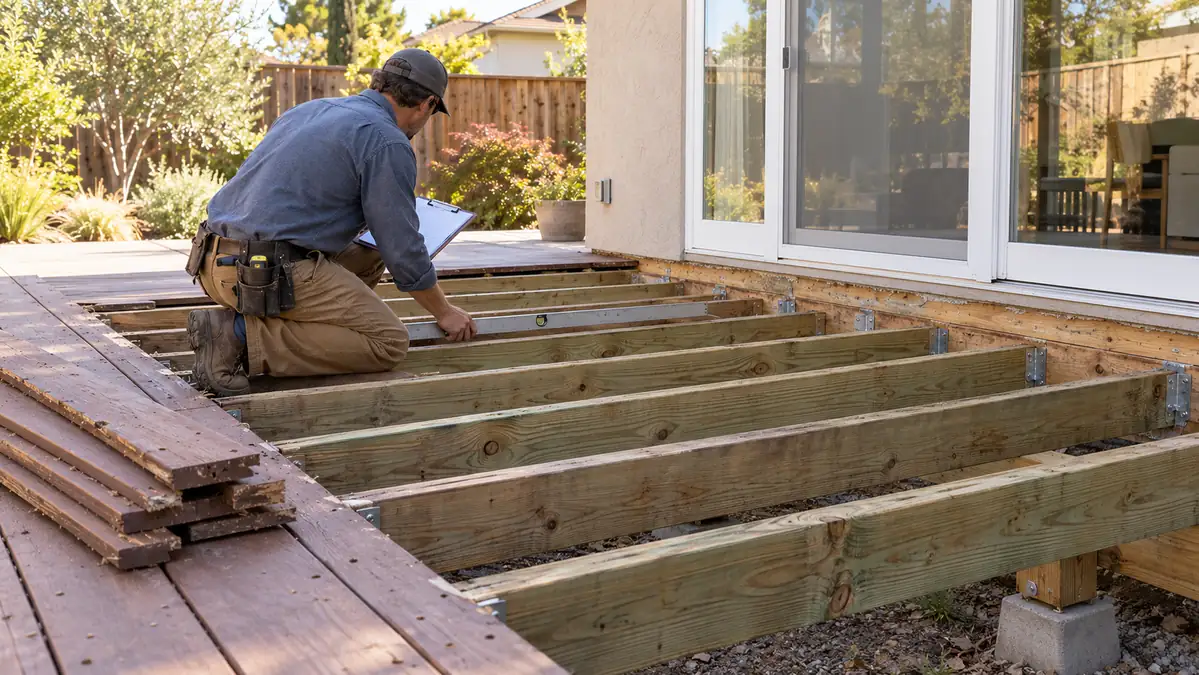
A collection change after framing can require extra blocking or different stair details. Make the board decision early enough for the structure and finish plan to work together.
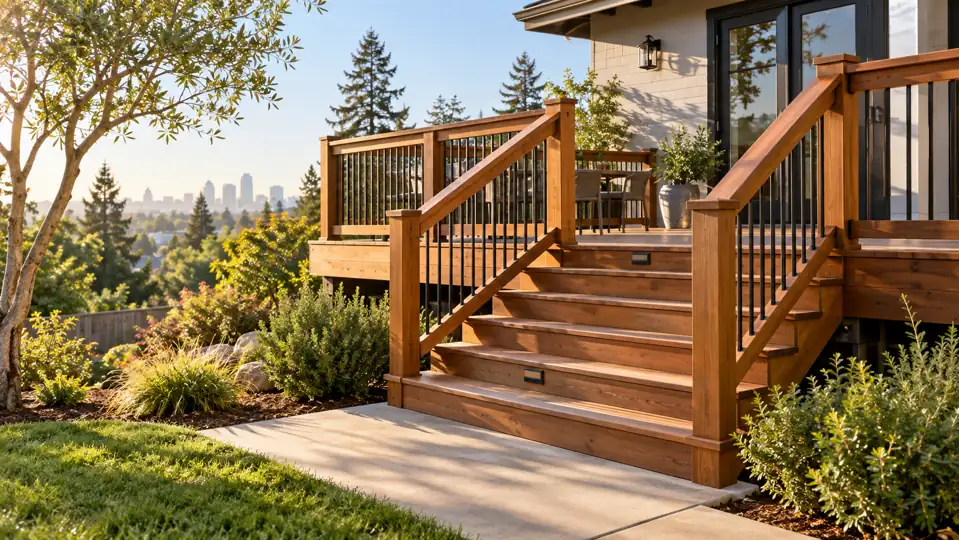
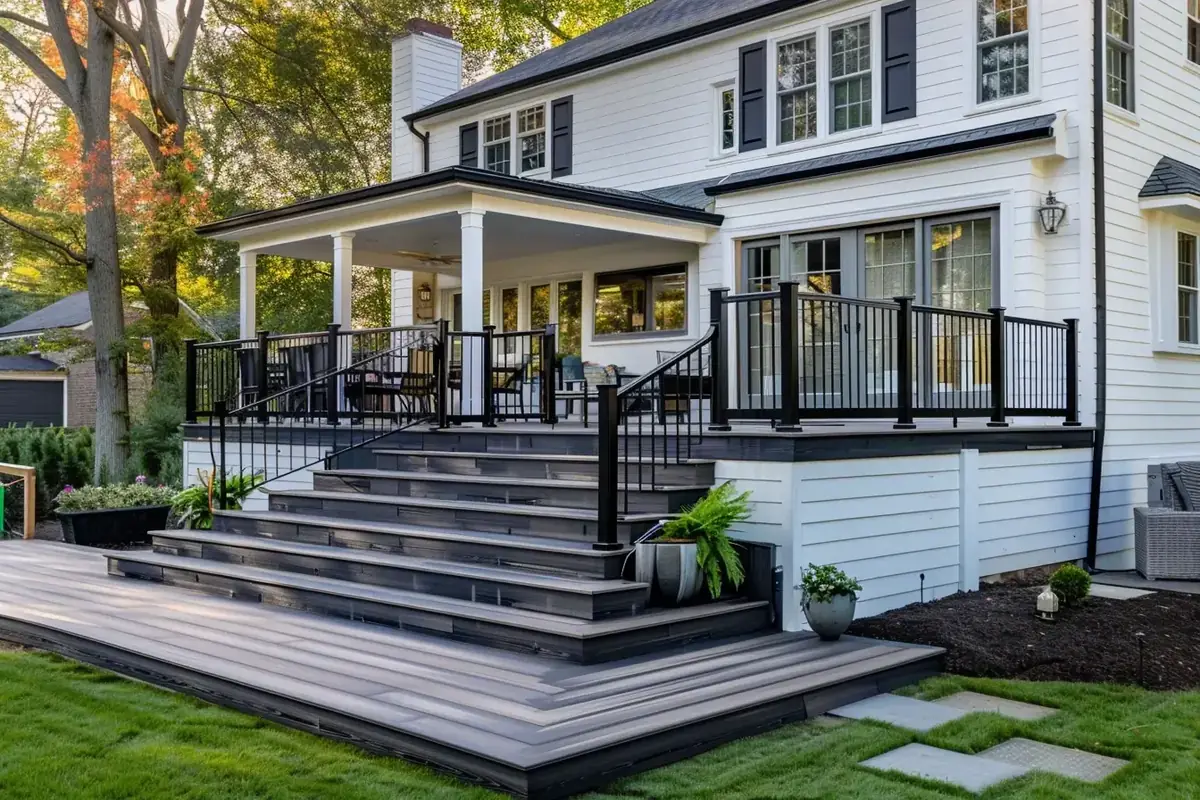
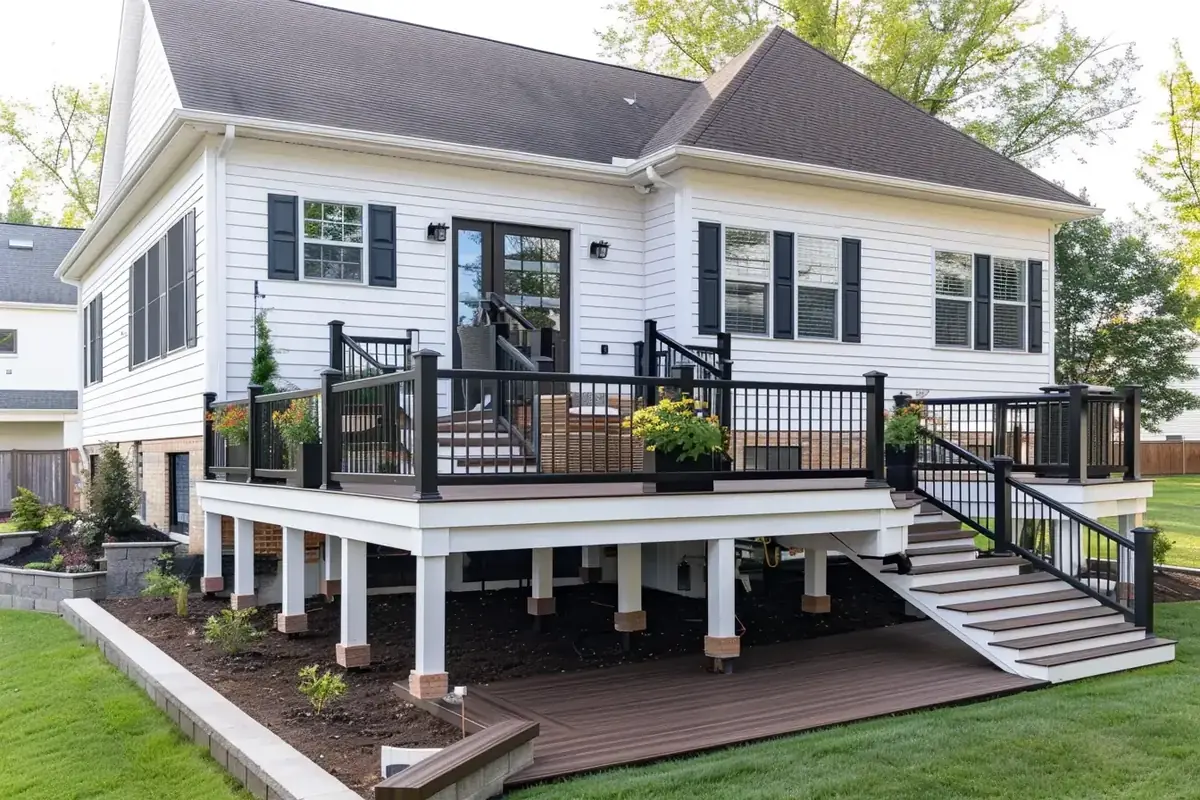
For an example of how color, borders and railing read across a complete installation, see our Sacramento composite-deck project. Project photos can provide design context, but they cannot predict the temperature at another property.
Questions Sacramento homeowners often ask
Does composite decking get hot in Sacramento?
Any outdoor walking surface can become hot in direct sun. The exact temperature depends on the product, color, exposure and conditions. Compare exact samples on site and plan shade where comfort matters.
Is light composite always cooler than dark composite?
Lighter colors generally absorb less solar energy than darker colors, but construction and product-specific technology also affect the result. Compare exact boards from the collections under consideration rather than relying only on color names.
Can an infrared thermometer choose the best board for me?
It can make a side-by-side comparison more consistent, but it is not a guarantee. Use it to compare samples under the same conditions, then consider color, structure, warranty, profiles and shade together.
Should I pick the board before the deck is designed?
Choose a short list early. The final product affects joist spacing, fasteners, borders, stairs and fascia details, so it should be confirmed before framing decisions are locked.
Compare deck samples at your Sacramento home
Yellowstone Renovation can review the exposure, compare exact board options and coordinate the finish choice with the framing, stair and shade plan. Learn about our Sacramento composite-deck service and local work in Sacramento, California, then request an on-site estimate.