First: the California wood is redwood, not red oak
When Sacramento homeowners describe the warm California fence wood they have seen, they often mean redwood. Red oak is a hardwood commonly used for interior flooring, cabinets and furniture; it is not the standard local privacy-fence choice.
Redwood, cedar and pressure-treated lumber can all build a useful fence, but they should not be compared by species name alone. Grade, board thickness, moisture, posts, fasteners and finish can matter as much as the label.
Quick comparison
| Question | Redwood | Cedar | Pressure-treated lumber |
|---|---|---|---|
| Visual character | Warm color with recognizable California character | Light-to-warm natural tone and varied grain | Practical lumber appearance that can be stained |
| Grade sensitivity | High—clear, heartwood-rich and common grades differ substantially | High—species and grade can vary by supplier | High—appearance grade and moisture condition vary |
| Typical reason to choose it | Premium natural look and custom details | Natural appearance and workability | Budget and structural practicality |
| Refinishing | Needed if you want to retain more of the original color | Needed if you want to retain more of the original color | Often finished after the material is ready |
| Best comparison method | Exact grade, profile and board thickness | Exact species, grade and thickness | Use category, appearance grade and moisture condition |
Redwood fencing
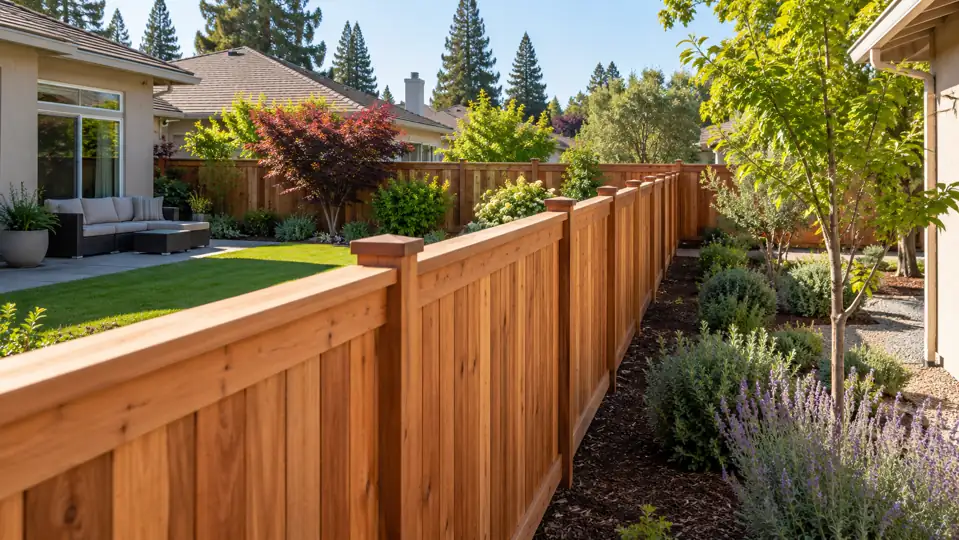
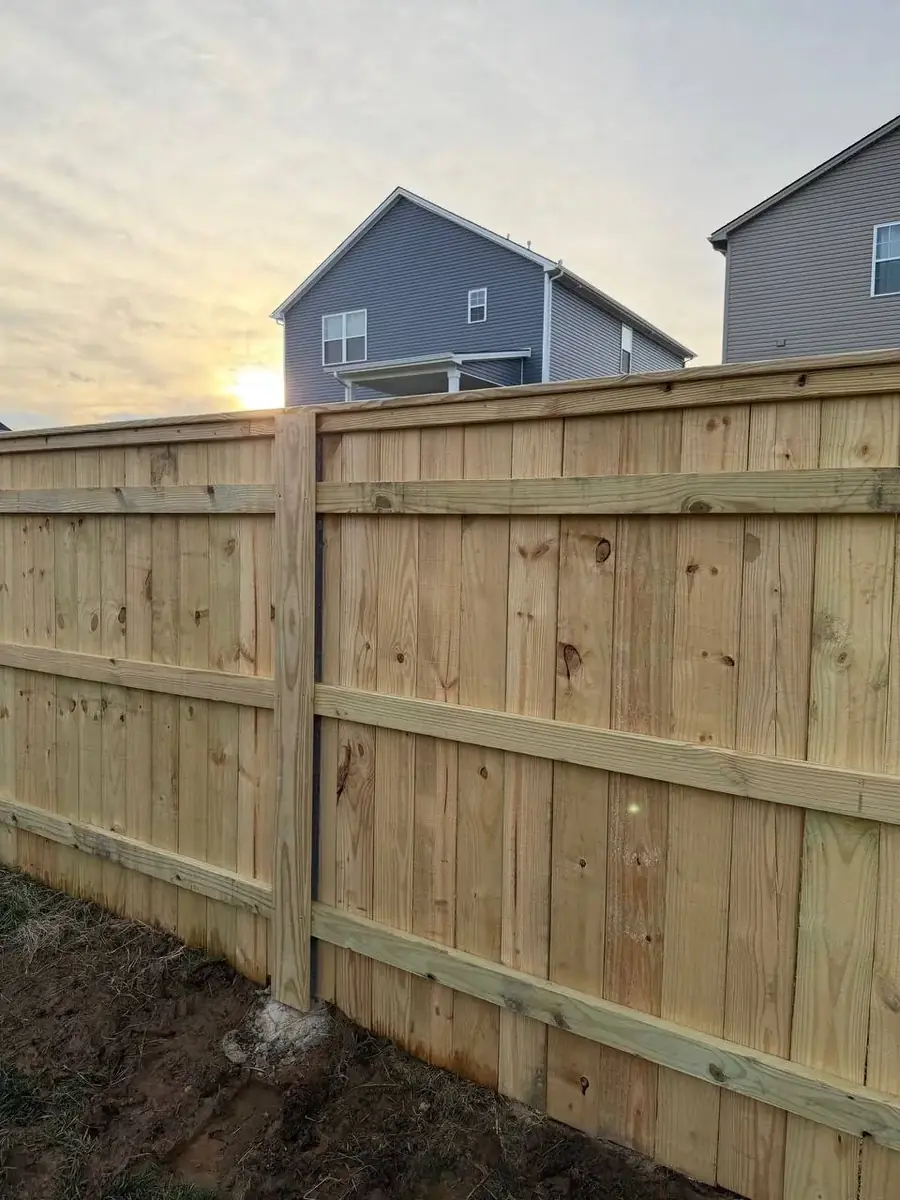
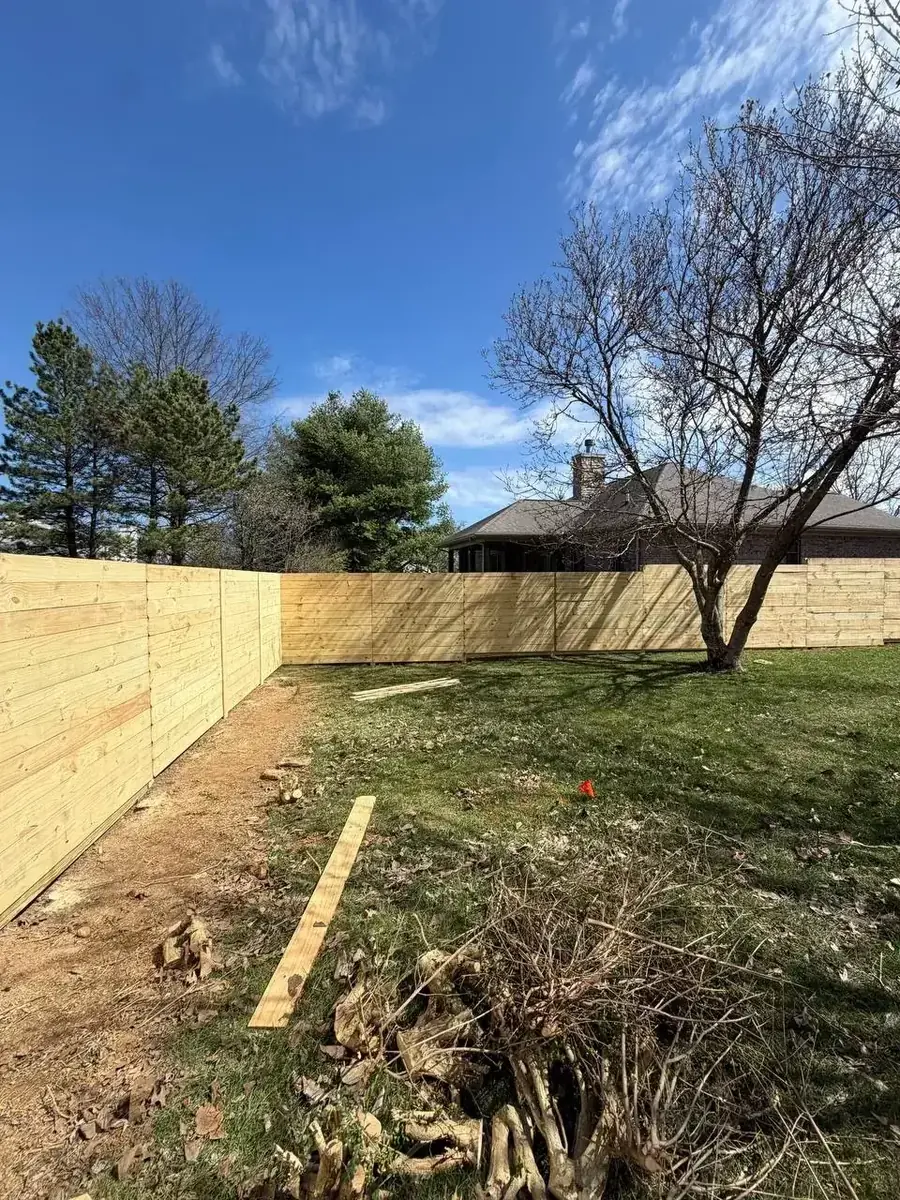
Redwood is popular for vertical privacy, horizontal fencing, board-on-board layouts, gates and cap-board details. Its warm tone works especially well with California landscaping and modern exterior colors.
The important question is: Which redwood? A clear, heartwood-rich product is not the same as a knotty common grade. A proposal should identify the intended grade or at least set a clear appearance expectation.
Redwood advantages:
- Attractive natural grain and color
- Easy to customize with caps, trim and framed panels
- Familiar fit for Sacramento-area architecture
- Individual boards can be repaired or replaced
Redwood considerations:
- Premium grades can raise the budget quickly
- Unfinished boards weather toward gray
- Horizontal designs need proper intermediate support
- Sprinklers and soil contact can shorten the life of any wood fence
Learn more on our redwood fence service page.
Cedar fencing
“Cedar” can refer to different products. Color, density, knot pattern, availability and price vary, so ask what species and grade the quote includes.
Cedar advantages:
- Natural appearance
- Relatively lightweight and workable
- Suits vertical, board-on-board and decorative styles
- Can accept compatible stains and finishes
Cedar considerations:
- Supplier terminology can be vague
- Thin or low-grade boards may move differently than expected
- Exterior-rated compatible fasteners are important
- Local availability may influence price and lead time
Learn more about cedar fences in Sacramento.
Pressure-treated fencing
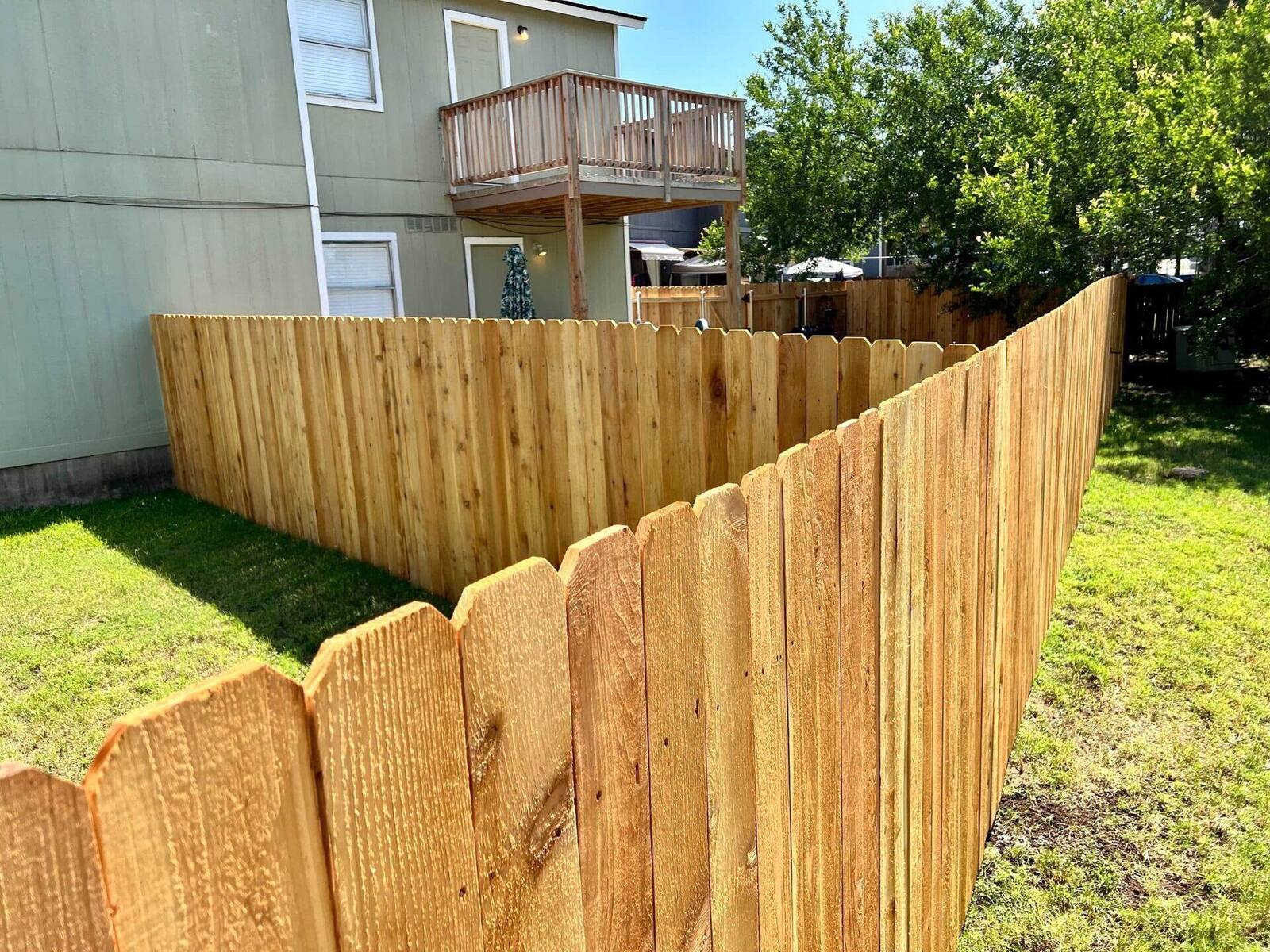
Pressure-treated lumber is commonly used for posts and can also be used for rails and pickets. It is often selected when practical coverage and budget matter more than premium grain.
Treatment does not make lumber immune to movement, checking or sun weathering. Fresh material may contain substantial moisture and can change as it dries.
Pressure-treated advantages:
- Practical for structural components
- Often offers a lower initial material cost
- Available in several profiles and appearance grades
- Useful for rental and large-perimeter projects
Pressure-treated considerations:
- Confirm that the use category fits the exposure
- Use compatible fasteners and hardware
- Expect some drying movement and surface checking
- Follow product directions for field cuts and finishing
See our pressure-treated fence guide.
Which wood is best for Sacramento sun?
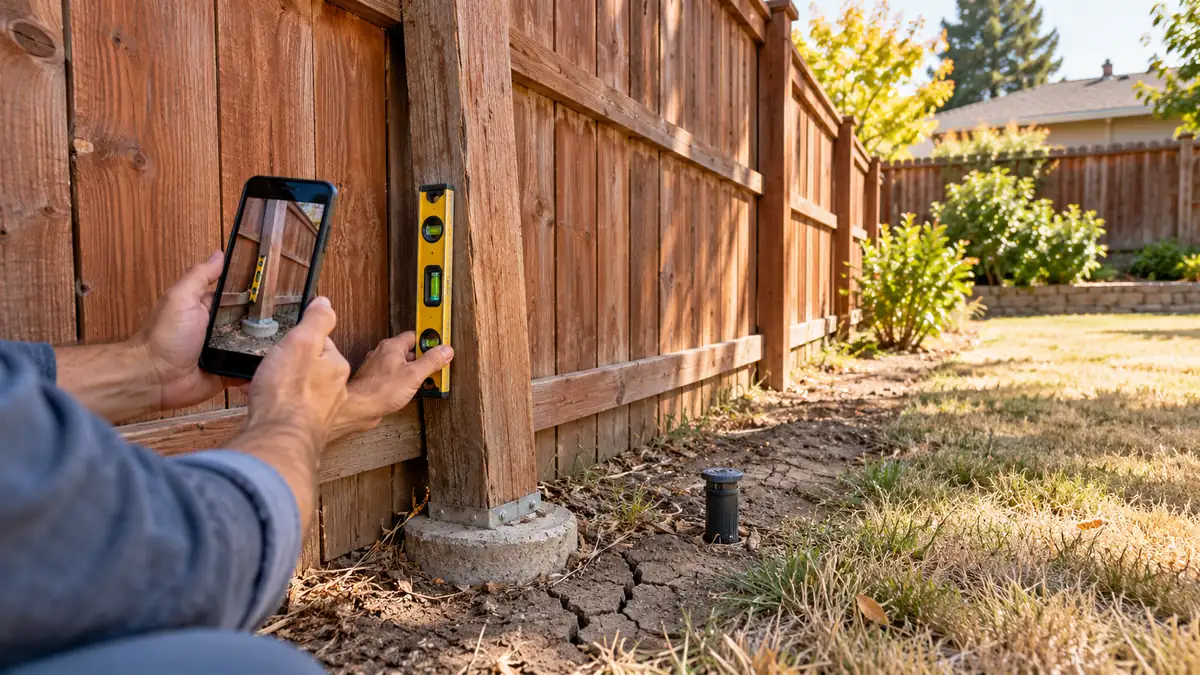
No species can compensate for poor construction. Sacramento heat and strong sun make these details important:
- Use sound posts and a layout appropriate for fence height and wind exposure.
- Keep the bottom of boards away from soil and constant moisture.
- Redirect sprinklers that repeatedly wet one section.
- Allow the selected board orientation to move as intended.
- Use exterior fasteners compatible with the lumber.
- Choose a finish based on the exact wood and manufacturer instructions.
The questions to ask before choosing
- What exact species and grade are included?
- How thick are the boards?
- Are posts wood or metal?
- Is the design vertical, horizontal or board-on-board?
- What happens at grade changes?
- Is staining or sealing included?
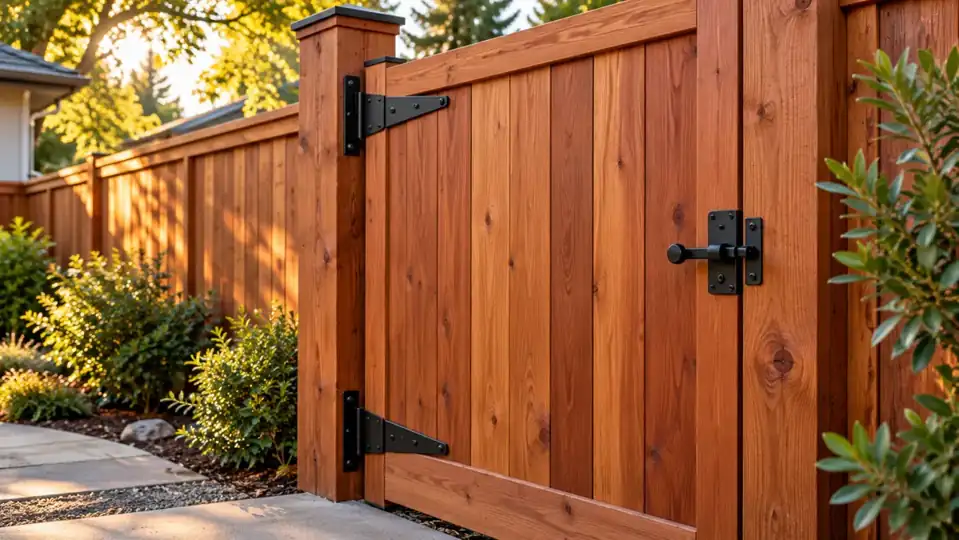
- How are gates framed and reinforced?
- What maintenance should begin in year one?
The best material is the one that fits the look, budget and care you are actually willing to provide. Compare samples in daylight, then review the complete post, frame, gate and finish system.
For help selecting a wood fence, explore our Sacramento fence installation options or schedule a free estimate.