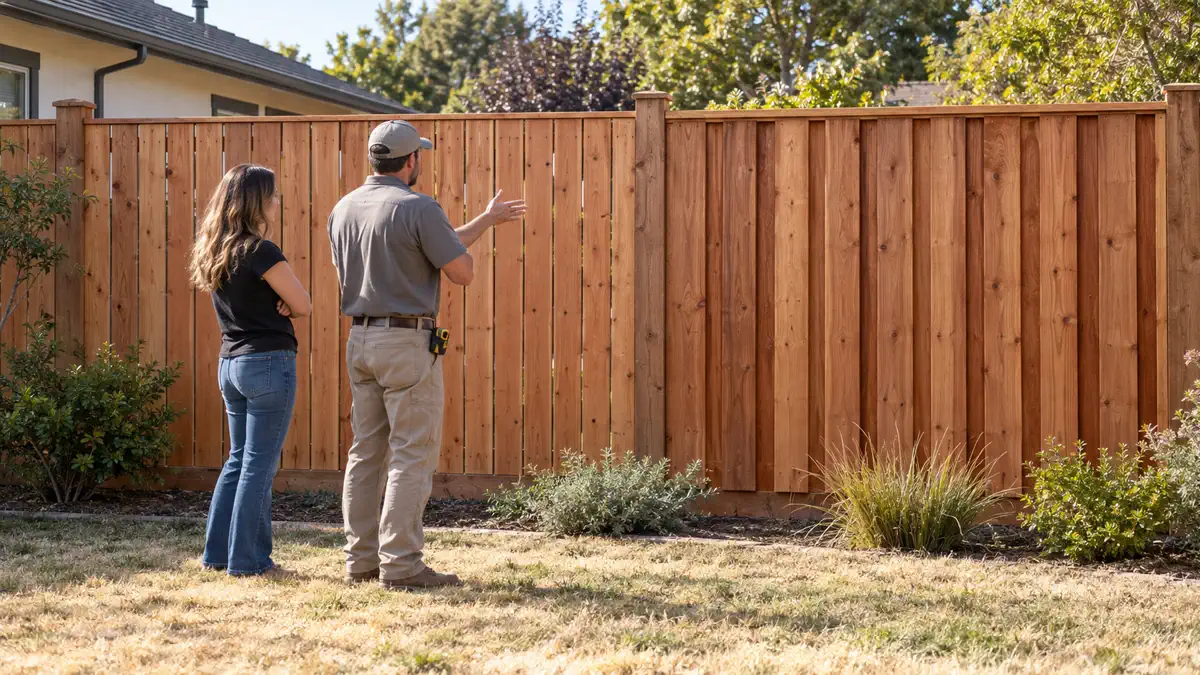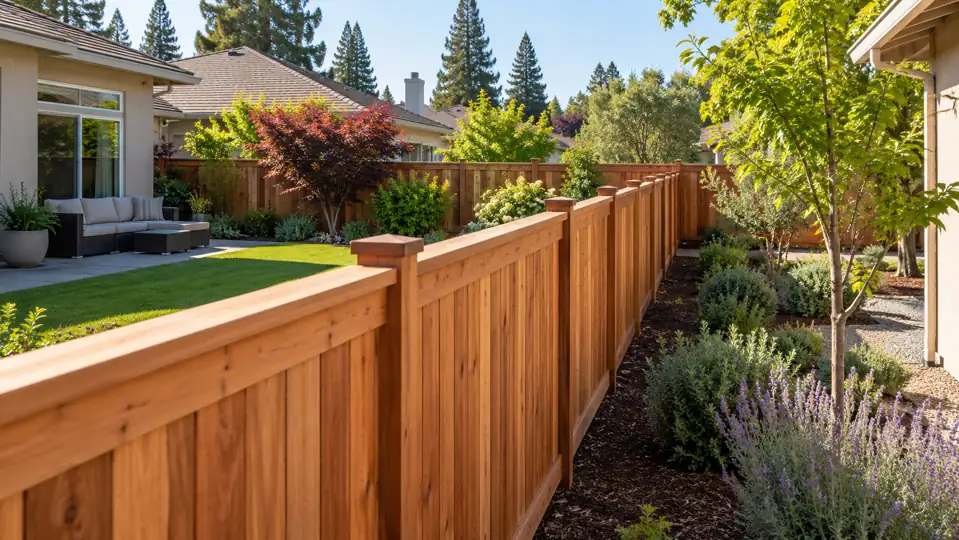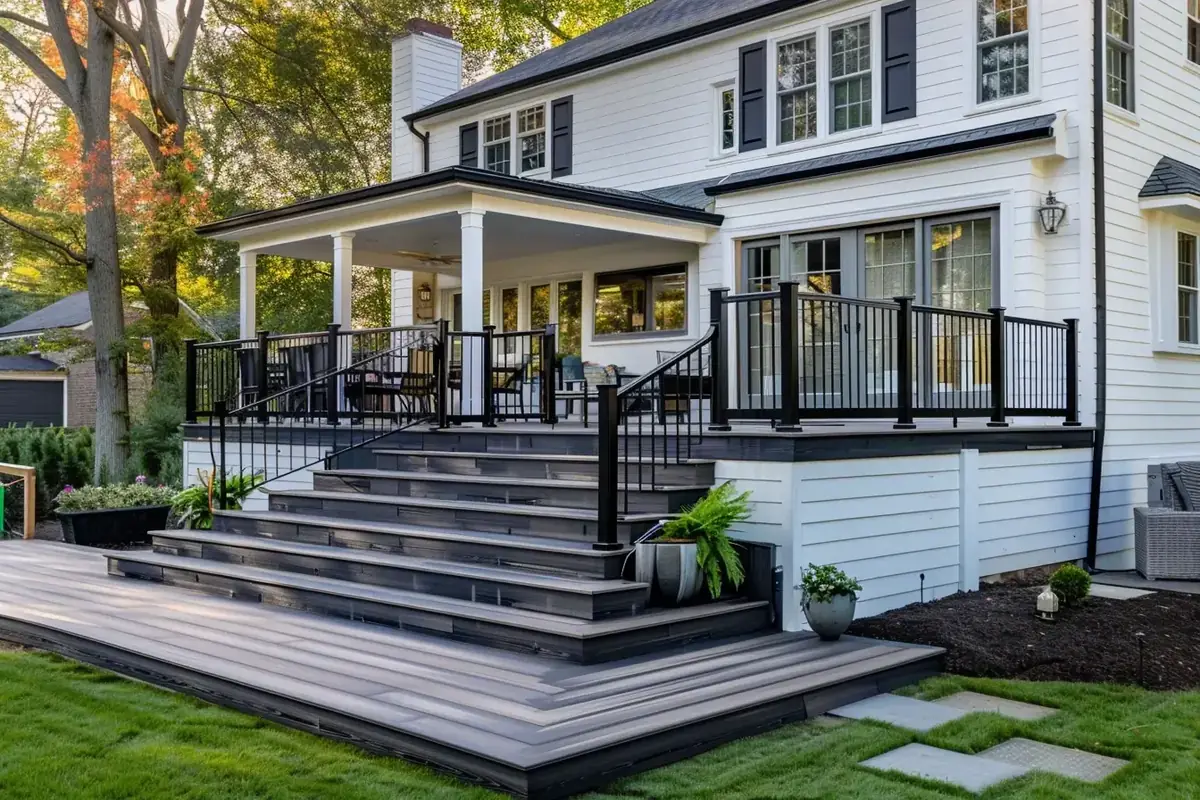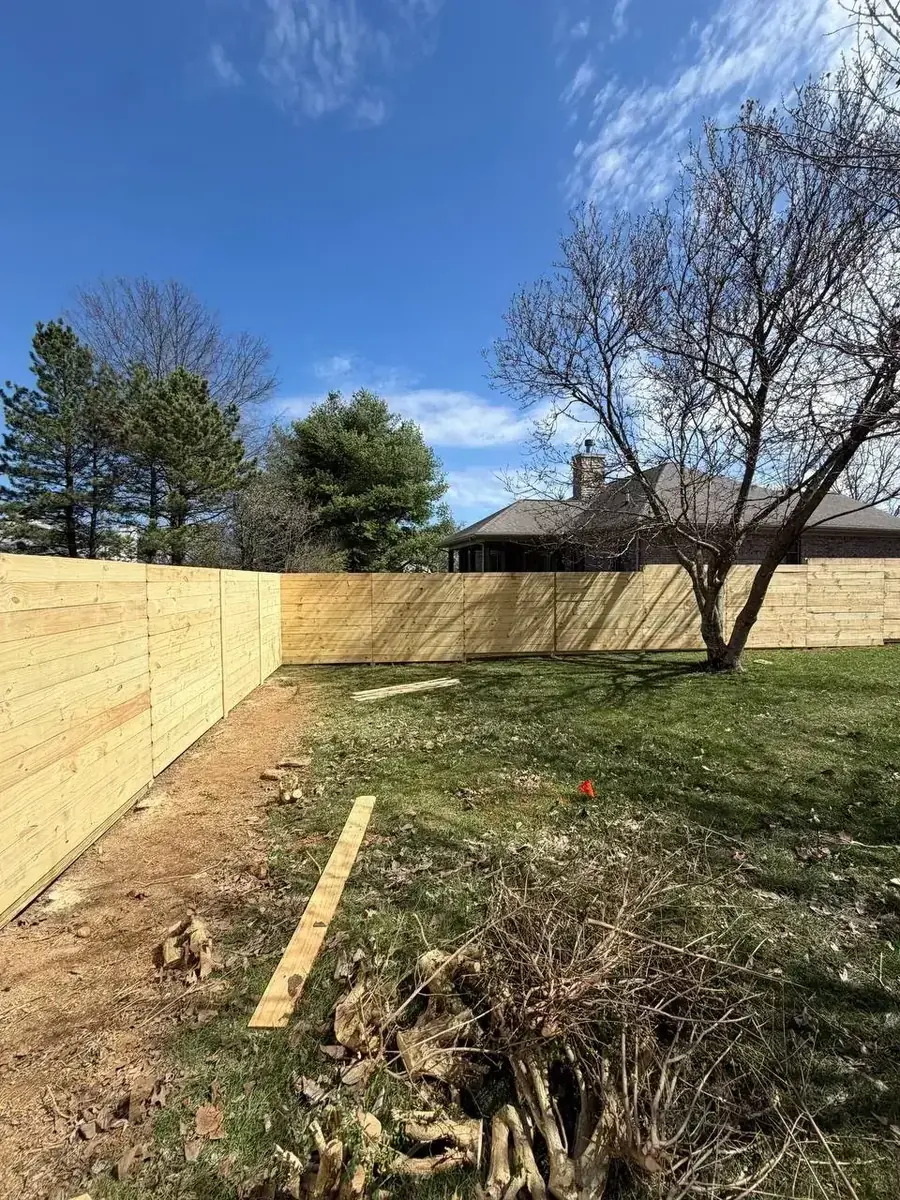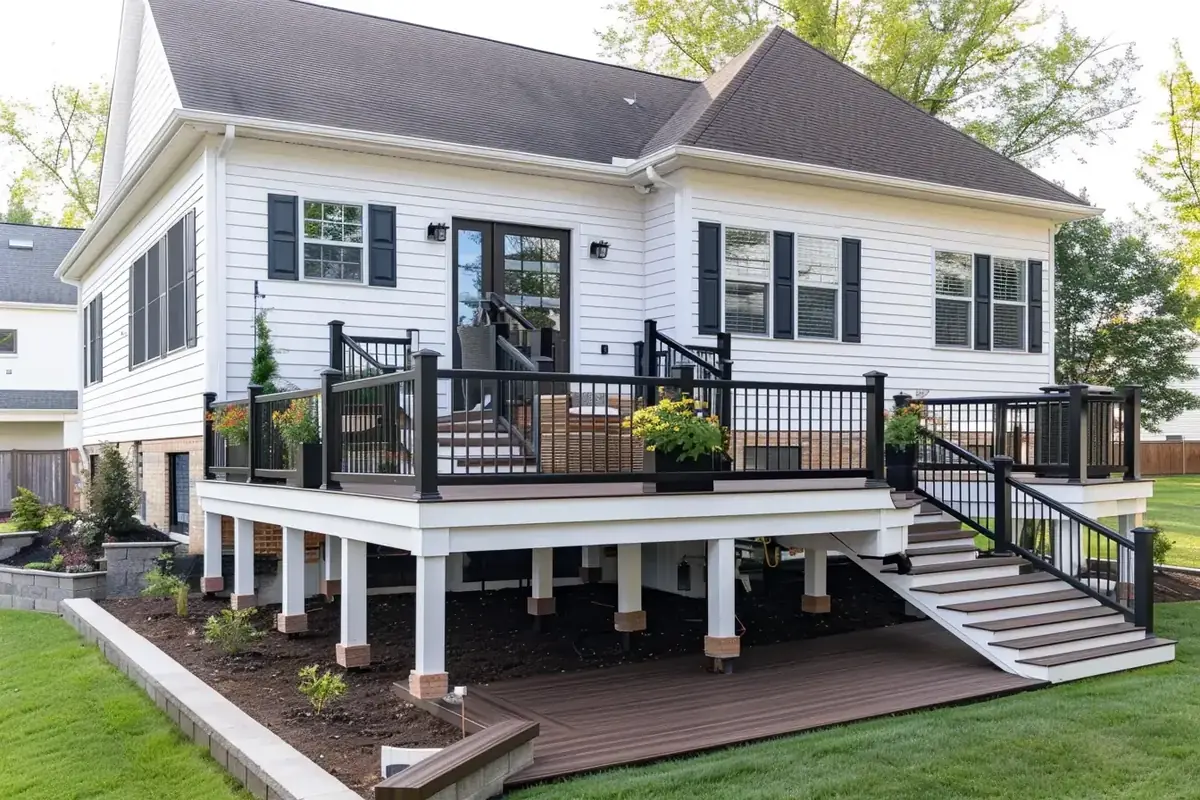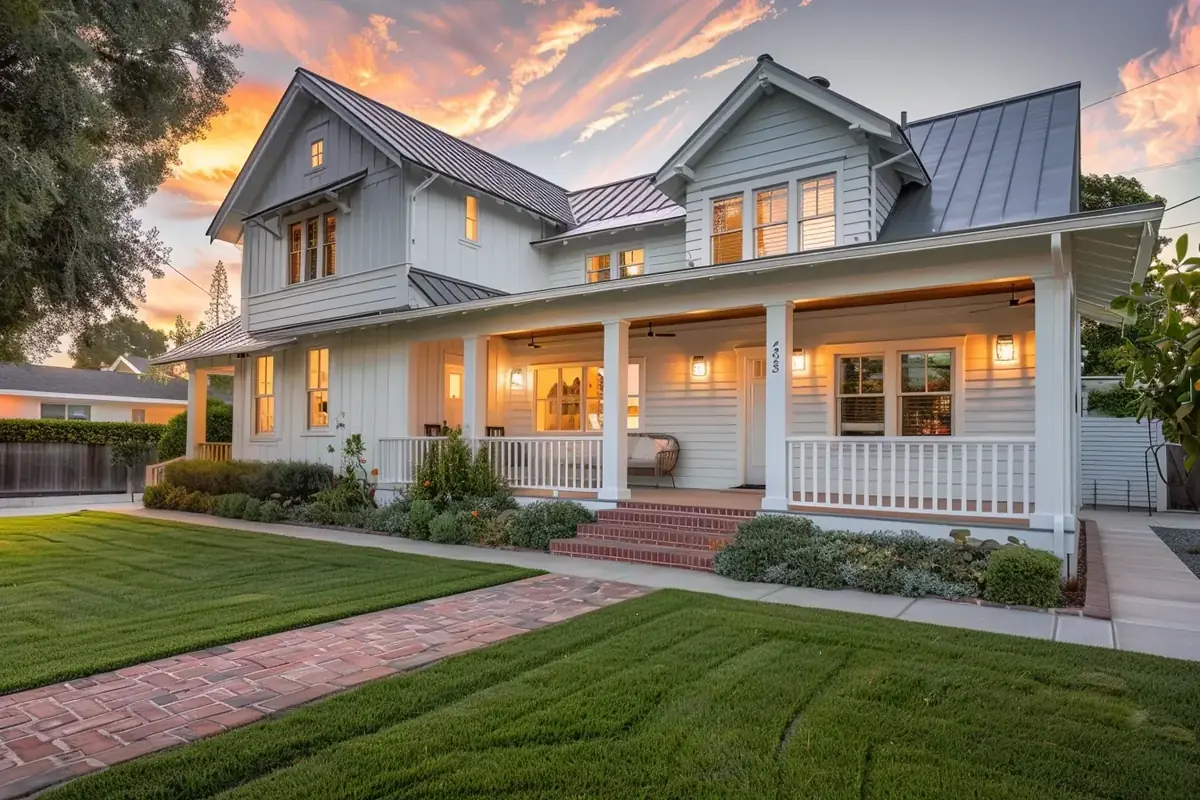
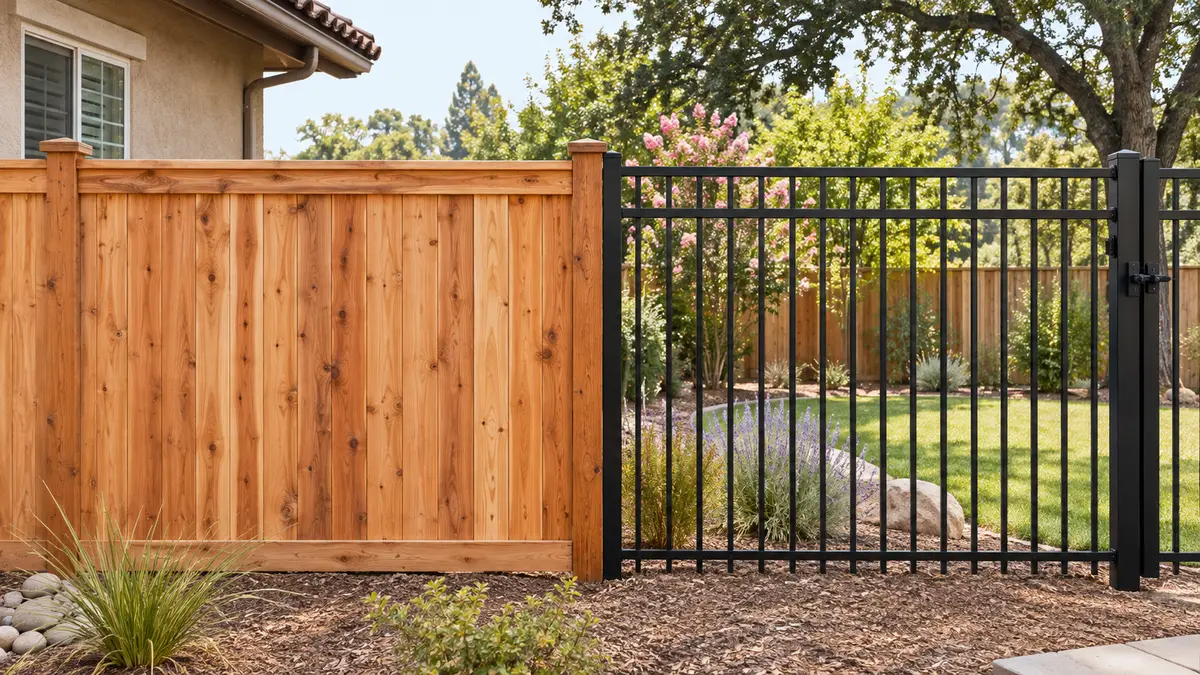
Wood fencing usually requires more finish care but provides solid privacy and board-by-board repairability. Powder-coated aluminum avoids routine staining, yet it still needs gentle washing, coating inspections and gate-hardware adjustment. The better Sacramento fence is the one whose privacy, appearance and maintenance pattern match the property—not simply the material described as “low maintenance.”
This comparison is about ownership after installation. It does not make wood and aluminum interchangeable: a wood privacy fence closes views, while ornamental aluminum typically preserves them. Compare the complete system, including posts, grade transitions and gates, before comparing cleaning schedules.
The maintenance difference at a glance
| Ownership question | Wood privacy fence | Powder-coated aluminum fence |
|---|---|---|
| Routine cleaning | Remove soil, plant debris and surface buildup using methods approved for the wood and existing finish | Wash dust and deposits with mild soap, water and nonabrasive tools approved by the manufacturer |
| Finish work | May need cleaning, preparation and another compatible stain or coating when its condition and product instructions call for it | Does not receive wood stain; inspect the factory coating and use the manufacturer's repair method for damaged areas |
| Common inspection points | Board movement, checking, loose fasteners, post condition, rail ends and moisture at the bottom edge | Scratches, coating damage, loose panel connections, post movement, hinges and latch alignment |
| Typical repair pattern | Individual boards and some rails may be replaced without replacing the entire run | Damaged panels or manufactured components may need an exact compatible replacement |
| Privacy | Commonly configured as a solid or overlapping screen | Commonly an open ornamental boundary |
| Main ownership tradeoff | More finish responsibility and natural variation | Less refinishing, but less privacy and greater dependence on the selected system |
Do not use the table as a universal maintenance calendar. Wood species, finish, exposure and irrigation vary. Aluminum coating systems and warranty instructions also vary. The proposal should identify the actual materials and manufacturers so future care is based on documentation rather than a generic interval.
What wood-fence maintenance really includes
Wood changes outdoors. Sun alters color; moisture changes board dimensions; soil and plant debris can slow drying. A maintenance plan should control exposure, preserve the chosen appearance and catch small structural problems before they affect a full bay.
Keep the fence able to dry
Start at ground level. Remove mulch, leaves and vines that remain against picket ends or the bottom rail. Redirect sprinklers that repeatedly wet one face or one post. Check whether grade changes are burying boards that originally had clearance.
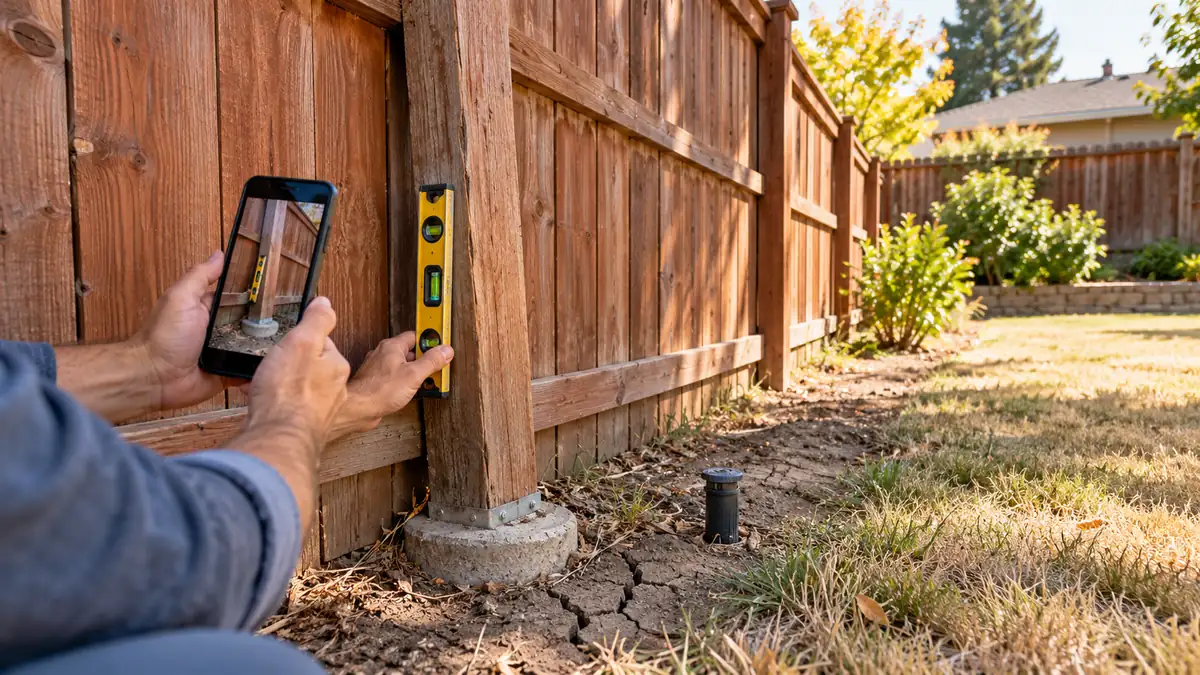
Constant irrigation is not the same as seasonal rain. A sprinkler can wet the same location several times each week during warm weather, creating a concentrated exposure pattern. Photograph recurring wet zones and correct the water path before applying another finish.
Inspect the structure before refinishing
Cleaning and staining should not hide movement or decay. Walk both accessible sides and check:
- posts that lean or move when the gate operates;
- rails pulling away from posts;
- split, cupped or loose pickets;
- fastener staining or protruding hardware;
- the lower ends of boards near soil and irrigation;
- cap, trim and horizontal surfaces that hold debris;
- gates that drag, twist or no longer latch consistently.
Replace failed wood and correct the moisture source before coating. Our guide to fence posts after a dry Sacramento summer explains how post movement, irrigation and framing can produce symptoms that a new surface finish will not solve.
Treat the finish as a product-specific system
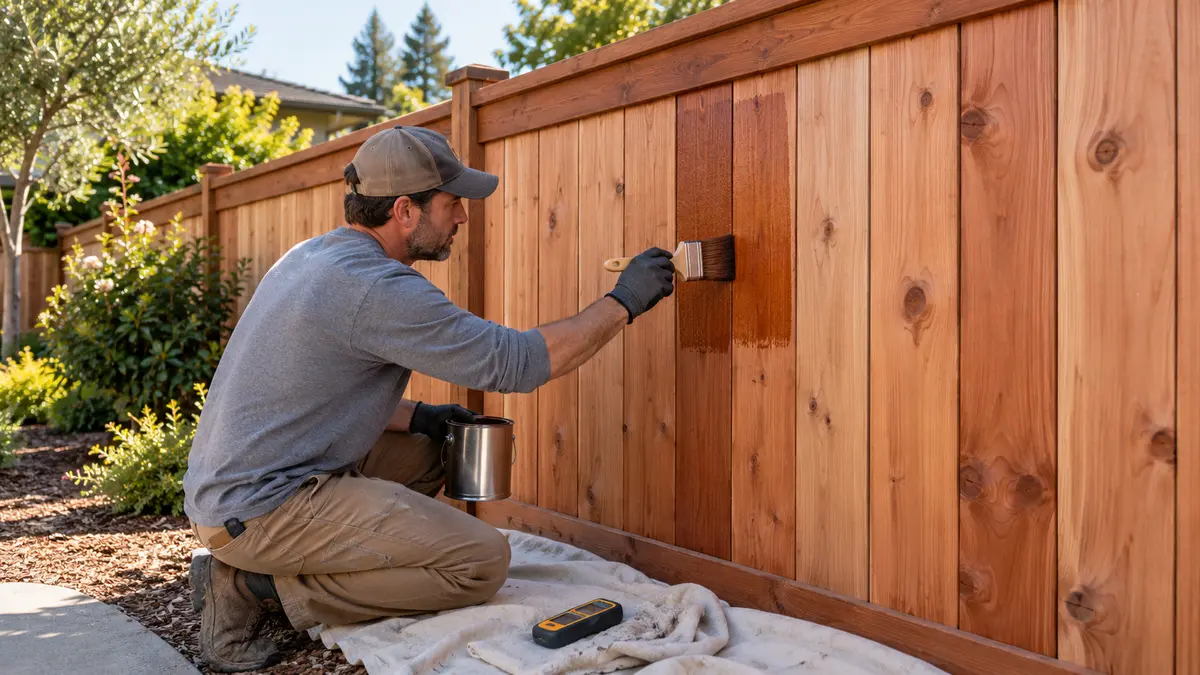
A wood fence does not need a new coat merely because a fixed number of months has passed. Inspect the existing finish and identify it before cleaning or recoating. Preparation may involve washing, drying, sanding or removing a failed coating, depending on the product and surface condition.
Sherwin-Williams' current fence-staining guidance calls for repairs and cleaning before application, a dry surface, weather within the product's limits and protection of nearby surfaces. Those are sound process principles, but the selected product label and technical data remain the controlling instructions.
If redwood color retention matters, use the more detailed Sacramento redwood fence staining guide. It covers moisture checks, test patches, exposure and written finish scope without imposing an unsupported universal schedule.
What aluminum-fence maintenance really includes
Powder-coated aluminum is often selected to reduce refinishing and preserve an open view. “Low maintenance,” however, does not mean that dirt, sprinkler residue, coating damage or moving hardware can be ignored.
Wash without damaging the coating
Feeney's powder-coated aluminum care guidance recommends periodic cleaning with warm water, mild soap and a soft cloth or sponge, followed by a freshwater rinse. It warns against abrasive tools and strong acidic or alkaline cleaners. The manufacturer also advises cleaning shaded, cool material rather than a surface heated by direct sun.
Use the instructions for the exact fence system installed. Before trying a spot cleaner on irrigation residue, paint or sealant, test it in an inconspicuous location and confirm it is allowed by the coating manufacturer. Pressure, harsh chemistry and abrasive pads can turn a minor stain into permanent finish damage.
Inspect scratches and connections
Look at corners, gate openings, lawn-equipment paths and areas beside hardscape where impacts are more likely. If the coating is scratched or chipped, do not improvise with unrelated paint. Record the product, color and damage, then use the manufacturer's approved touch-up or component-replacement procedure.
Also check panel connections and posts for movement. Aluminum pickets do not eliminate the need for stable posts and correctly resolved grade transitions. A loose post can misalign an otherwise undamaged panel or gate.
Give gates their own checklist
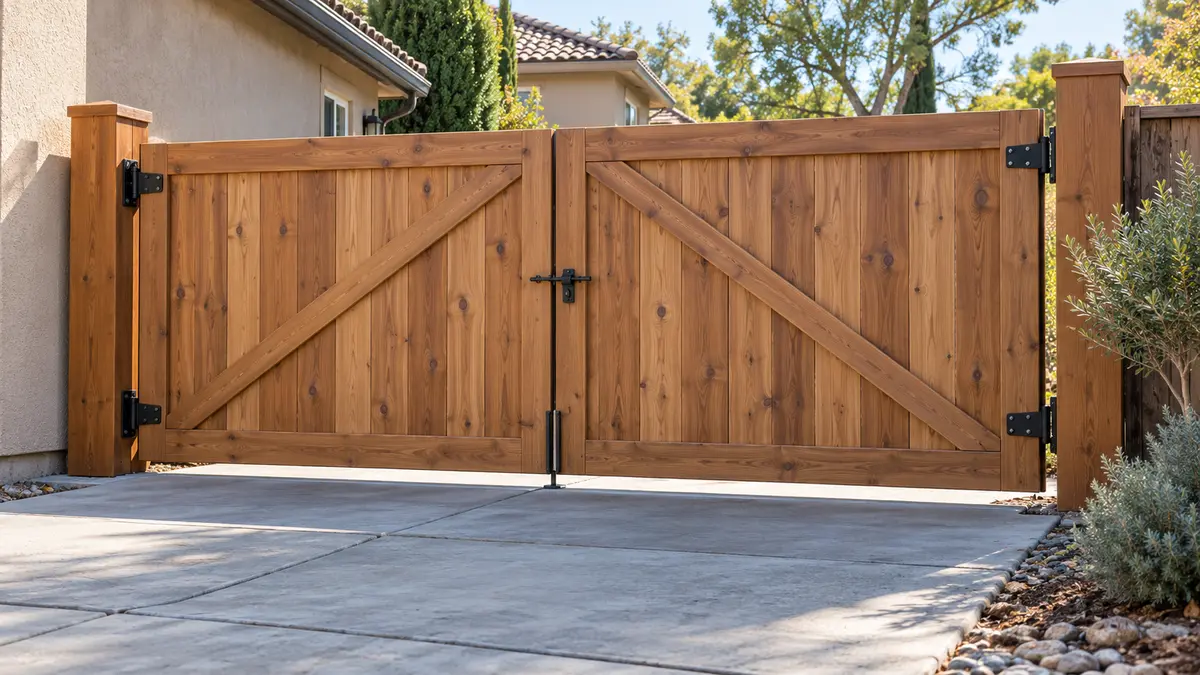
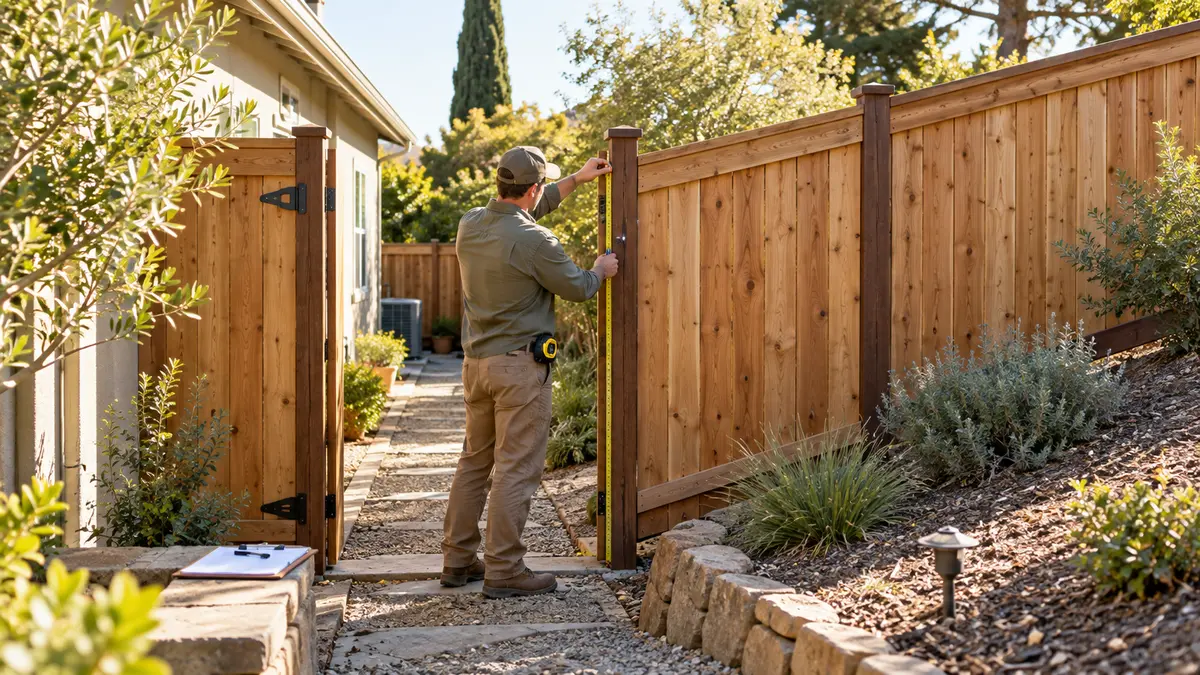
Gates are moving assemblies. Check hinge fasteners, latch alignment, closing travel, ground clearance and post movement. If a gate is part of a pool barrier, ordinary maintenance advice is not enough: the exact barrier and hardware must continue meeting the applicable requirements. Do not disable self-closing or self-latching features to make a misaligned gate easier to use.
For wide equipment access, use the separate Sacramento wide-gate frame and hardware checklist. Gate size, support and daily cycles can matter more than the fence-panel material beside it.
Sacramento conditions that affect both materials
Sun and surface temperature
South- and west-facing runs receive different exposure from shaded side yards. Wood may weather unevenly, while a dark metal surface can become hot in direct sun. View samples at the property and consider where children, pets and routine gate users will touch the system.
Irrigation and landscaping
Sprinkler overspray leaves repeated moisture and mineral deposits on either material. On wood, it can interfere with drying and finish consistency. On coated aluminum, deposits can accumulate on the surface and around hardware. Correct the irrigation pattern rather than relying on more aggressive cleaning.
Keep vines and dense shrubs from concealing connections, trapping debris or blocking a gate. Preserve enough access to inspect posts and both sides of moving hardware.
Grade and drainage
A material comparison cannot fix poor layout. Stepped or racked sections, bottom clearance and runoff paths should be resolved before posts are installed. Our guide to fence replacement on a sloped Sacramento yard shows why grade treatment belongs in the original proposal.
Repairability is different, not automatically better
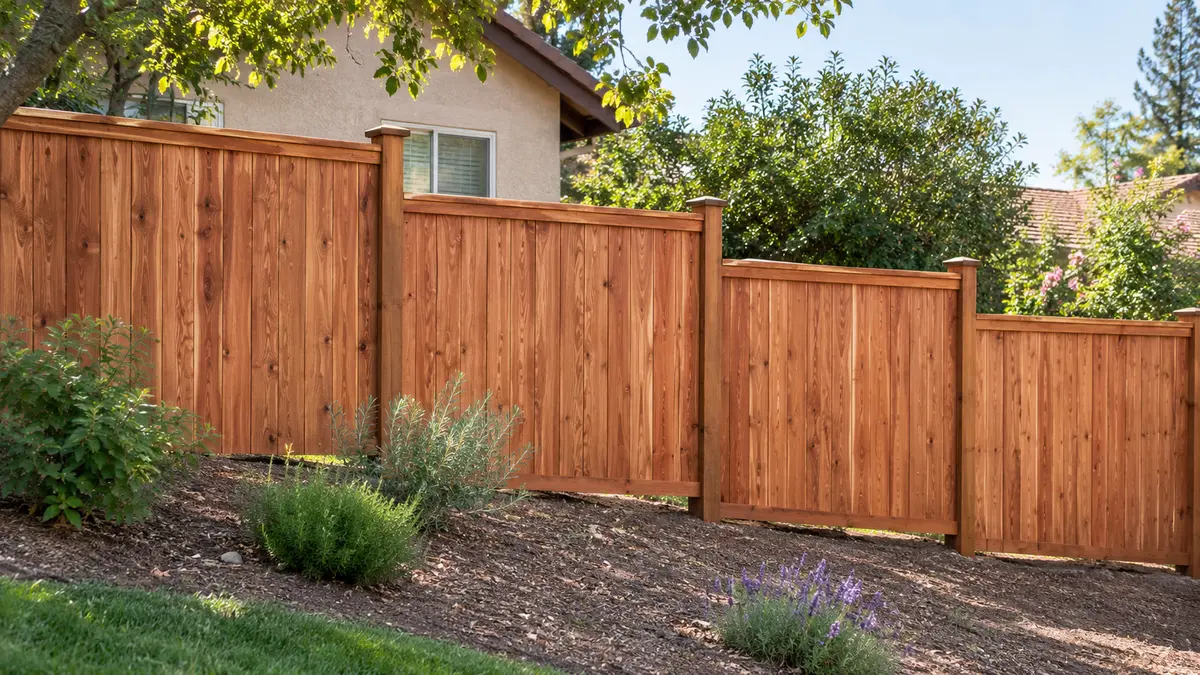
Wood fences can often be repaired one picket at a time. That is useful when damage is localized, but a new board may not initially match weathered neighbors. If rails or posts are failing, replacing visible boards alone may only postpone a larger repair.
Aluminum systems use coordinated panels, posts, brackets, caps and gates. A damaged part may be quick to replace when the product is still available, yet matching an older profile or color can be difficult. Keep the manufacturer, product line, color, installer documents and spare touch-up materials with the project record.
Before choosing either material, ask who supplies replacement components, how long the current product line has been offered and what the written warranty requires. A vague lifetime claim is not a maintenance plan.
Which fence fits your property?
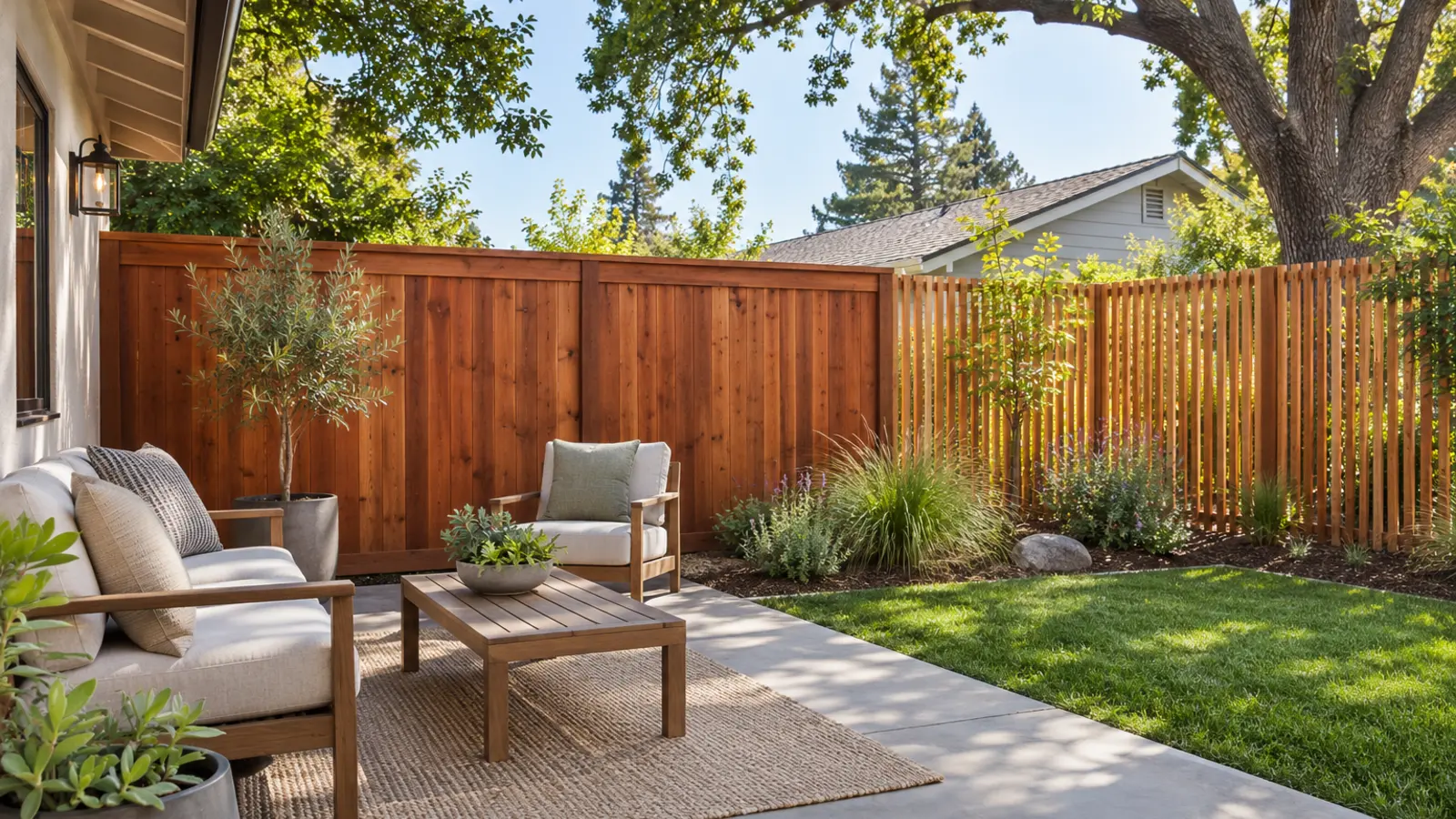
Choose wood when full privacy, natural texture, custom board layouts and individual-board repair are priorities—and when you accept periodic finish evaluation and natural variation.
Choose aluminum when an open ornamental boundary, visible landscaping and reduced refinishing are priorities—and when the lack of solid privacy fits the location.
For a side yard that needs screening, wood may solve the actual problem better even though it asks for more care. Around an open landscape or selected pool layout, aluminum may preserve sightlines that a privacy fence would close. Some properties can use both, but transitions, gates and approvals should be drawn rather than improvised in the field.
Put maintenance responsibilities in the proposal
Before signing, confirm:
- Exact wood species and grade, or aluminum manufacturer, product line, coating and color.
- Post, panel or rail system; gate hardware; and grade-transition method.
- Whether wood finishing is included, deferred or excluded—and who decides when the surface is ready.
- Approved aluminum cleaning and coating-repair instructions.
- Irrigation or landscaping corrections required before installation.
- Replacement-component availability and documentation delivered at completion.
- Warranty exclusions tied to cleaning, chemicals, impacts, coating damage or unauthorized modifications.
For properties inside the City of Sacramento, fences not over seven feet may be exempt from a building permit, but the City states that proposed fencing remains subject to Planning Division approval and applicable fence standards. Location, visibility, pools, special review areas and other property conditions can still affect the design. Verify the address and proposed layout before ordering either system.
Compare both systems at the property
Yellowstone Renovation offers wood fence installation and ornamental aluminum fencing within its Sacramento fencing services. Review the Sacramento city service page and a real completed Sacramento wood-fence project to see an installed privacy-fence example.
Request an on-site fence estimate to compare privacy, sightlines, grade, gates, irrigation exposure and the maintenance documents for the actual products being proposed.
Frequently asked questions
Is an aluminum fence maintenance-free?
No. Powder-coated aluminum normally avoids wood staining, but it still needs manufacturer-approved cleaning, coating inspection and hardware checks. Gates and moving latches require more attention than fixed panels.
Does a wood fence have to be stained?
That depends on the wood, desired appearance, existing finish and product instructions. Unfinished wood will weather and change color. If a finish is selected, preparation and future recoating should follow that exact system rather than a generic schedule.
Which material is easier to repair?
Wood often allows individual picket replacement, although new material may not match weathered boards. Aluminum repairs may use modular manufactured parts, but availability and exact color or profile matching matter. Keep product records for either system.
Which option gives more privacy?
Wood is commonly built as a solid or overlapping privacy fence. Ornamental aluminum normally has open pickets and preserves views. Compare the actual panel geometry instead of assuming all fences provide the same screening.