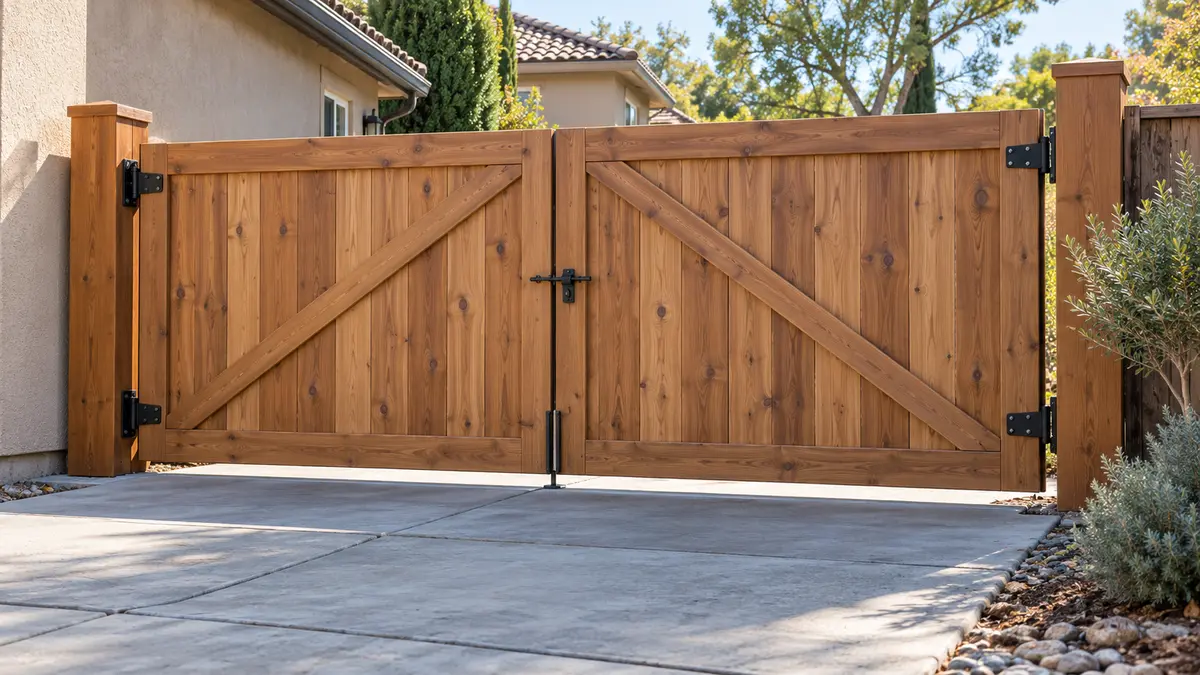
For a wide fence opening, choose the gate only after measuring the clear passage, swing area, grade and intended traffic. A double-swing gate can divide the span into two lighter leaves, but it also needs two stable hinge posts, aligned leaves and dependable center hardware. A wide single leaf has fewer moving parts, yet places more leverage on one post and needs enough unobstructed room to swing. Neither layout is automatically better.
This is a planning guide, not a universal framing schedule. Gate material, privacy infill, leaf weight, wind exposure, soil, hardware listings and site conditions determine the final frame, post and foundation design.
Start with the opening you actually need
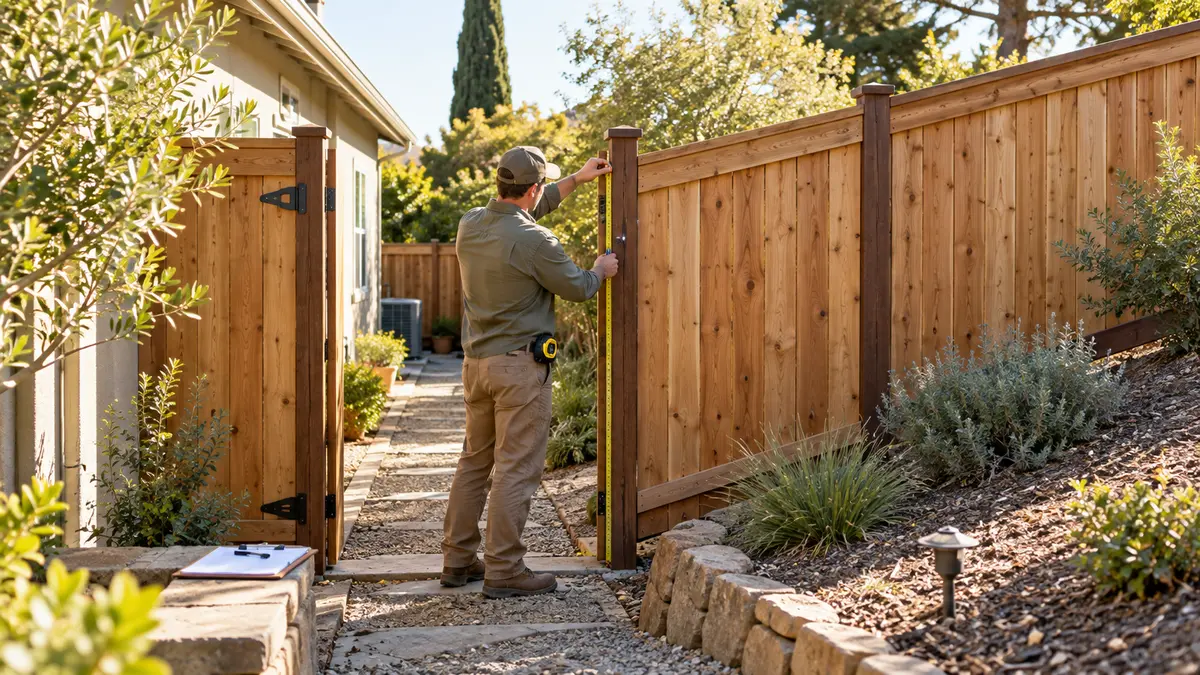
Measure the finished clear opening between the parts that will limit passage when the gate is fully open. Do not rely only on the distance between existing posts. Hinges, latches, stops and an open leaf can reduce usable width.
Write down what must pass through the opening:
- People, bicycles and trash carts
- A mower, wheelbarrow or landscape equipment
- A trailer or vehicle, including mirror clearance
- Material deliveries for future yard work
- Emergency or utility access when applicable
Photograph the approach from both directions. A technically wide-enough opening may still be awkward if a wall, tree, utility box or tight turn blocks the path. On a shared boundary, settle alignment and access questions before demolition using the Sacramento shared-fence planning checklist.
Compare a single leaf with a double-swing layout
A single leaf
A single leaf provides one uninterrupted opening and one latch location. Its tradeoff is leverage: as the leaf becomes wider and heavier, the free end demands more from the frame, hinges, fasteners, post and footing. Solid privacy boards also catch more wind than open infill. A proposal should not simply stretch a walk-gate detail across a larger opening.
Two leaves
A double-swing gate divides the opening, so each leaf has a shorter span. One leaf can serve daily pedestrian access while both open for wider equipment or vehicle passage. The design, however, adds a second hinge post and a center joint that must stay aligned.
Ask how the inactive leaf will stay closed. A drop rod or cane bolt needs a durable receiver, while the active leaf needs a positive latch and both leaves may need a center stop. Loose soil is not a precise receiver; grade or pavement movement can make center hardware hard to operate.
Treat the frame as structure, not decoration
Wood boards provide privacy, but they should not be expected to keep a wide gate square by themselves. The frame needs continuous, sound members that connect the hinge and latch sides and transfer the free-corner load back toward the hinges.
For a conventional wood gate using a compression brace, the brace generally rises from the lower hinge corner toward the upper latch corner. That orientation helps direct the free-corner load toward the supported side. A tension cable or manufactured anti-sag system works differently, so it must follow its own instructions. A metal gate frame may use a completely different welded or bolted layout.
Before approving the detail, ask what forms the structural frame, how its corners are joined, where hardware fastens, how wood movement is accommodated and whether the infill's weight and wind exposure were considered.
If an existing gate already drags or misses its latch, first use the Sacramento gate-sagging diagnosis guide. A planning article cannot determine whether the leaf, post, hardware or ground has failed.
Size the posts, footings and hinges as one system
A hinge post does more than support a stationary fence panel. It carries the moving leaf during every cycle and resists the leverage created when the leaf is open. The latch post and center hardware also need to hold the leaves in a repeatable closed position.
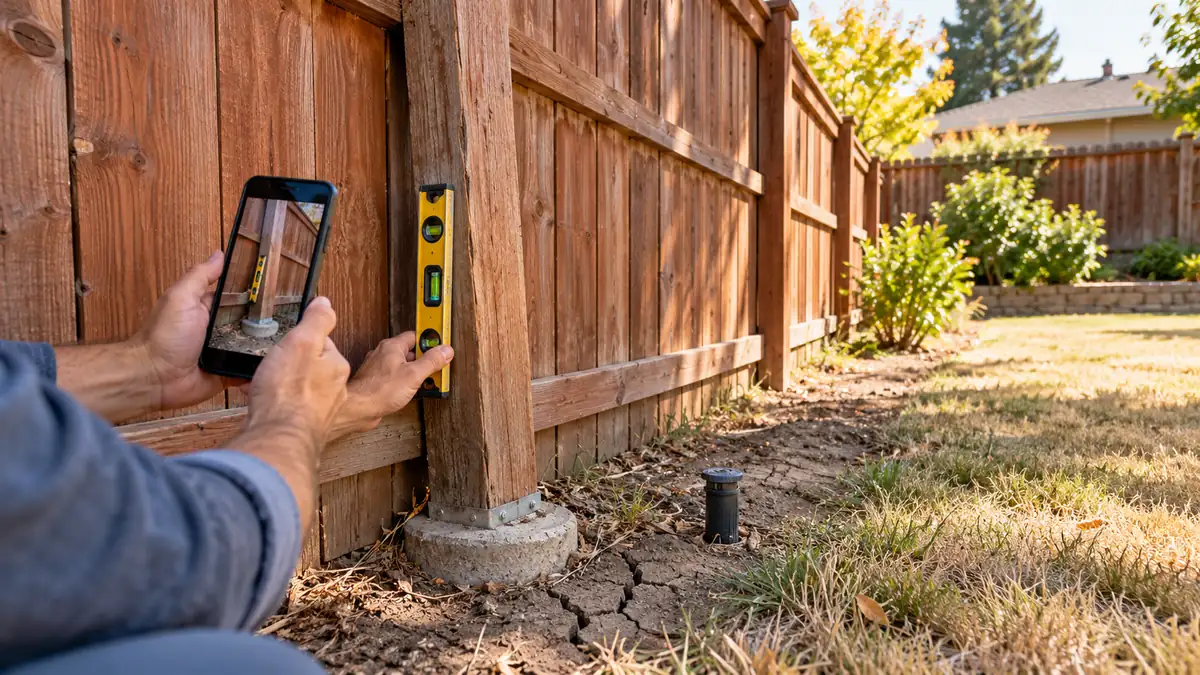
There is no responsible universal post size or footing depth for every wide gate. A contractor should evaluate the clear span, leaf weight, post material, soil, irrigation, adjacent concrete, wind exposure and expected use. Existing fence posts should not be assumed adequate merely because they look straight today.
Hinges should be selected from manufacturer data for the specific gate and installation method. Confirm:
- Rated capacity and any maximum leaf dimensions
- Post and frame material required by the hinge
- Bolt-on, screw-on or weld-on attachment method
- Fastener type and required edge distances
- Vertical or horizontal adjustment range
- Clearance through the full swing
- Corrosion protection appropriate for irrigation exposure
Published capacity does not replace frame and post design. Follow the selected product's current instructions rather than copying a hinge count from another gate.
Plan the latch, stop and ground hardware together
On a double gate, the center is a small system:
- The inactive leaf is secured by a drop rod or other hold-open/hold-closed device.
- A receiver or stop establishes the closed position.
- The active leaf closes against that stable leaf.
- The latch holds the pair without forcing misaligned frames together.
Specify the active side, latch access, locking needs and how the gate releases from each side. Record child or pet clearance concerns. Also decide how each open leaf is restrained; wind can move an unsecured wide gate unexpectedly.
Check grade and the complete swing path
Measure the surface beneath the entire arc, not only at the closed line. A driveway that rises toward the yard can stop an inward-swinging leaf after a few degrees. A surface that falls away can create an excessive gap at the free end. Wheels are not an automatic fix: they need a suitable, consistent surface and a gate designed to use them.
Mark these conditions on the site sketch:
- Highest point under each swing arc
- Concrete joints, pavers, gravel and soil transitions
- Drainage routes and places water collects
- Sprinklers and irrigation lines near posts
- Trees, roots, utility boxes and meters
- The space required to park a vehicle clear of the gate
Before excavation, use the required utility-location process and identify private irrigation or electrical lines separately.
Verify Sacramento driveway and fence rules before final layout
City of Sacramento rules are property- and location-specific. The City's current permit page states that fences not over seven feet are generally exempt from a building permit, but proposed fencing remains subject to Planning Division approval and Chapter 17.620 standards. That exemption does not erase planning, historic-district or other applicable requirements.
For gates across a driveway, the City publishes additional setback and visibility guidance. Its driveway FAQ states that a manual driveway gate generally must be set back 20 feet from the property line, while a gate proposed within that first 20 feet requires a driveway variance and automation. The City also regulates visibility triangles near driveways. Confirm the current rule with the City for the exact address before ordering or setting posts; do not scale a legal layout from a blog summary.
Sacramento County and other nearby jurisdictions use different processes. If the property is outside city limits, check the authority that actually governs the parcel. County guidance notes that vehicular gates may require review by the appropriate fire district and transportation staff.
If automation may come later, say so now
Automation changes gate geometry, stops, power, access control and safety requirements. UL explains that automated gate operators are covered by UL 325, including entrapment protection. Have a qualified gate-operator professional evaluate the complete system and applicable code; this article does not claim Yellowstone Renovation supplies automated access-control systems.
What a useful wide-gate proposal should state
Ask each bidder to identify:
- Finished clear opening and number of leaves
- Swing direction and operating leaf
- Frame material, bracing and privacy infill
- Hinge and latch posts, footing assumptions and adjacent work
- Hinge manufacturer/model or performance basis
- Latch, center stop, drop rod/receiver and hold-open hardware
- Ground clearance and grade strategy
- Demolition, access, finish and hardware corrosion protection
- Permit responsibility, exclusions and any automation coordination
Compare this with the broader Sacramento privacy-fence estimate checklist so gates, grade, access and demolition are not hidden inside one line item.
Plan the opening before choosing hardware
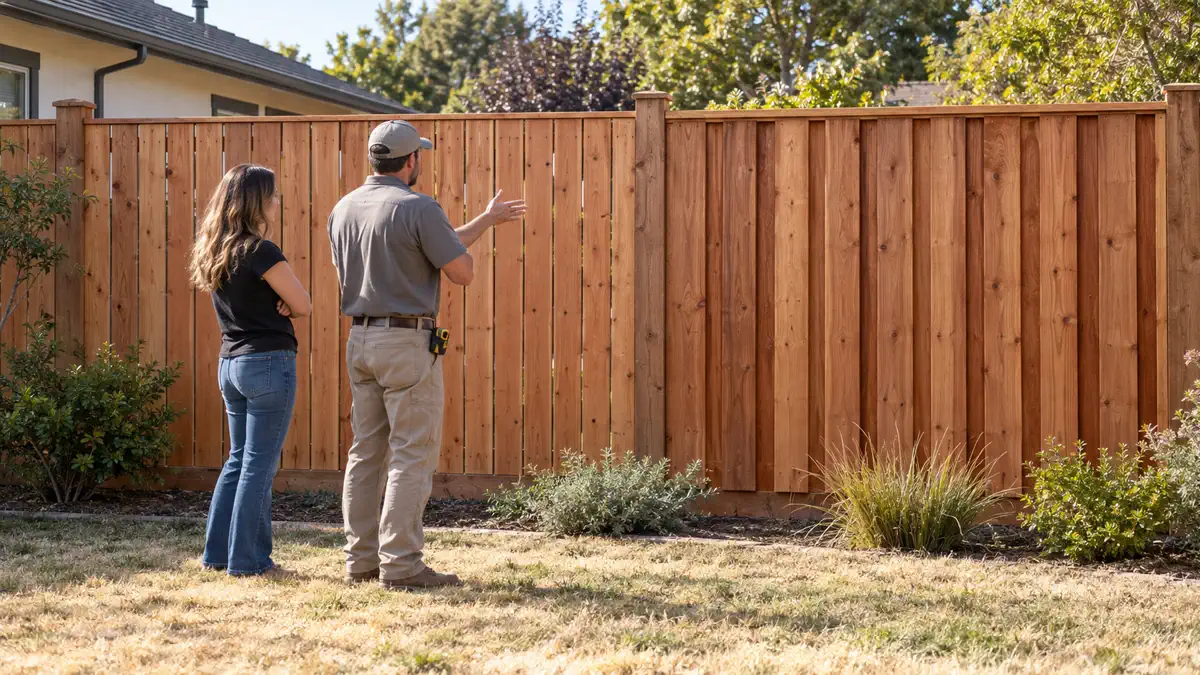
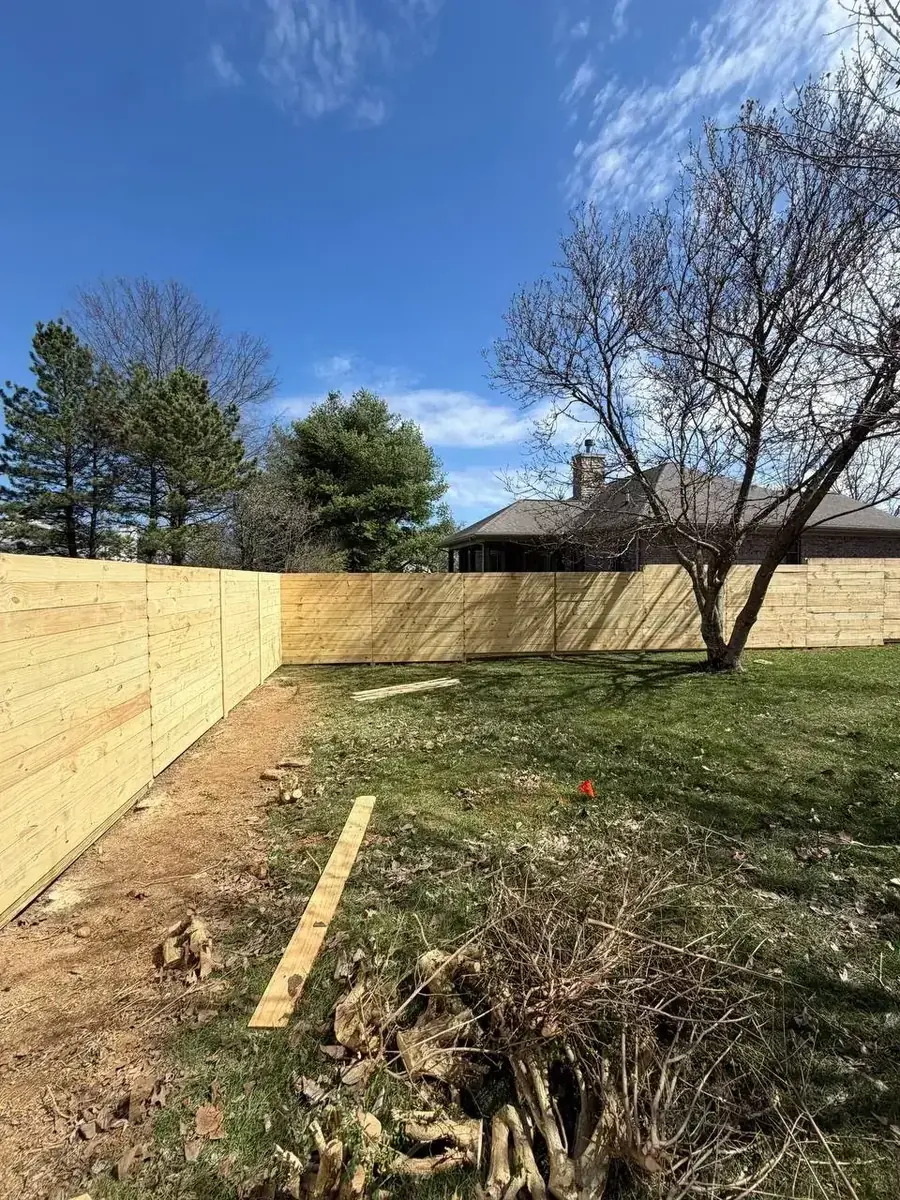
Yellowstone Renovation builds wood fences in Sacramento and can measure the opening, grade, access and existing post conditions before preparing a scope. Review the Sacramento city service page and a verified vertical wood fence project, then request an on-site fence estimate. The editorial image above illustrates the planning concept; it is not a Yellowstone Renovation project photograph or a construction drawing.
Frequently asked questions
Is a double gate always better for a wide opening?
No. Two leaves reduce the span of each leaf but add a second hinge post and center hardware. The better layout depends on the required clear width, grade, swing room, material, weight and daily use.
Can I reuse existing fence posts for a wider gate?
Only after their material, condition, alignment, footing and capacity are evaluated for the new moving load. A post that supports a fixed panel may not be suitable as a wide-gate hinge post.
Does a fence gate under seven feet need no City review?
Not necessarily. The City says fences not over seven feet are generally exempt from a building permit, while all proposed fencing remains subject to Planning approval and applicable fence and gate standards. Driveway location, visibility, design review and property-specific conditions can add requirements.
Sources
- City of Sacramento — Required Building Permits
- City of Sacramento — Driveway Permit Application FAQ
- City of Sacramento — Wall and Fence Regulations Near Driveways
- Sacramento County — Vehicular Gates
- D&D Technologies — Adjustable heavy-gate hinge specifications
- UL Solutions — Access Control and Gate Operators