The short answer
Choose board-on-board fencing when maintaining privacy as wood moves is the main goal; choose standard side-by-side privacy fencing when you want a simpler assembly, less lumber and a lower starting scope. Neither layout is automatically the better fence. Posts, rails, fasteners, lumber quality, gate framing and site drainage still determine how the whole system performs.
In Sacramento's long dry season, wood boards do not remain dimensionally identical to the day they were installed. The USDA Forest Products Laboratory's Wood Handbook explains how wood moisture relates to dimensional change. A board-on-board layout uses overlap to keep a direct sightline covered as individual pickets move. A standard layout places one row of boards beside one another; small gaps can become visible as the boards dry or cup.
The right comparison starts with the actual assemblies, not just two style names.
What is a standard side-by-side privacy fence?
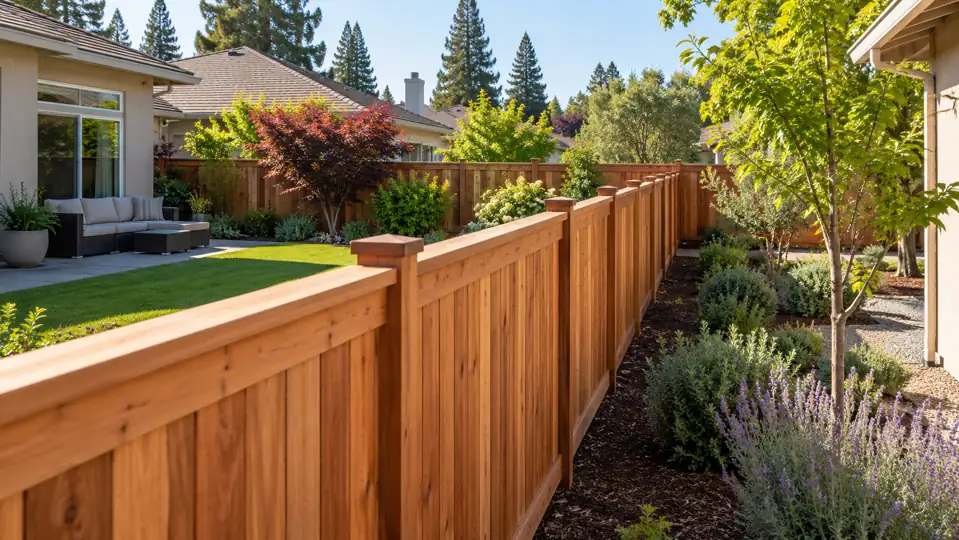
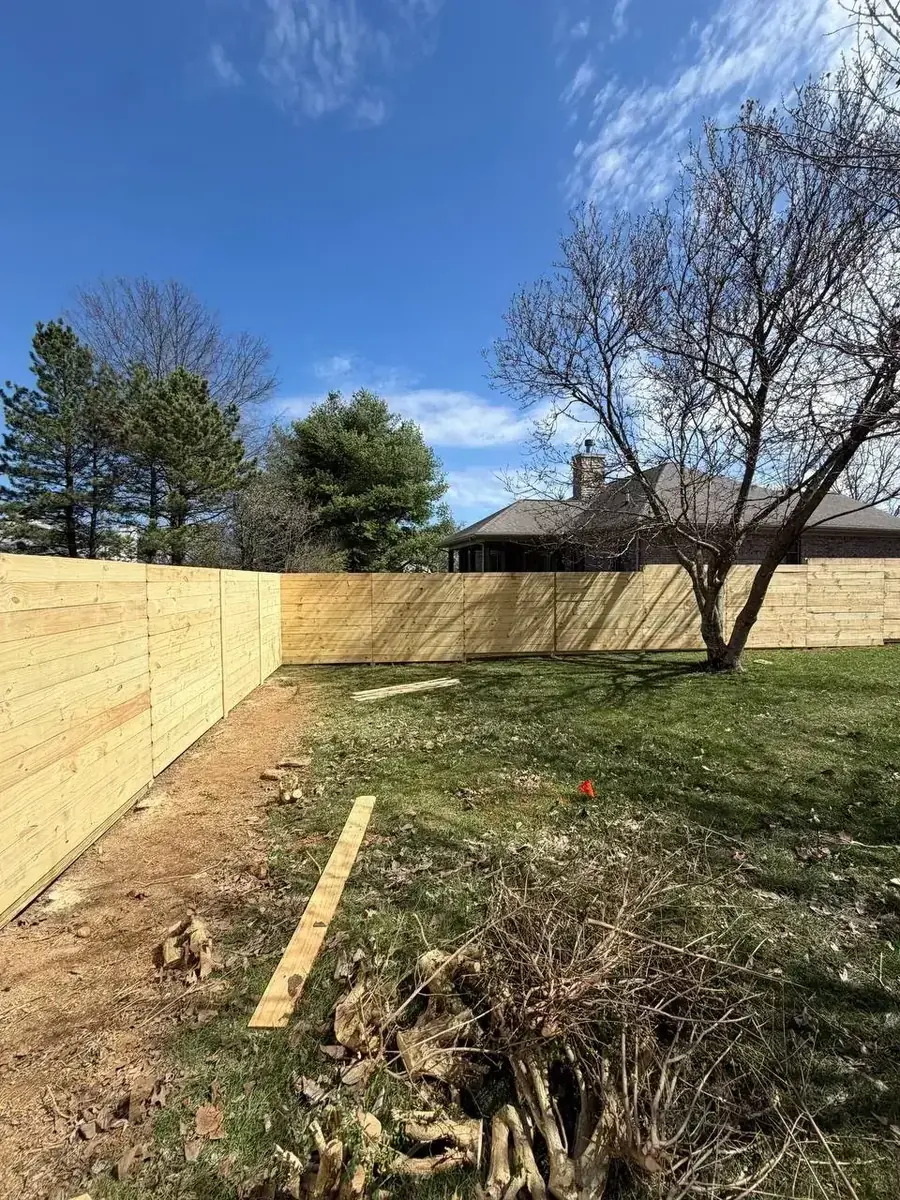
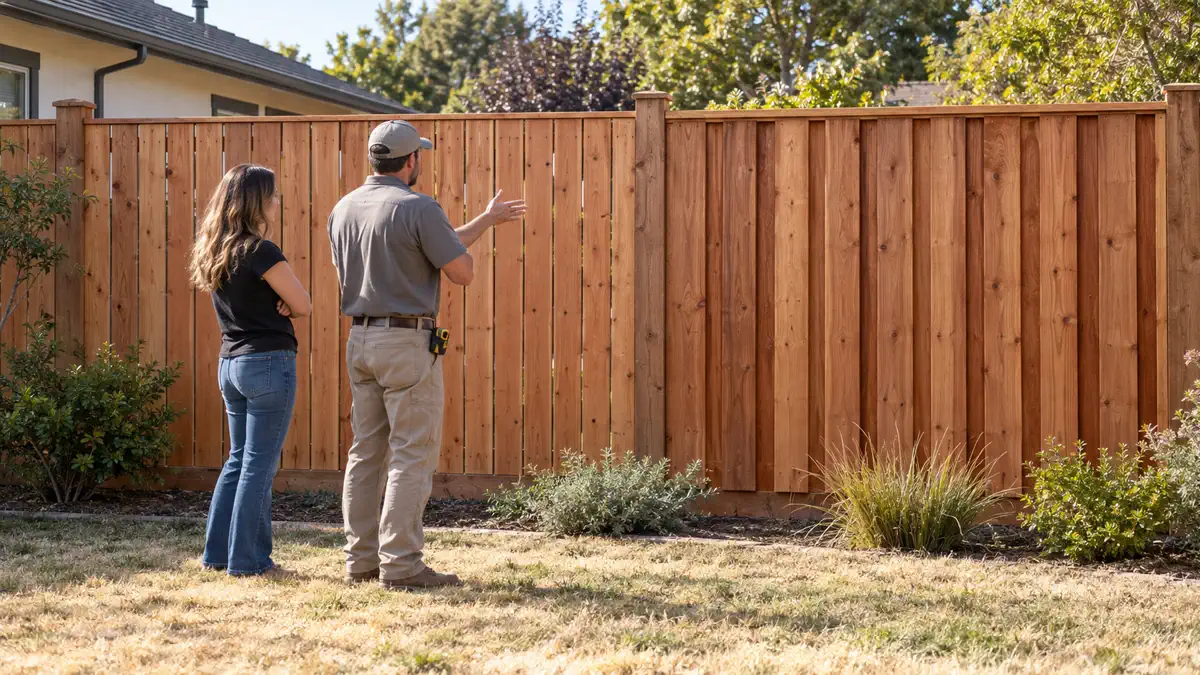
A standard vertical privacy fence usually has one row of pickets fastened to horizontal rails. The pickets meet edge-to-edge or are installed with a planned space, depending on the material condition and the intended appearance. From the finished side, the fence reads as one flat plane.
This is a familiar Sacramento backyard fence because the material list and installation sequence are straightforward. It can also be easy to inspect: you can see whether a board has split, pulled from a rail or developed excessive movement.
The privacy tradeoff is at the joints. If boards shrink, twist or cup, narrow sightlines may appear between them. Installing wet boards tightly together does not guarantee a gap-free fence later, and forcing dry boards together without a moisture-aware plan can create its own problems when conditions change.
What is a board-on-board fence?
A board-on-board privacy fence uses two offset layers of pickets on the same face of the rails. The first course is spaced, and the second course overlaps those joints. The finished face has alternating depth and a stronger shadow line.
The overlap is the important part. A properly laid-out assembly can continue blocking a straight sightline even when individual boards change width. That makes it useful along patios, pools or closely spaced side yards where privacy is more important than using the fewest boards.
Board-on-board is not the same as a shadowbox or “good-neighbor” fence. A shadowbox fence typically alternates boards on opposite sides of the rails. That can balance the appearance from both yards and permit angled airflow, but it may allow a view through the fence at an angle. Ask the estimate to name and sketch the assembly so all parties are pricing the same design.
Side-by-side comparison
Privacy after seasonal movement
Board-on-board has the advantage when uninterrupted visual screening is the priority. The second course covers the first course's joints. The overlap still needs to be wide enough for the selected board width, expected movement and installation moisture—not merely enough to look closed on installation day.
A standard fence can provide good initial privacy, but its performance depends more directly on each board remaining close to its neighbor. Select boards carefully and set realistic expectations for future gaps.
Material and labor
Board-on-board requires more pickets than a single-course fence and more fastening and layout work. It also adds weight to each bay. The estimate should identify the board count or coverage method, overlap, rail configuration and fastener schedule rather than hiding the design under “premium privacy fence.”
Standard side-by-side fencing normally uses fewer boards and has a simpler layout. That can make it the practical choice for a long run where modest future gaps are acceptable. For a fair comparison, use the Sacramento privacy-fence estimate checklist and confirm that both proposals include the same demolition, posts, gates, grade treatment and finish.
Appearance from each property
On a typical fence with rails exposed to one side, neither layout automatically gives both neighbors the same view. Board-on-board changes the depth of the finished face; it does not by itself conceal rails on the opposite side.
Before replacing a shared fence, agree on which face goes where, whether cap and trim are included, and how gates, stepped sections and corner returns will look. The shared-fence planning guide separates these design decisions from boundary and cost-sharing questions.
Wind, posts and footings
Do not buy either style on the claim that it is universally “better in wind.” A privacy fence presents a broad surface to wind, and a board-on-board assembly adds boards and weight. Actual performance depends on height, exposure, post material and spacing, footing conditions, rails, fasteners and openings around the site.
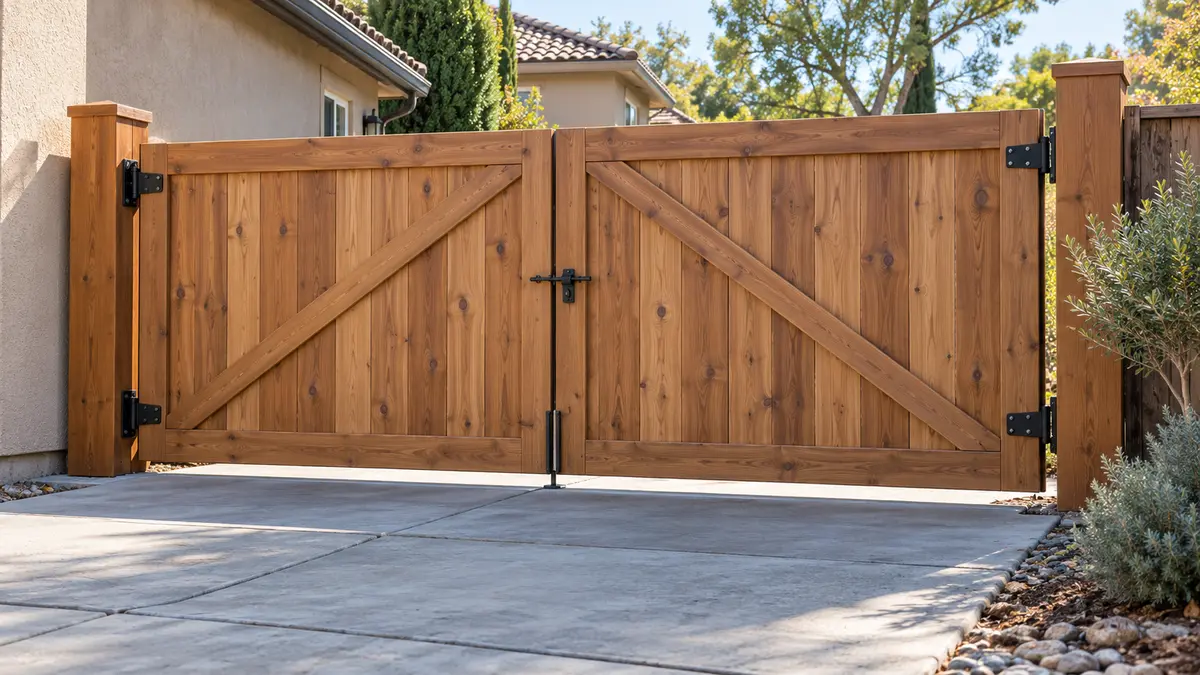
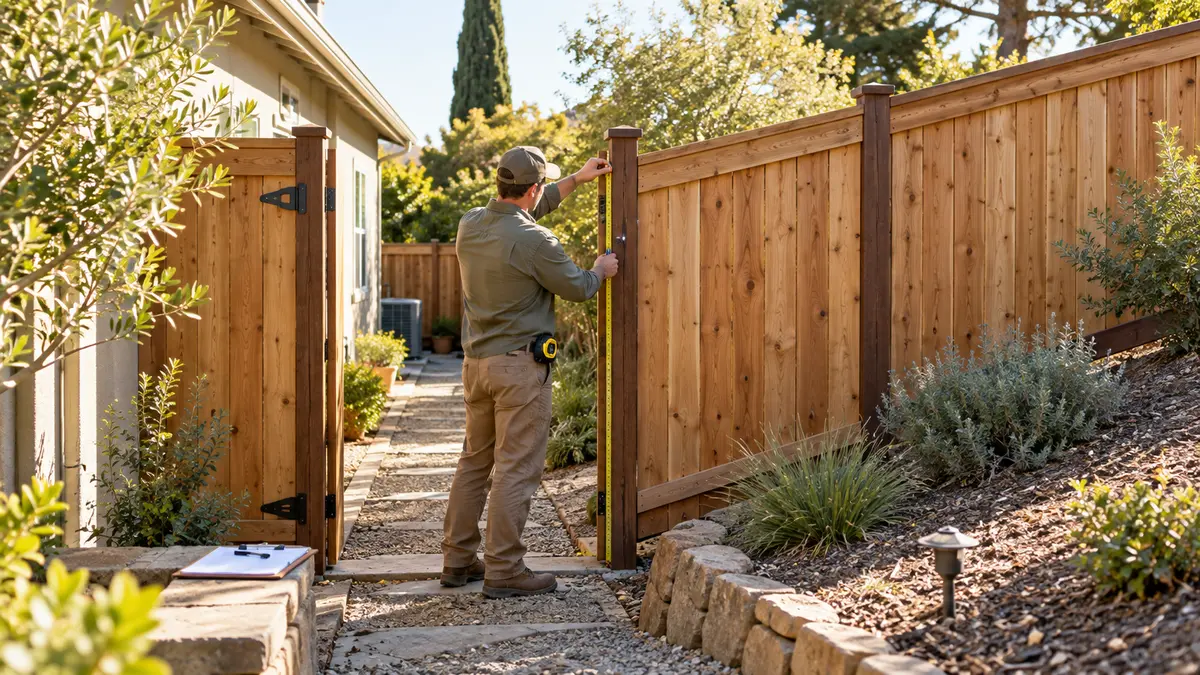
The contractor should size the system for the address and design rather than assuming the picket pattern alone provides strength. Exposed lots, corner conditions and gates deserve specific review. A wide gate also transfers repeated leverage to its hinge post, so gate support should be detailed separately from the typical fence bays.
Repair and maintenance access
On a single-course fence, an individual picket is usually visible and direct to replace. On a board-on-board fence, the overlapping sequence matters; reaching one board may require temporarily removing the board above its edge. That is manageable, but it changes repair labor.
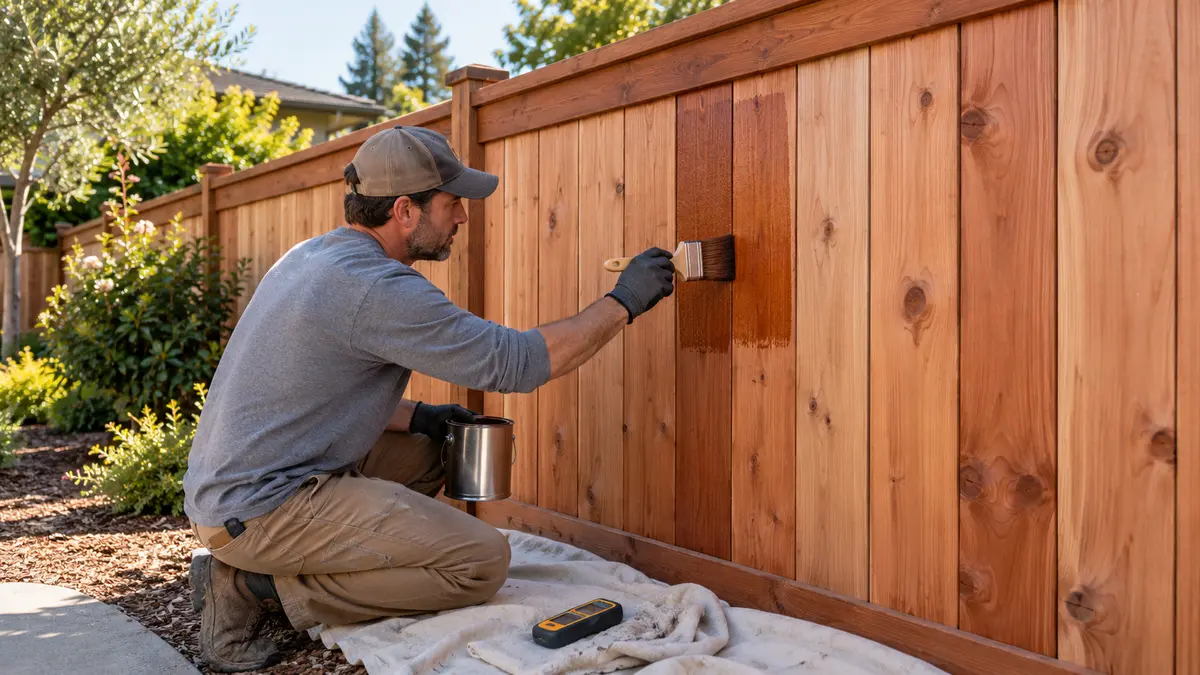
Both styles need a finish plan appropriate to the selected wood and manufacturer guidance. Keep soil, mulch and constant irrigation away from the bottom of the boards and posts. Sprinklers that repeatedly wet only one face can create uneven moisture exposure. Inspect the bottom rail, board ends and gate area rather than judging the fence only from eye level.
Five details to settle before choosing
- Privacy target: Is the goal ordinary yard separation or blocking direct views near a patio or frequently used side yard?
- Exact assembly: One course, overlapping two-course, or alternating shadowbox? Record board orientation and overlap.
- Post and rail system: Identify materials, spacing, footing assumptions and the rail configuration supporting the board load.
- View from both sides: Confirm the finished face, exposed framing, cap, trim and any neighbor-facing expectations.
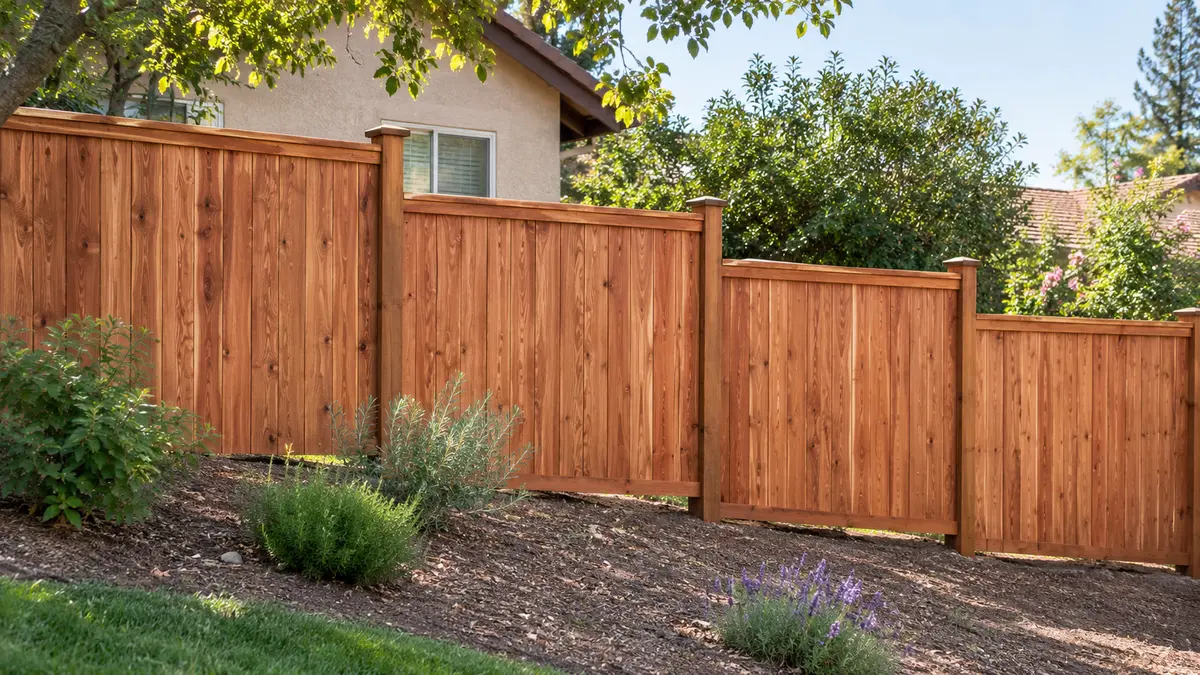
- Gate and grade transitions: Decide how the pattern continues at gates, steps, slopes and short returns without creating awkward gaps.
Lumber species and grade remain separate decisions. Compare redwood, cedar and pressure-treated fence materials after choosing the layout; a more private pattern cannot correct poor board selection or unsupported framing.
Sacramento approvals still depend on the address
For property inside the City of Sacramento, the City's current required-permits guidance lists fences not over seven feet among work that may be exempt from a building permit. The same guidance says proposed fencing remains subject to Planning Division approval and applicable standards. Location on the lot, visibility, easements, pools, an HOA or a special review area can change what is allowed.
That means “under seven feet” is not a complete approval check. Verify the jurisdiction and property-specific conditions before demolition or ordering material. A contractor's design comparison does not establish a property line or replace planning review.
See the difference before pricing the fence
For a compact yard, panel choice is only half of the design. Use the small-yard privacy-fence sightline guide to decide where a solid section is actually needed and where an open view, transition or planting layer can keep the space from feeling enclosed.
Yellowstone Renovation provides wood fence installation in Sacramento and can compare a standard vertical privacy assembly with board-on-board options at the property. Review a completed Sacramento vertical privacy fence and the board-on-board examples in the Project Showcase, then confirm the service area on the Sacramento city page.
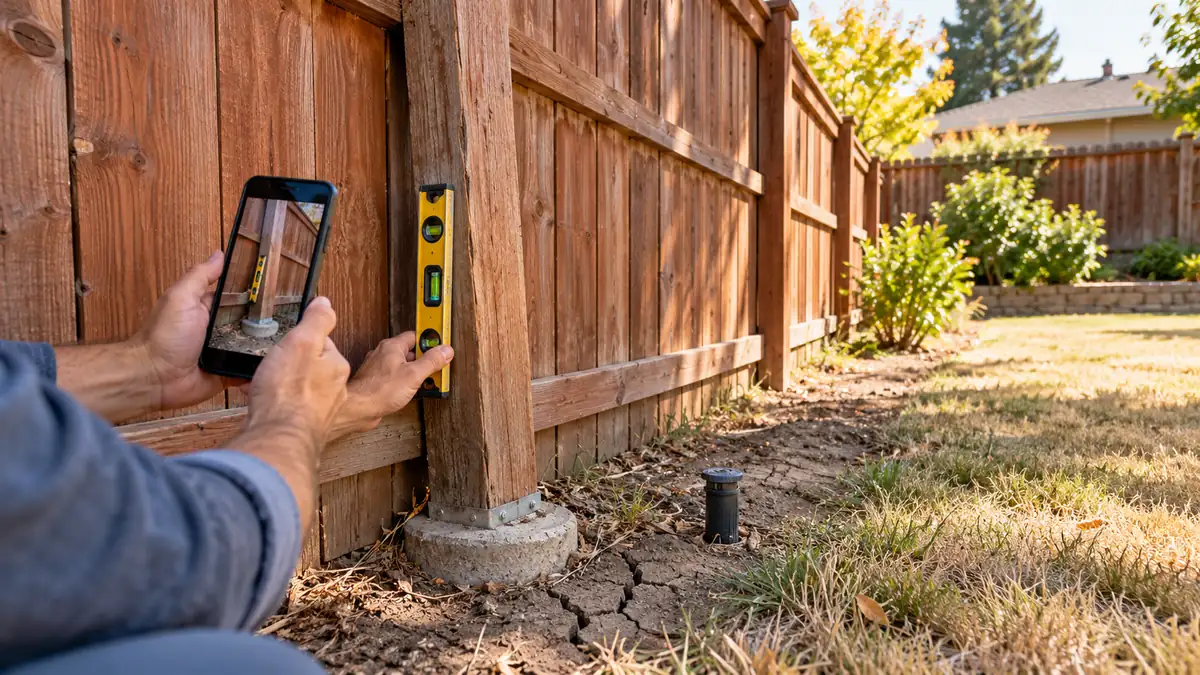
Bring photos of the full fence line, both authorized sides, gates, slope, irrigation and the narrowest access path. Request an on-site fence estimate to turn the style choice into a complete scope with posts, rails, boards, gates, demolition and finish responsibility clearly identified.
Frequently asked questions
Does board-on-board eliminate all gaps?
It is designed to cover the joints between the first course of boards, so it can maintain a direct privacy screen better than a single edge-to-edge course. It does not stop wood movement, and poor overlap or severely warped boards can still create visible openings.
Is board-on-board the same as a good-neighbor fence?
Not necessarily. “Good-neighbor” is an informal description, not one universal assembly. Some designs alternate boards on opposite sides of the rails; board-on-board commonly overlaps two courses on one face. Ask for a drawing or sample photo.
Which fence costs less?
A standard side-by-side fence usually starts with fewer pickets and a simpler installation sequence. The final project also depends on posts, gates, grade, access, demolition, wood species and finish. Compare written scope rather than relying on an unsupported per-foot figure.
Can an existing standard fence be converted to board-on-board?
Sometimes, but adding a second course adds boards, fasteners and weight. The existing posts, rails, footings, alignment and remaining service life need inspection first. Covering an already weak frame is not a sound upgrade.