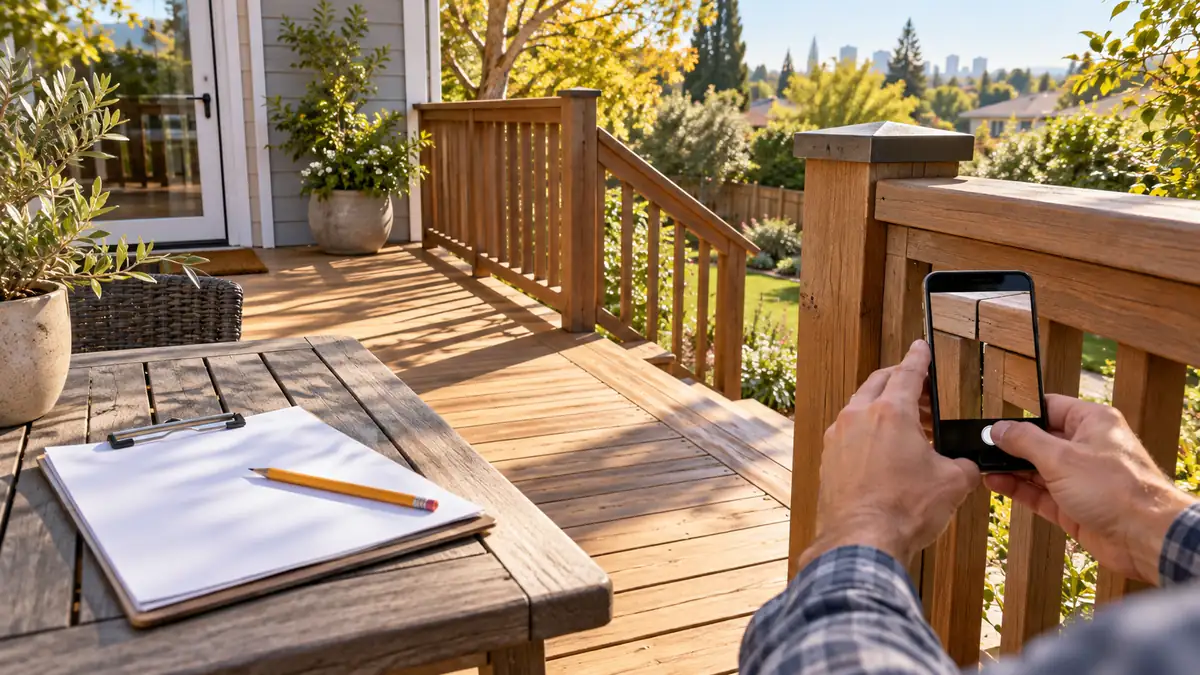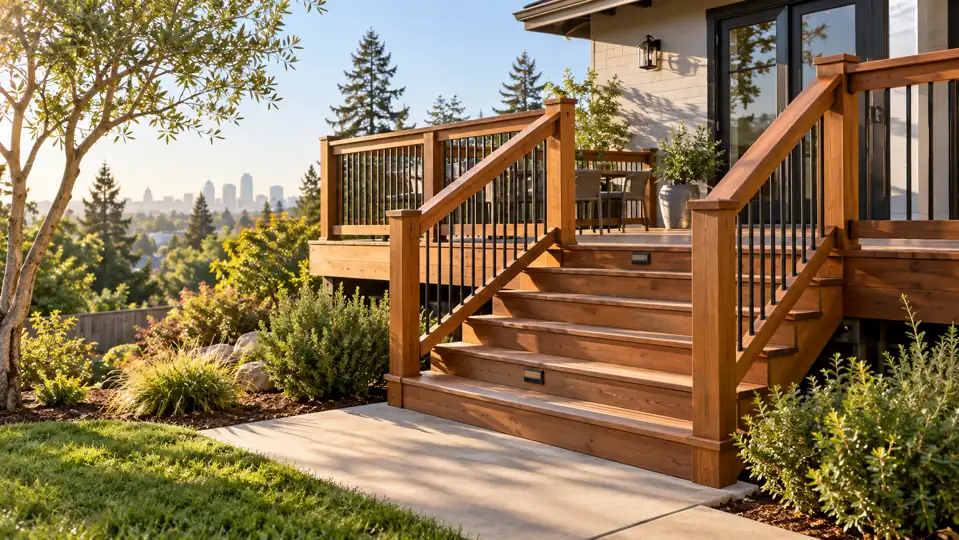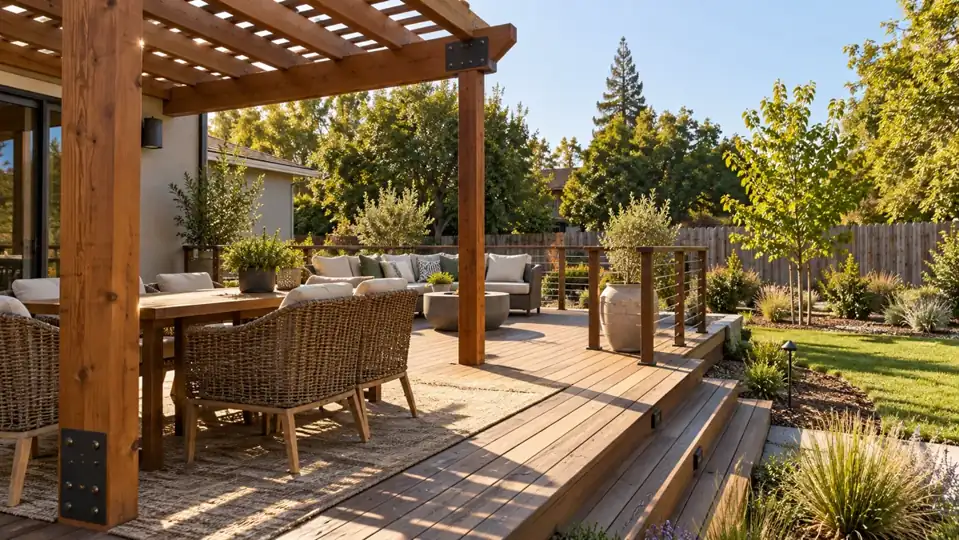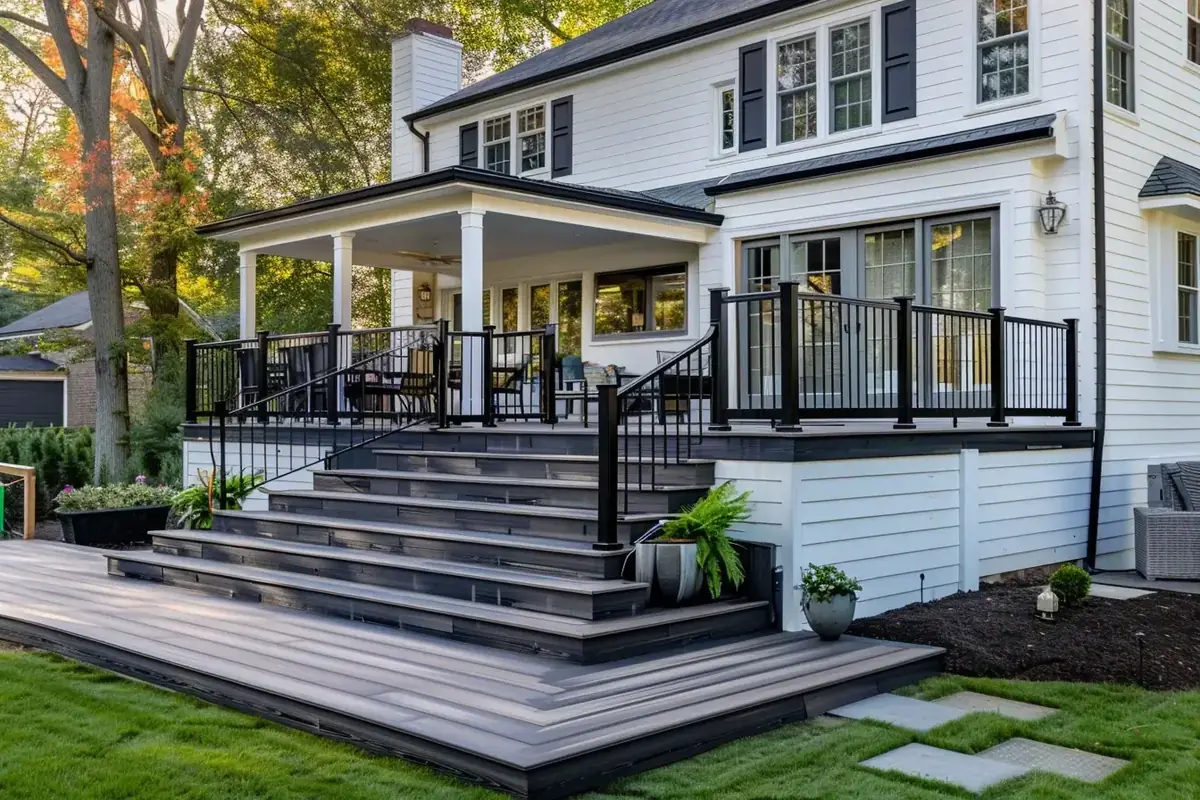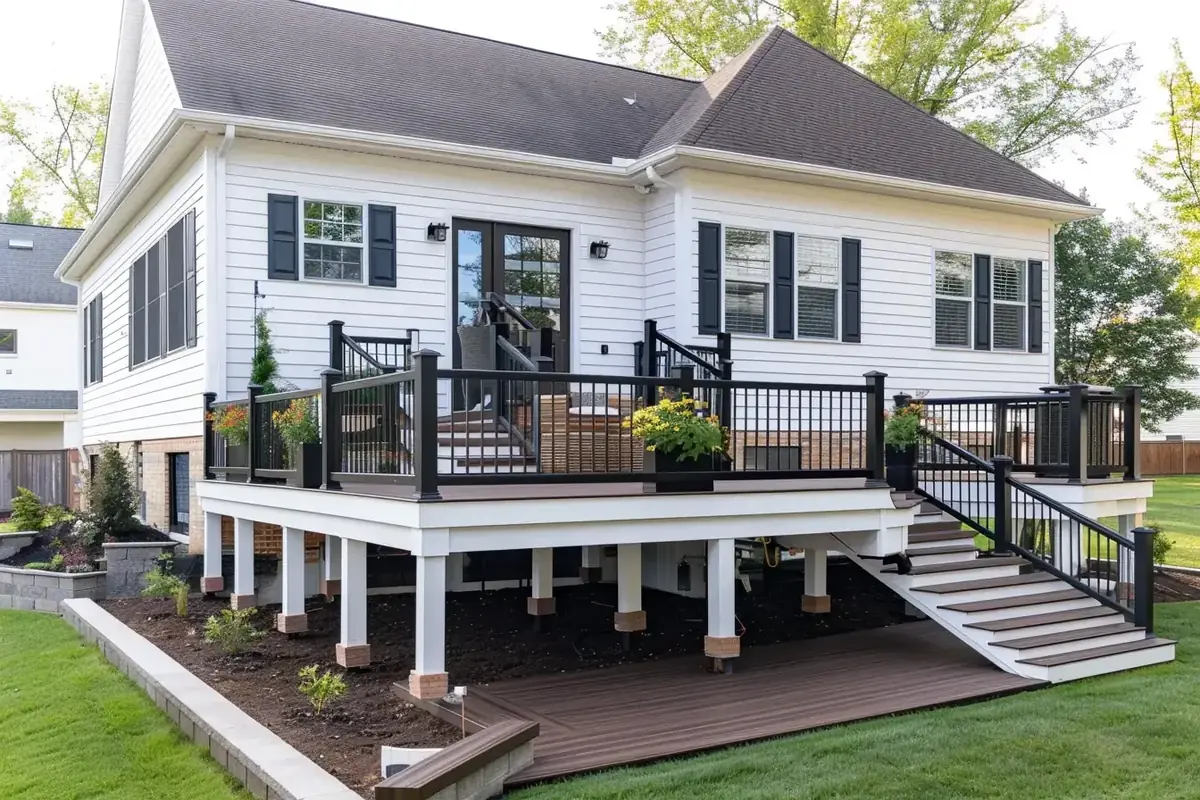
Start with the product line—not only the logo
Trex and TimberTech both make low-maintenance decking, but a brand-to-brand comparison can be misleading. Each company offers multiple collections at different prices, with different board constructions, colors, surface patterns and written warranties.
The useful question is not simply “Which brand is best?” It is: Which specific board fits the site, budget, design and installer’s plan?
Trex currently offers composite and PVC decking collections. TimberTech offers composite decking as well as Advanced PVC collections. That means two samples carrying different logos may be less different than two collections from the same manufacturer.
Quick comparison
| Decision | Trex | TimberTech |
|---|---|---|
| Material families | Composite plus PVC options | Composite plus Advanced PVC options |
| Visual range | Multiple wood-look colors and price tiers | Multiple wood-look collections, textures and price tiers |
| Warranty | Varies by product; current residential product and fade/stain terms commonly range from 25 to 50 years | Varies by collection; composite and Advanced PVC carry different product and fade/stain terms |
| Maintenance | Routine washing; no staining for capped boards | Routine washing; no staining for capped boards |
| Sacramento fit | Strong option when the chosen color, board and framing plan fit the exposure | Strong option when the chosen color, board and framing plan fit the exposure |
Always compare the current documents for the exact collection. Trex publishes its current terms on the Trex warranty page, and TimberTech organizes coverage on its warranty page.
Composite versus PVC
Most capped composite boards combine wood-based material and polymers under a protective cap. PVC boards use a different core and contain no wood fiber in that core.
This difference can affect:
- Board weight and stiffness
- Water absorption characteristics
- Available spans and fastening instructions
- Surface feel and sound underfoot
- Price
- Product-specific fire and heat data
Neither material family is automatically right for every home. A ground-level deck with limited ventilation, a covered deck and an elevated west-facing deck all create different conditions.
Heat and color in Sacramento
All outdoor surfaces become warm in direct summer sun. Darker colors generally absorb more heat than lighter colors, but color is not the only variable. Board formulation, surface texture, air movement, shade and the time of day also matter.
Before choosing:
- Place full-size samples in the intended sun exposure.
- Compare them at midday and late afternoon.
- Test the sample barefoot if that reflects how the deck will be used.
- Consider a lighter field color with a darker border instead of making the entire deck dark.
- Plan shade early; a pergola or cover can affect framing and permit scope.
Do not rely only on a small indoor showroom sample. Color and texture can look very different across a large outdoor surface.
Grain, color variation and board edges
Both brands offer convincing wood-look patterns, but collections vary in how much color variation appears within and between boards. Some designs are quiet and uniform; others use stronger streaking and contrast.
Also inspect the board profile:
- Square-edge boards are commonly used at borders, stairs and exposed edges.
- Grooved boards accept compatible hidden fasteners in the field.
- Scalloped or profiled bottoms may change fastening and stair-detail options.
- Full-profile boards may be preferred for certain picture-frame, breaker-board and exposed-edge details.
A beautiful sample can still be wrong if the available profiles do not support the intended stair, fascia or border design.
Framing and fasteners can decide the result
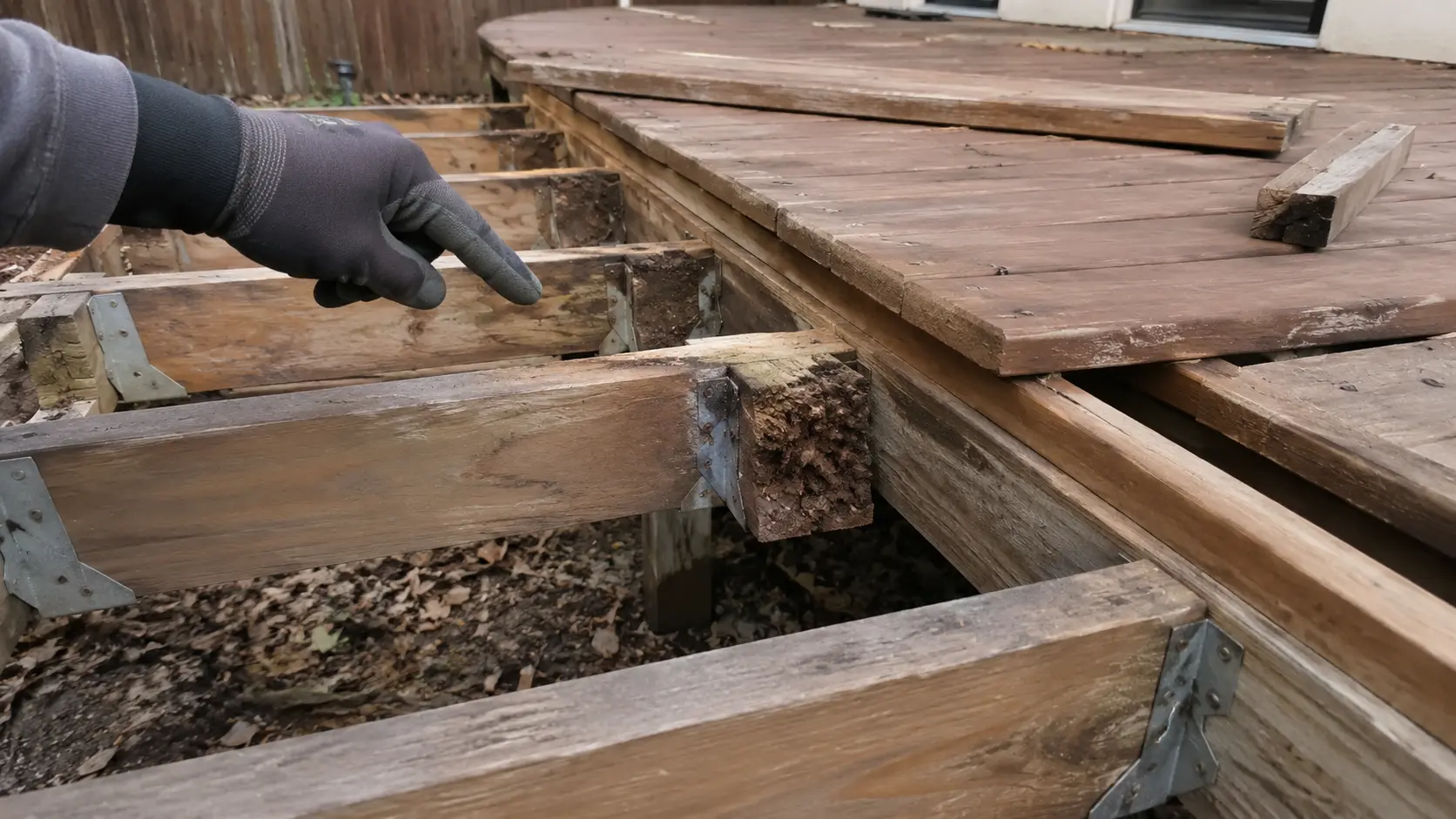
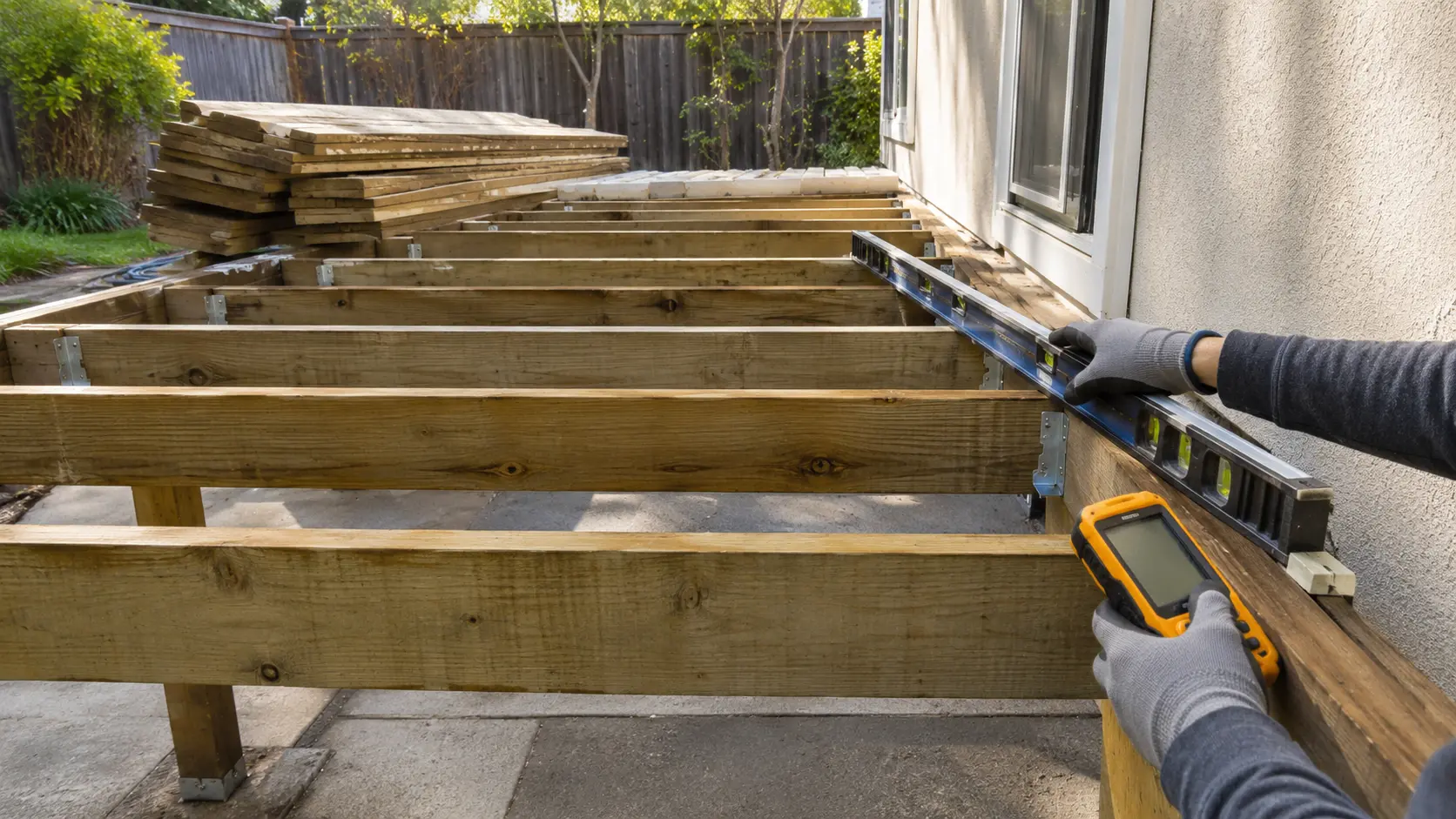
Deck boards are the visible finish, not the entire deck. Joist spacing, blocking, ventilation, drainage, stair geometry and fastener selection all affect performance.
The installer should follow the exact collection’s instructions for:
- Maximum joist spacing
- Stair-stringer spacing
- End and edge gaps
- Butt-joint support
- Hidden fastener compatibility
- Picture-frame blocking
- Fascia attachment
- Required ventilation and drainage
Switching brands or collections after framing has started may force changes below the surface.
Warranty: compare coverage, not the largest number
A “50-year warranty” headline does not tell you what is covered in year 40. Product performance, fade-and-stain coverage, labor, transferability and exclusions may be addressed separately.
Ask these questions for the exact board:
- Is the term prorated?
- Is labor included at any point?
- What fading threshold applies?
- Is registration required?
- Is coverage transferable to a future owner?
- Which cleaners, mats or installation choices can affect a claim?
- What proof of purchase and installation records should be retained?
Which one should you choose?
Choose the specific Trex collection when its color, profile, price, local availability and written terms best fit the project. Choose the specific TimberTech collection for the same reasons—not because one logo wins every comparison.
For many homeowners, the best process is to compare two or three exact boards side by side and price the complete installed system. Include railing, fascia, stairs, fasteners, framing corrections, demolition and permits—not only the price of decking.
Yellowstone Renovation can evaluate the existing structure, build a collection-level comparison and provide a complete scope for a composite deck in Sacramento or a new deck installation. Request an on-site estimate to compare real samples at your home.